The Fourth of July and the signing of the Declaration of Independence severed ties with Great Britain and thus receives its due attention.
But it was on July 5, 1776, that the former colonials got down to the nuts-and-bolts of governing and winning a war.
One of the first orders of business that day for members of the Second Continental Congress meeting in Philadelphia was getting cooking kettles to the militia. The Committees of Inspection and Observation were told to “furnish a good kettle to every six men, and give all the assistance in their power, that the said militia be well armed and equipped, and march with the greatest expedition,” according to the Journals of the Continental Congress at the Library of Congress.
It was also resolved “That a chaplain be appointed to each regiment in the Continental Army, and their allowance be increased to thirty three dollars and one third of a dollar a month.”
Members then had to deal with the always grumpy John Adams, who got approval to send a copy of the Declaration to Mary Palmer, the daughter of family friends of the Adamses in Braintree, Massachusetts, along with a somewhat-snotty note now preserved by the Massachusetts Historical Society.
“I will enclose to you a Declaration, in which all America is remarkably united,” Adams’ letter read. “It completes a Revolution, which will make as good a Figure in the History of Mankind, as any that has preceded it — provided always, that the Ladies take Care to record the Circumstances of it, for by the Experience I have had of the other Sex, they are either too lazy, or too active, to commemorate them.”
On the morning of July 5, the members of the Congress also ordered copies of the Declaration printed by John Dunlap to be distributed throughout the former colonies.
The thought also occurred to them that somebody ought to tell the troops what they were fighting for now that independence had been declared.
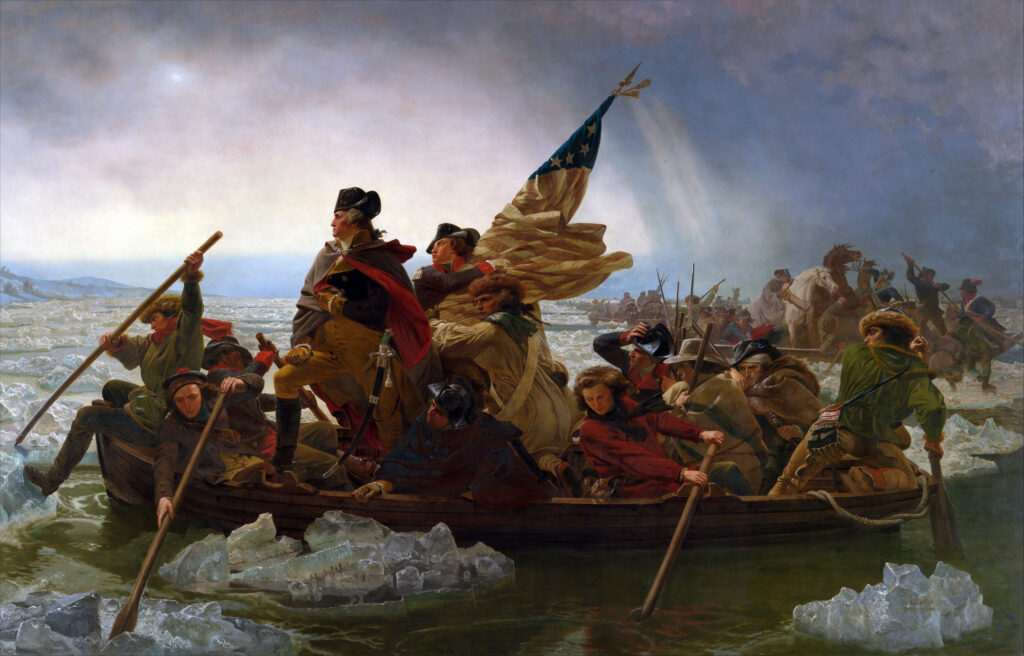
And so John Hancock, the Boston merchant-smuggler and president of the Second Continental Congress, was authorized to tell Gen. George Washington to have the Declaration read to his fledgling army at formations.
In his letter to Washington, Hancock wrote that “the Congress have judged it necessary to dissolve the Connection between Great Britain and the American Colonies, and to declare them free and independent States; as you will perceive by the enclosed Declaration, which I am directed to transmit to you, and to request you will have it proclaimed at the Head of the Army in the Way, you shall think most proper.”
Washington was in New York at the time, warily watching the buildup near the harbor of a British armada that would grow to 400 ships and 32,000 British regulars and Hessians. He scheduled the reading of the Declaration for July 9.
“The Honorable the Continental Congress, impelled by the dictates of duty, policy and necessity, having been pleased to dissolve the Connection which subsisted between this Country, and Great Britain, and to declare the United Colonies of North America, free and independent STATES,” Washington’s General Orders for July 9 read.
“The several brigades are to be drawn up this evening on their respective Parades, at six [o’clock], when the declaration of Congress, shewing the grounds and reasons of this measure, is to be read with an audible voice.”
Washington hoped that movement would “serve as a fresh incentive to every officer, and soldier, to act with Fidelity and Courage, as knowing that now the peace and safety of his Country depends (under God) solely on the success of our arms.
“And that he is now in the service of a State, possessed of sufficient power to reward his merit, and advance him to the highest Honors of a free Country.”
Things did not immediately go according to plan, however.
Washington was livid when a mob of troops and locals rioted, storming down Broadway to Bowling Green where they toppled a statue of King George III and lopped off its head.