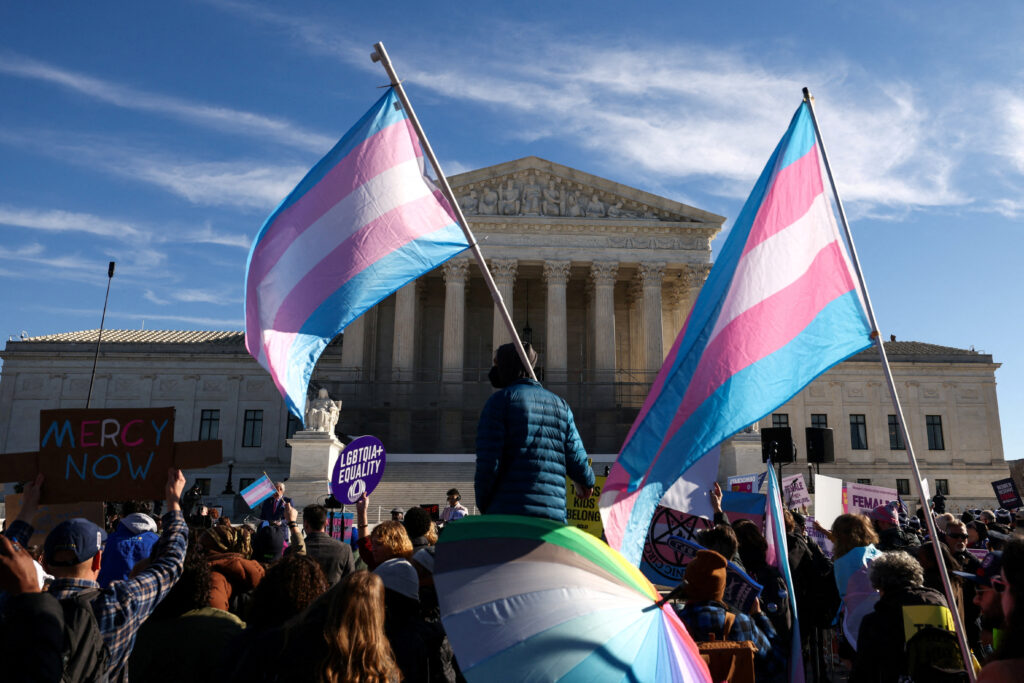
A federal court issued a ruling Tuesday that paves the way for all transgender service members to continue serving in the military despite a Trump administration policy that ordered their removal.
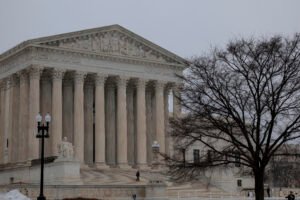
The U.S. District Court for the District of Columbia granted a motion to certify Talbott v. USA as a class action lawsuit several weeks after the U.S. Court of Appeals for the D.C. Circuit said in a June 1 ruling that the Pentagon’s transgender military ban was unlawful.
The June ruling only allowed the plaintiffs in that case to continue serving, meaning all other transgender service members are currently still banned from the military. But if the class action lawsuit goes into effect in two weeks along with with the June ruling, the protections won in Talbott v. USA would extend to all transgender service members currently serving.
“The protection afforded to our plaintiffs should be available to all transgender servicemembers and their families,” said National Center for LGBTQ Rights Legal Director Shannon Minter. “We know that this ban is discriminatory, rooted in animus, and irrationally excludes highly decorated servicemembers who have deployed around the world and given everything to our country.”
President Donald Trump signed an executive order on Jan. 27, 2025, stating that service members with a history of “gender dysphoria” have medical, surgical and mental health constraints “incompatible with the high mental and physical standards necessary for military service.”
Transgender troops previously needed a gender dysphoria diagnosis in order to receive gender affirming care while in the military and, as a result, many transgender service members have the term in their medical record.
Approximately 4,240 transgender individuals are serving in the military have a gender dysphoria diagnosis, both on active duty and in the reserves, according to an Associated Press report.
The Defense Department rolled out a sweeping “voluntary separation” policy last February that attempted to incentivize transgender military service members to separate from the military by offering more money than they’d otherwise receive for involuntary separation.
Service members who Military Times spoke to at the time said the move was anything but voluntary, as they wanted to continue to serve and saw the policy as a way to kick them out.
Transgender service members have either been voluntarily or involuntarily separated or are in the process of being separated while on paid administrative leave.
The National Center for LGBTQ Rights and GLAD Law filed a lawsuit against Trump on Jan. 28, 2025, alleging that the ban was unconstitutional because the policy was based on animus.
The lawsuit eventually shifted so that the plaintiffs were suing the U.S. government.
The United States District Court for the District of Columbia issued a nationwide preliminary injunction on March 18, 2025, blocking the discharge of transgender service members, which the newly enacted Defense Department policy called for.
The U.S. government appealed to the U.S. Court of Appeals for the D.C. Circuit, which ultimately ruled in the plaintiffs’ favor over a year later on June 1, 2026.
The government has 45 days after the June 1 ruling to file a petition for rehearing.
The U.S. Court of Appeals for the D.C. Circuit can either accept or deny that request.
The government can also ask the entire U.S. Court of Appeals for the D.C. Circuit to rehear the case, which would comprise 11 active judges, as opposed to a three-judge panel, like the one that decided the June 1 ruling.
If the government went that route, the ruling of that rehearing would go into effect seven days after the decision.
The Trump administration could also ask the U.S. Supreme Court to issue an emergency stay to stop the preliminary injunction and class action lawsuit from going into effect.
The government hasn’t filed as of Wednesday.