It’s been nearly eight years since Congress reauthorized the farm bill, the massive legislative package that funds programs run by the U.S. Department of Agriculture. What used to be passed roughly every five years, the farm bill touches nearly every aspect of agricultural production in the U.S. It puts billions toward conservation programs, nutrition assistance, rural development, crop insurance, and climate-smart practices.
But persistent disagreements between lawmakers over these and other programs have stymied the process of passing a new farm bill. The federal government has instead resorted to stop-gap measures and one-year extensions of a small handful of programs.
If farmers were hoping to see a new farm bill this year, they may very well be disappointed — as a new schism between the two houses of Congress was made clear this week, when the Senate agricultural committee released a draft of its farm bill that excluded a law known as the Save Our Bacon Act. The measure was included in the House draft farm bill earlier this year with vocal support by Representative G.T. Thompson, who chairs the House agricultural committee.
Save Our Bacon, or SOB, would override state and local laws like California’s Prop 12, which bans the sale of pork, chicken, and veal products that come from farms using the most extreme forms of animal confinement, such as gestation crates for hogs. Factory farming operations where animals have the least amount of space to move around result in a lot of manure, which is typically consolidated and stored in lagoons that can pollute the local air and waterways.
Advocacy groups argue laws like Prop 12 are common sense and popular among voters who want to know where their food comes from. There are currently 14 states with similar laws on the books, according to the American Meat Producers Association, or AMPA, an industry group that opposes SOB.
“It’s just disappointing that we’re even talking about this because the farm bill should be about supporting sustainable farming and healthy food and food security. It should not be a way for large industry groups to overturn the will of voters,” said Molly Armus, who works on animal agricultural policy at Friends of the Earth, an environmental nonprofit.
Armus notes that transitioning away from extreme confinement of livestock can have positive environmental and climate impacts if producers move toward a pasture-raised system. (Prop 12 only establishes minimum space requirements for animals.) A recent analysis from the USDA found that 27 percent of hog farmers, or 1 in 4, are already Prop 12 compliant — suggesting that the transition away from extreme confinement is underway.
“Most hog farmers do not support the Save Our Bacon Act,” said Holly Bice, president of AMPA, which was founded last year in response to an earlier attempt to skirt Prop 12 in a previous draft farm bill. For many hog farmers, Prop 12 has “been an important opportunity for them,” said Bice, because investing in crate-free operations allows producers to sell their products at a premium. “It’s helped them keep their heads above water at a time when consolidation has increasingly driven out farmers,” she said.
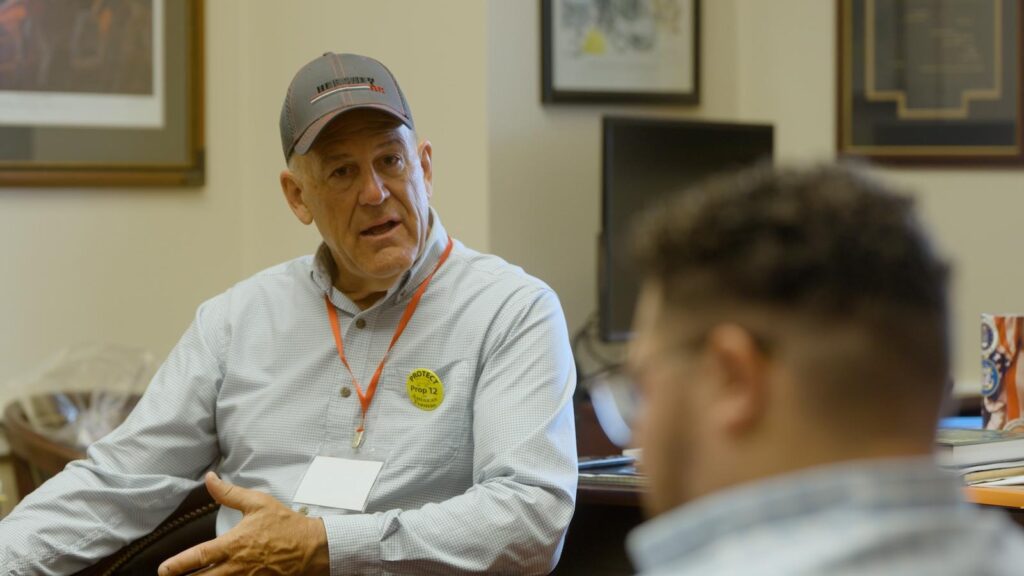
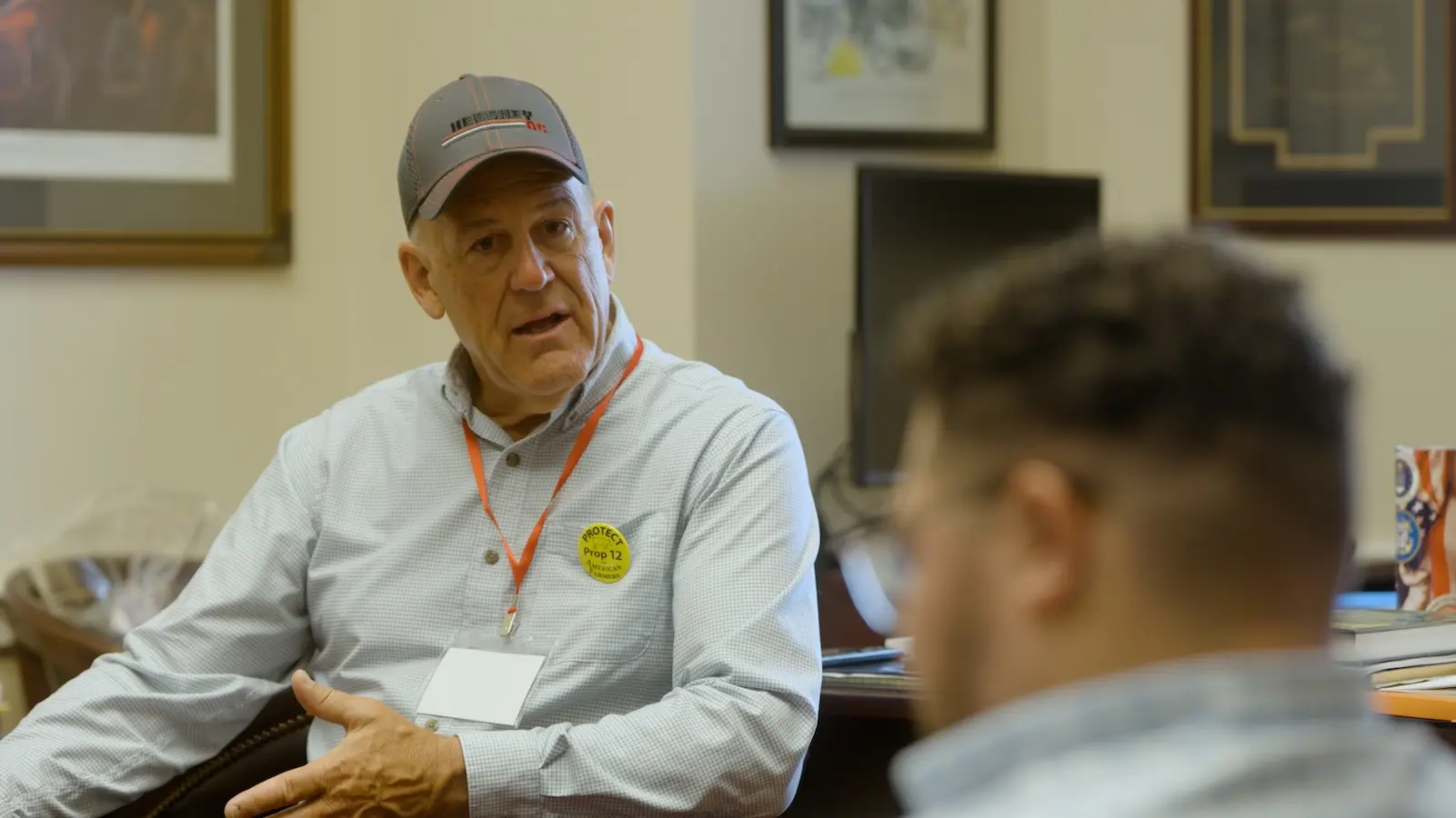
However, Brent Hershey, a hog farmer in Pennsylvania and member of AMPA, said the issue of extreme confinement has sparked a “civil war” among pork producers. “The industry is completely divided on this,” he added. Personally, Hershey said, he was reluctant to change the way his operation did things, but after years of receiving negative feedback, he began to see things differently. Today, Hershey’s farm has been crate-free for three years. Passing SOB, he said, would be “devastating” for producers like him who invested time and money into improving their operations.
AMPA
Experts also argue that passing a farm bill that allows industrial animal agriculture operations to skirt state laws sets a bad precedent for broader environmental and public health goals.
“When you’re doing something that, in a more macro sense, erodes states’ abilities to rollback some of the more harmful aspects of massive commercial agricultural operations, how does that impact any law that could impact agriculture?” said J.W. Glass, senior policy specialist at the Center for Biological Diversity. For example, he added, “How does it impact state laws to restrict the use of pesticides?”
In the Senate, at least for now, it seems like a measure that allows animal agricultural producers to skirt Prop 12 is a nonstarter. “That is why [Boozman] did not put this in his bill. He knew it,” said Sara Amundson, president of the Humane World Action Fund (formerly the Humane Society). “And that’s why it’s critical to keep up the noise on it.”
Still, it’s unclear what happens next — whether the House will fold and exclude SOB from its draft farm bill, or whether, if the two chambers of Congress cannot reconcile their differences on extreme confinement, the gridlock lasts into next year.
This story was originally published by Grist with the headline States want transparent laws around animal agriculture. A fight in Congress could derail that. on Jun 26, 2026.