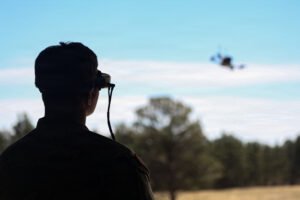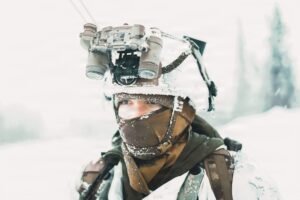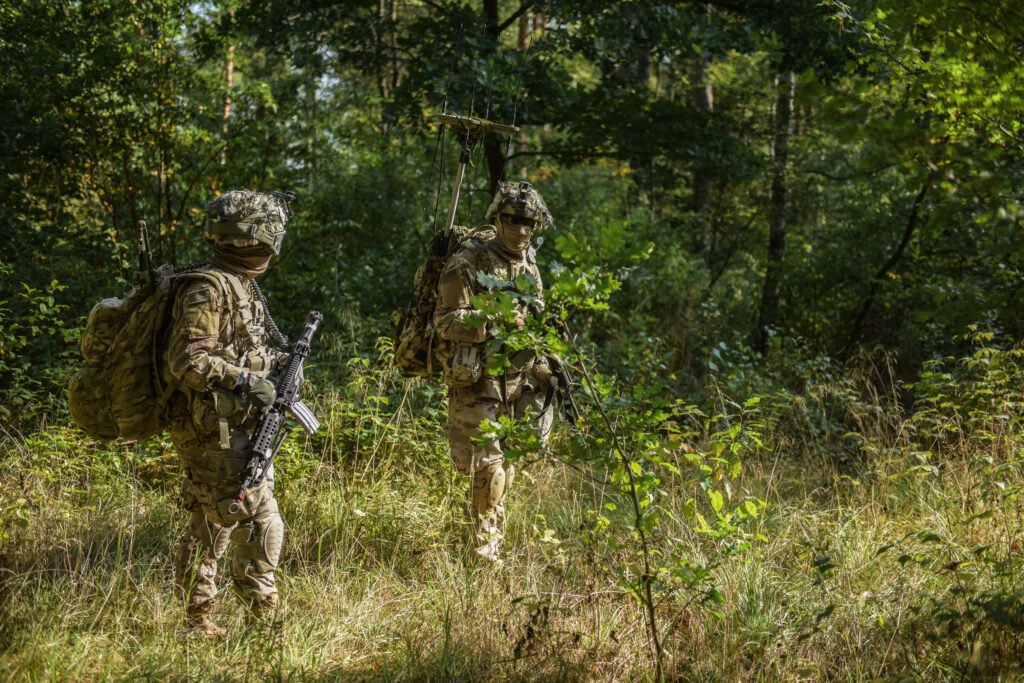
WASHINGTON, D.C. — The Army is in the early stages of developing and testing a wearable or lightweight device that could alert soldiers to the presence of hostile drones without substantially adding to their combat load, officials said in a briefing with reporters on Wednesday.
Speaking at the Association of the United Army’s annual meeting here, U.S. Army Combat Capabilities Development Command (DEVCOM) C5ISR Center Director Beth Perry said this kind of sensing tech had been the subject of recent “innovation sprints” within the center.
“As we categorize the threat in the [counter-unmanned aerial systems] space, in the drone space, and we understand all of the different platforms, they all have different acoustic signatures,” Petty said. “And so being able to do some [work] on the soldier-based, very lightweight sensing technology that will pick up, hey, you know, there’s a drone following you … that’s a very early innovation project.”
Perry said such a sensor might integrate with software to provide identification, which would then allow the soldier or unit to take action.
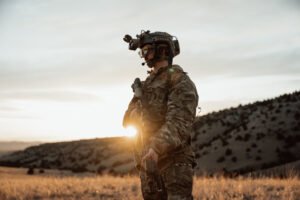
The work comes after a fear soldiers are expressing over developing a level of comfort in a battlespace where they might be unknowingly observed or targeted at any time, said Jami Davis, assistant director for Soldier and Platform Mission Equipment.
“I think one of the overarching things we’ve heard from our user community this year is very basic things,” Davis said. “Their priority is the soldier knowing he’s being observed by a UAS, right? Like it’s very basic things that we can provide to help kind of even give our soldiers situational awareness.”
Being able to provide that awareness without giving the soldier another thing to carry has been a priority,” Davis added.
“Our technology is always pushing for … lighter, smaller, more integrated to reduce the soldier load and improve the capability,” she said. “So definitely, you know there are industry solutions out there. Our objective really is just to try and make those better, smaller, lighter, more integrated, so that a tactical soldier doesn’t have to carry more unique, threat-unique equipment.”
Multiple defense contractors have offered variants of drone-sensing solutions that integrate with other gear, like radios, or stand alone as a wearable device that detects through RF or acoustic detection.
Earlier this year, Stars and Stripes reported that an Army sergeant in Germany had also improvised his own RF-based personal drone-sensing device that could fit in a pocket or a pouch and be assembled in an hour for about $120.
Perry said she couldn’t yet talk about the form factor of the device the C5ISR center started developing or the way forward for the effort.
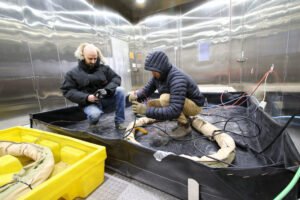
“It’s still things that we’re doing in the lab that we see as a way for us to provide a low [size, weight and power] solution for a known threat, but not something that we’ve tested yet,” she said. “You know, we work on the large technology spectrum, things that are very early to things that are closer to the field, and that one in particular is very early.”