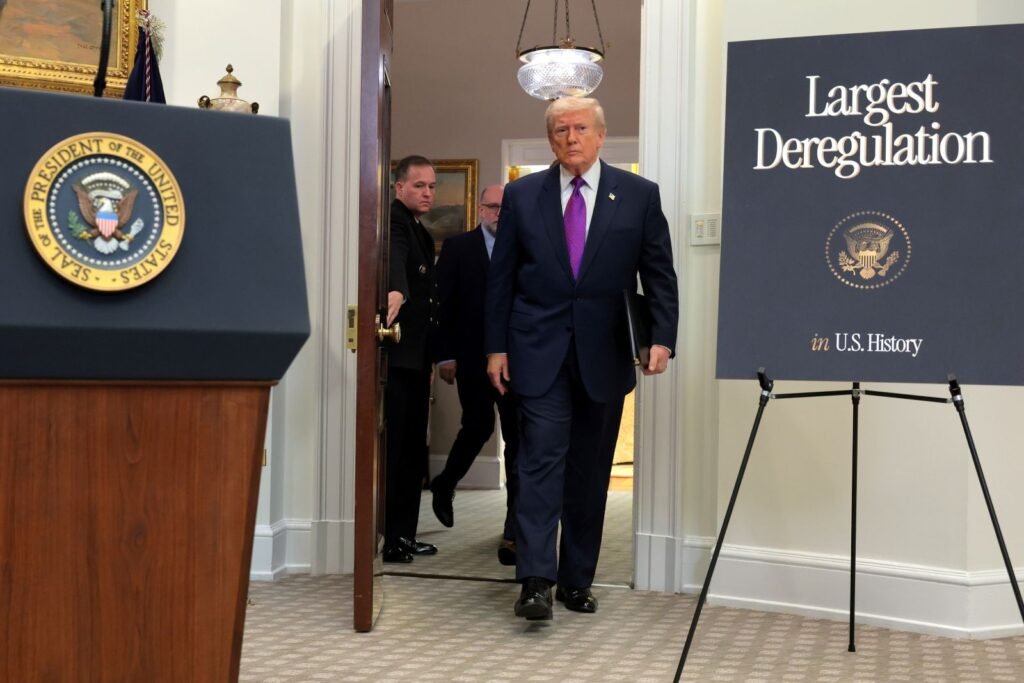
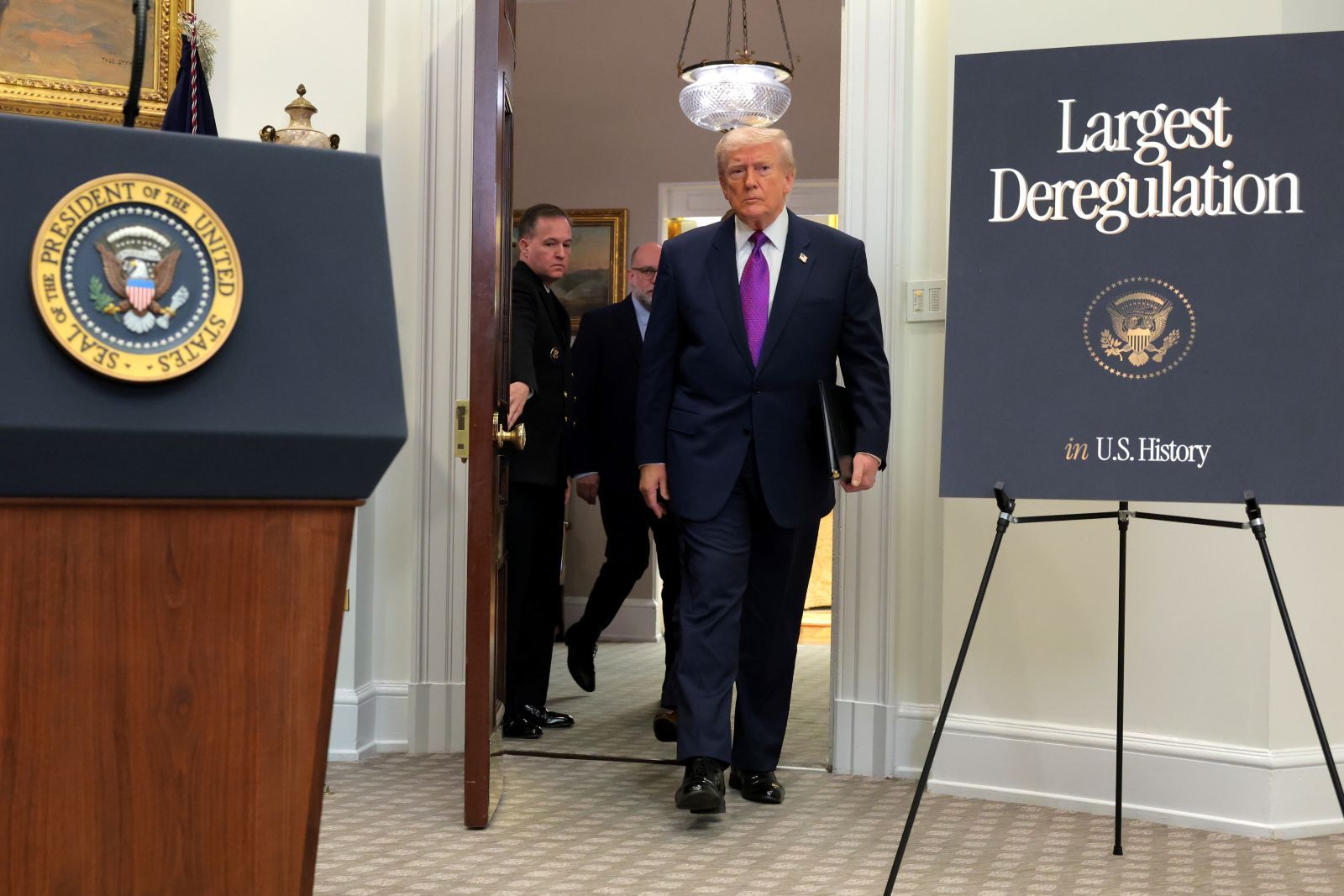
The Trump administration came close to fully dismantling the federal government’s regulation of greenhouse gas emissions from cars Monday, announcing a final plan to ease fuel-efficiency requirements. The move was largely symbolic: Congress had already eliminated the penalties automakers face for violating those standards. Those steps, along with a range of other reductions in federal climate authority, have now left the federal government with virtually no meaningful policy governing carbon pollution from cars, which account for roughly 16 percent of U.S. greenhouse gas emissions.
But one entity still has enough sway, and just enough regulatory authority, to keep pressing car companies toward greater fuel efficiency: California. The state’s vehicle emissions rules are still in effect, effectively setting a baseline for fuel efficiency that automakers cannot fall below without potentially incurring penalties. The Trump administration has been busy attacking California’s ability to make its own emissions rules, but it hasn’t claimed full victory — yet. For now, the Golden State’s wounded but not defeated regulations are the most important government policy on vehicle emissions in the country.
Because of a half-century-old special exemption, California is allowed to go further than the federal government when regulating tailpipe emissions. Southern California was so smoggy in the 1950s that California created its own vehicle emissions standards before Congress established national standards through the Clean Air Act. Acknowledging California’s air pollution struggles, Congress gave it unique authority to keep making its own car emissions rules.
California cannot use its special authority to directly mandate fuel efficiency in vehicles. But because reducing fuel consumption is essentially the only way to reduce a gasoline-powered car’s greenhouse gas emissions, its emissions standards can have much the same effect as federal fuel-efficiency standards, and vice versa.
California’s rules have vast impacts beyond its borders. Other states can choose to adopt its regulations, and 19 have done so (including the District of Columbia). Rather than produce different vehicles for different states, many car companies have been willing to make all their vehicles comply with California’s standards, even when those standards go further than Washington’s. The states using California’s current vehicle emissions standards made up 40 percent of new car sales in the U.S. in 2022.
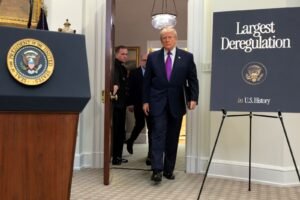
The Trump administration has been working to strip California’s special emissions regulations. Last year, both houses of Congress voted to block California’s effort to phase out gas-powered cars by 2035, after President Donald Trump’s EPA asked lawmakers to do so. That phase-out effort was only possible because of California’s special emissions regulation power. In response, California sued the Trump administration.
“What we’re seeing is a thinly veiled attempt by the president to retaliate against California for choosing progress over regression,” said California Attorney General Rob Bonta after his office filed the suit.
With its ambitious vehicle transition plan undone for now, California aims to continue enforcing its previous set of emissions standards, which would have otherwise expired in 2026. While those standards won’t force car companies to continue reducing their greenhouse gas emissions, they might keep car companies from backtracking on gains they’ve already made. The Trump administration has asked Congress to overturn these standards also, but a federal judge blocked that effort in early September.
Car companies have been mostly silent on how they’ll respond to the regulatory uncertainty, including whether they’ll stay on track to meet California’s rescinded requirements if courts allow the state to put them back in place. Automakers at this point are used to the whiplash of policies changing between administrations.
Anna Moneymaker / Getty Images
In addition to fluctuating regulations, car manufacturers are also facing changes in what customers want. Automakers have said aggressive fuel efficiency standards from the Biden administration — the ones Trump undid this week — ran up against Americans’ preferences. Companies were building more electric vehicles, partly to help them meet the Biden standards, but customers weren’t buying enough of them. (That problem became much worse after the Trump administration rolled back policies promoting their growth.)
But customers might also push car companies toward greater fuel efficiency even when Washington doesn’t require it — especially at a time when gasoline prices have spiked in the wake of Trump’s war on Iran. Hybrid vehicles are gaining popularity, making up a record 16 percent of passenger vehicle sales by the summer of 2026. And some car companies aren’t giving up on their electric vehicle efforts. Zero-emission cars have become more popular abroad, and some executives think they’ll pick up steam in the United States eventually.
“We’re in for the long haul, and we’re maybe a little slower on EVs, for instance,” said General Motors president Mark Reuss at a conference this week. “That’s OK, but the whole world is moving that way, and so we invested in the platforms that are EV platforms.”
But market dynamics alone aren’t expected to be enough to spur the rapid emissions reductions needed to address climate change. California’s remaining regulations provide an important baseline, but the state’s now-blocked rules for phasing out gasoline-powered cars would push automakers much further.
The fate of California’s stricter emissions rules will likely be decided in court, and some analysts say the state has a strong legal case for restoring them. Republicans in Congress used an unusual, potentially unprecedented maneuver to revoke the permission that made the rules possible, and both the Government Accountability Office and the Senate parliamentarian declared at the time that the maneuver was illegal.
“There are multiple levels of shenanigans, depending on your viewpoint, that are being litigated,” said Rebecca Higgins, vice president of Policy at the Eno Center for Transportation, a nonprofit transportation research institution. “That creates tremendous uncertainty.”
A judge could ultimately decide that the congressional and Trump administration actions were unlawful. In any case, California’s phaseout plan might be reinstated if Democrats take the White House in 2028.
But another Republican effort could leave a more lasting mark on California’s authority, Higgins said. In a separate lawsuit, the Trump administration is trying to undo California’s underlying authority to regulate greenhouse gas emissions, arguing it is illegal for the state to regulate fuel efficiency, even if it does so indirectly through emissions regulations. Federal judges have ruled in California’s favor on this point before, Higgins said. The case is still in lower federal courts for now, but if it reaches the Supreme Court, its fate is uncertain. The Supreme Court has never ruled on this subject, and the current bench of conservative justices has frequently sided with the Trump administration.
“That one feels like it could have the potential to sort of reset the authorities going forward,” Higgins said.
This story was originally published by Grist with the headline Under Trump, California’s clean car rules are essential — and vulnerable on Oct 1, 2026.