The Pentagon is launching a religious affairs office to address what Secretary of Defense Pete Hegseth calls a loss of religious community within the military after an era of “political correctness.”
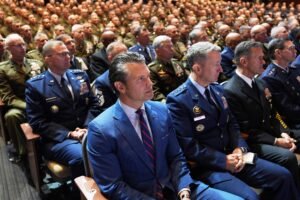
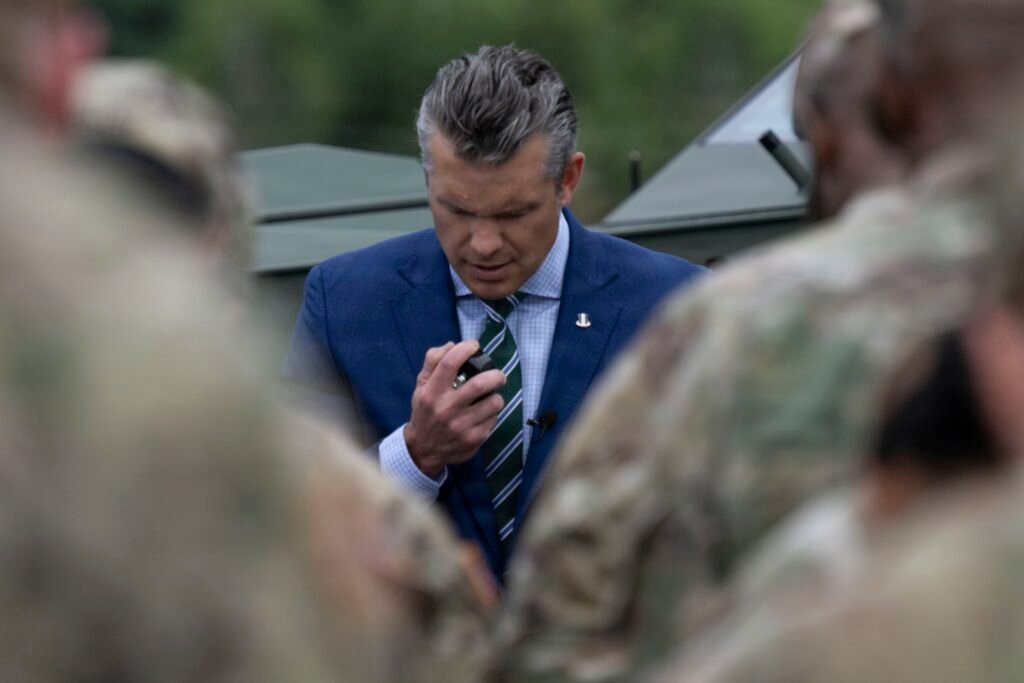
Reporting directly to Hegseth, the Office of Religious Affairs, or ORA, is meant to offer service members “first-class religious support,” according to the defense secretary. Hegseth first announced the office during his State of the Force address on Wednesday at Marine Corps Base Quantico, Virginia, to junior officers and enlisted leaders.
“Our department is, you might say, putting on the full armor of God because while we wage physical war, we all know the real battle is spiritual,” Hegseth said on Wednesday. “God is good. Evil is not. And America’s military must understand the difference.”
Hegseth announced the new office alongside a slew of other initiatives, such as the Autonomous Warfare Command, but he said all would be incomplete without faith, which he described as the “most essential part of our republic.”
Hegseth said that less than 5% of the joint force identifies as nonreligious, and the other 95% recognizes an “Almighty God.” The Pentagon has not released an official report of the religious makeup of the military since 2019, when the composition of active-duty personnel was 70% Christian, 2% atheist or agnostic and 24% reported as unclassified or unknown.
He said the force previously did not prioritize faith and instead emphasized “political correctness and secular humanism” and claimed that “secular careerists” and lawyers with red tape were dictating the spiritual life of service members, instead of military chaplains.
“The people who actually practice faith and religion, our chaplains, were buried echelons deep, waiting for permission,” he said. “We asked chaplains to serve and sacrifice, and then sidelined them with paperwork and process. And that ends now.”
Service chaplains will continue to serve as the department’s primary providers of religious support, with the office being their advocate, a Pentagon release says.
ORA’s First Steps
Effective immediately, the office will report directly to the defense secretary, according to a Sept. 30 memorandum. Its director, who has yet to be named, will serve as the principal advisor to the secretary and deputy secretary for religious affairs across the department.
The office’s core responsibilities, as outlined by the memo, will be to ensure that the Pentagon and military departments obtain sufficient funding and resources for religious affairs, such as chaplain-led programs and faith-based initiatives, as well as sponsoring and overseeing research and analytical tools to support and assess spiritual fitness and readiness across the military.
The office will also align and issue policies on religious affairs for the secretary; represent him on all religious affairs matters in engagements with Congress, religious endorsing organizations, and external governmental departments; and realign the Armed Forces Chaplains Board and its executive director under the office’s authority for chaplain advisement.
“This is not going to be a paper-pushing shop,” Hegseth said. “It’s going to have real teeth. It’ll protect budgets, demand infrastructure and strengthen religious support. The experts, our chaplains, will finally have an advocate at the highest levels.”
Within 60 days of the memo’s date, the office is expected to submit an initial baseline budget to Hegseth for fiscal year 2027 funding, the memo says, including permanent manning requirements. In the next 90 days, the director of Administration and Management will work with the office’s director to incorporate it into the Pentagon’s organizational framework and identify the initial allocation of senior executive service, civilian and military billets to stand up the office.
Within 90 days of the memo, the military departments’ secretaries are also expected to submit a baseline report of all unfunded and underfunded religious affairs requirements to the office’s director.
Pentagon’s Religious Overhaul
The announcement comes as the Pentagon has largely reduced the number of officially recognized faith affiliations from over 200 to 31, sparking criticism that most are Christian denominations and pressing the department to update the classifications by removing the subheading that grouped the Christian denominations.
In what the secretary described as a “top-down cultural shift,” he directed an overhaul of the Chaplain Corps and later required military chaplains to stop wearing rank insignia and to instead wear symbols of their faith.
To further align with the Pentagon’s policies, military services recently began requiring service members to update their Religious Affiliation Codes in their personnel records. The Department of the Air Force said the requirement exists only to improve chaplains’ knowledge of the force’s religious makeup.
In the past, Hegseth has faced backlash from advocacy groups for hosting monthly Pentagon Christian prayer services and his religious rhetoric in public appearances, raising concerns that he is associating the Christian faith with politics and the military.
“Our national motto is, after all, ‘In God We Trust,’” Hegseth said Wednesday. “Today, we reaffirm that trust. We’re placing spiritual health at the same level as physical health.”