Most Americans loathe data centers. Recent polling found that Democrats and Republicans alike would oppose having one in their neighborhood, and hundreds of communities across the country have fought against them, citing fears about noise, water contamination, and energy bills. After years spent courting tech companies, many politicians are now vowing to protect their constituents from their development. In just the past month, policymakers in New York, Texas, Pennsylvania, and Utah have proposed limits on the facilities. For the AI startups and others racing to secure more computing power, the question seems to be not which projects will face opposition, but which won’t.
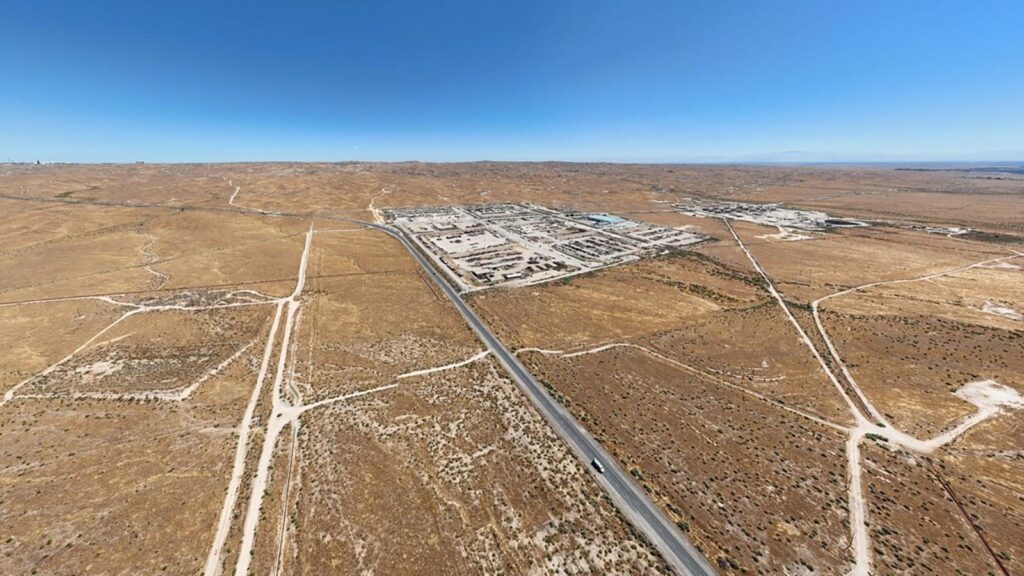
A project unveiled this week in California’s Central Valley suggests a potential answer. California Resources Corporation, the state’s largest oil company, wants to build a 600,000-square-foot data center in the Elk Hills oil field about two hours north of Los Angeles. It hopes to avoid the nationwide backlash from communities that have watched the outfits developing these sprawling operations swallow up farmland or install diesel generators near residential neighborhoods.
It’s part of a new trend in the AI boom. More developers are building data centers in or near active oil and gas fields, which tend to sit far from densely populated areas and boast ready access to power. Projects are being planned in Texas, where the prolific Permian Basin oil patch has an abundance of natural gas, which can be used to generate electricity, and in Pennsylvania, which is already the country’s leading producer of natural gas from shale. These projects are seen as a way of juicing revenues for legacy producers, even as the California project is unfolding in a state that has been trying to phase out fossil fuels.
California Resources Corporation executives have framed the deal, announced Monday, as a “responsible development” approach to the AI buildout.
“By repurposing an existing industrial site, creating jobs and tax revenue in Kern County, utilizing dedicated on-site power, and employing one of the industry’s most water-efficient cooling systems, the project is designed to support California’s growing digital infrastructure needs while minimizing impacts on local communities,” said Chris Gould, the company’s chief sustainability officer and the head of its carbon capture venture, in a statement to Grist.
The Elk Hills location has an obvious strategic benefit for CRC and Beacon, the developer collaborating on the project. The proposed Golden Valley Technology Hub will sit on 100 acres within an oil field that stretches across tens of thousands of acres, and will sit more than a mile from the nearest homes. The project will also face strict environmental review, which could take about a year. CRC has already held a number of community meetings with residents of nearby Taft and Buttonwillow and has promised to provide financial support for community groups and public infrastructure like roads.
Building in a century-old oil zone could sidestep the common furor over the impacts of data centers, which require massive amounts of electricity and water and can emit a lot of noise, said Gabriel Collins, an expert on energy and water issues who serves as a research fellow at Rice University’s Center for Energy Studies.
“Where you stand on these things depends on where you sit,” said Collins, who has studied the potential of Texas’ enormous Permian Basin to support data centers. “If you’re already out in the middle of an area that’s seen heavy industrial activity for a long time, there’s already a precedent, and folks there will probably find it easier to deal with.” In its permit application for the project, CRC included around 150 signatures from nearby residents who support the data center. At least five names on the list are affiliated with the local oil industry.
Ready access to electricity is the most important asset for these operations, something CRC’s oil field already has. It runs on a 550-megawatt natural gas power plant that has long been used to generate steam for drilling operations. Elk Hills no longer produces as much crude as it once did, so the power plant is running well below capacity. The proposed data center will be able to run almost exclusively on that excess energy. (As for water, the company says the data center will use a closed-loop cooling system that will consume enough to fill an Olympic swimming pool over the course of 10 years. It also plans to erect noise barriers around the site.)
While the data center will rely on fossil fuels when many others draw power from the wind or sun, CRC is expanding its business to focus on carbon capture. Just this year it launched a first-of-its-kind system that captures CO2 emitted by another oilfield gas plant and stores it in depleted wells, and plans to build such a system for the plant that will supply the data center. Although the existing system absorbs about 7 percent of the plant’s total emissions, CRC has the storage space to capture several hundred times as much carbon underground.
For oil producers in the Permian, data centers represent a market for natural gas that might otherwise be burned or vented to the atmosphere as a byproduct of drilling. Chevron signed a deal to supply methane to a Microsoft data center in west Texas, and oil service companies Schlumberger and Halliburton assist data center developers with energy and construction. Collins said the model makes even more sense for a declining field like Elk Hills, where production has fallen and CRC no longer needs as much electricity.
“In the Permian Basin, it’s a different dynamic, because the oil field and the data centers are gonna compete with each other for power,” said Collins. “If you have a declining oil field and you had that big captive asset there, then plugging it in to run digital infrastructure instead makes a lot of sense.”
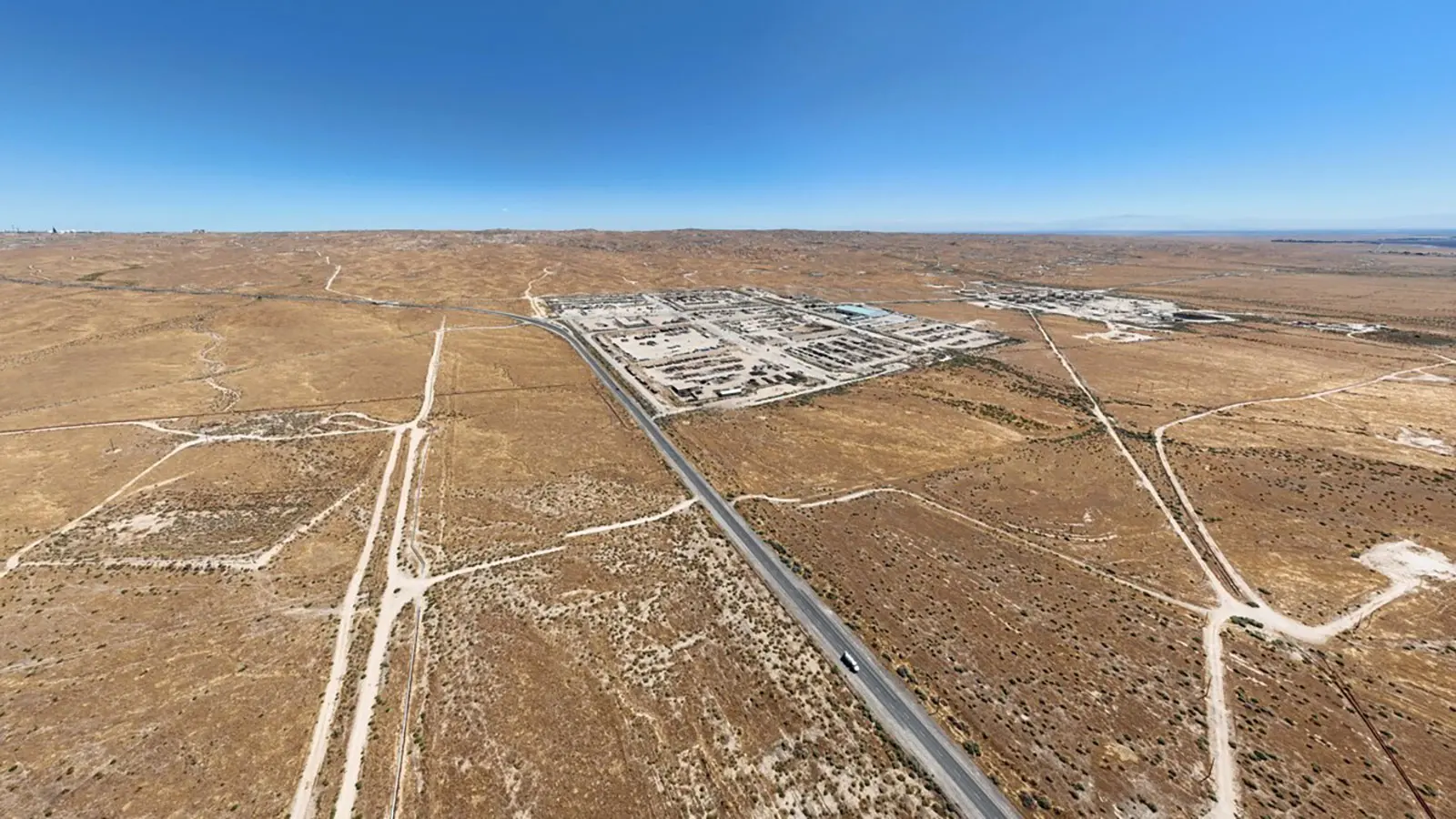
California Resources Corporation and Beacon
California has seen gasoline demand fall about 15 percent over the last decade, and crude production has fallen by more than half during that time, due in part to strict regulations rolled out by Governor Gavin Newsom. State lawmakers struck a deal last year to stabilize in-state production as part of an effort to avoid gasoline price spikes, but few experts expect production to reach previous levels.
As a result, CRC is looking beyond oil for its future. It has invested billions in carbon capture projects across the state, and executives have said that they expect revenue from such efforts to become essential as oil demand declines in California. The company acquired two of its largest competitors, Aera and Berry, over the past two years, and now accounts for nearly two-thirds of the state’s production. A senior executive last year likened the company to Equinor, the Norwegian state oil company that produces both oil and wind power.
The data center could advance this transition. CRC says the project would create at least 1,500 union construction jobs, as many as 250 permanent jobs, and ample tax revenues. The number of oil and gas jobs in Kern County has declined from around 12,000 to around 6,000 since 2015, and oil assets account for around 10 percent of its property tax income, compared to 30 percent a decade ago. CRC’s previous carbon capture project earned a stamp of approval from Newsom, long an opponent of oil, who called it “proof that innovation and ambition are the California way.” (His office said decisions about the data center should be left to Kern County.)
Many climate groups in California have opposed CRC’s carbon capture push. The environmental law firm Earthjustice has said the carbon storage project would “open the door to a range of new polluting facilities that could be built from scratch.” It also said carbon capture could increase emissions by prolonging the life of the Elk Hills oil field or leading to more gas power production. Earthjustice, the Center for Biological Diversity, and a number of other groups sued the county over its approval of the carbon capture project. Neither organization responded to a request for comment on the data center.
But CRC seems to see tech and oil as natural partners. It signed an agreement last year to capture carbon from a nearby gas power plant owned by a Canadian company. That power plant, which can produce twice as much electricity as the one at Elk Hills, could in theory support another data center.
This story was originally published by Grist with the headline A solution to data center backlash? Put them in oil fields. on Jun 18, 2026.