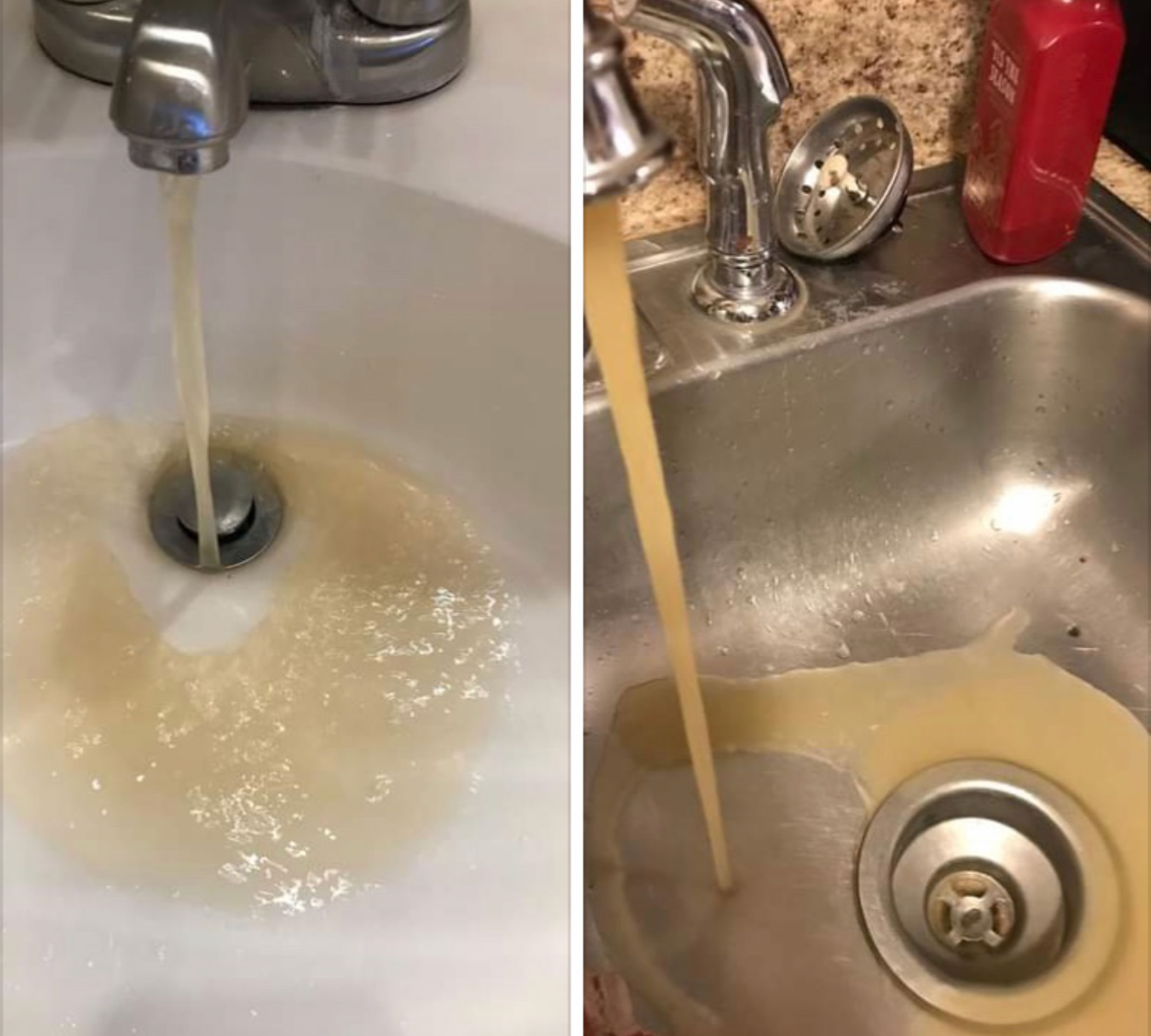
When Trish Leigey’s taps started running brown and foul in late 2019, she had an uneasy suspicion about what was tainting the once-clear mountain water.
Tests later confirmed her hunch. Bovine DNA had infiltrated drinking water supplies in rural Loganton, Pennsylvania — contamination her lawyers linked to Nicholas Meat and its practice of spreading liquefied animal waste on nearby fields.
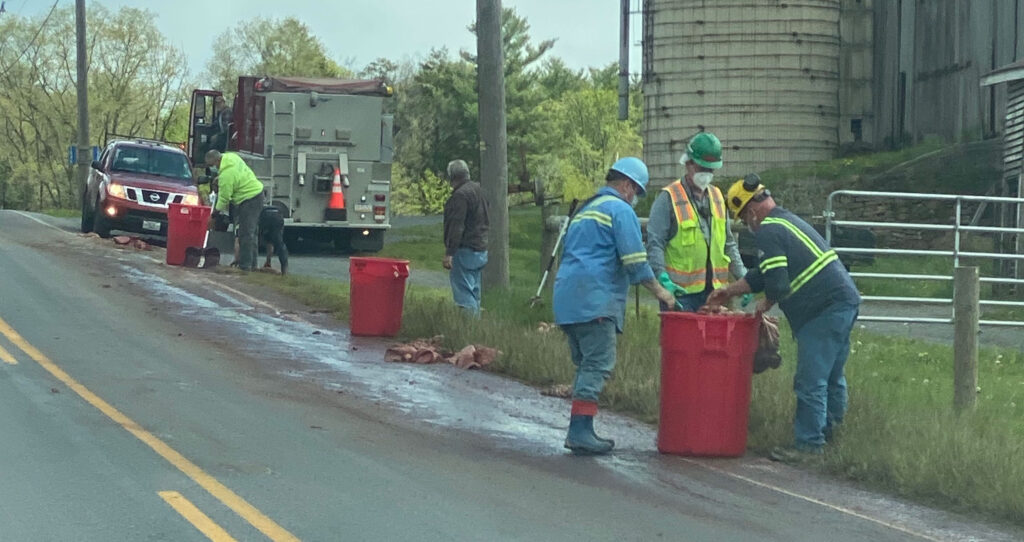
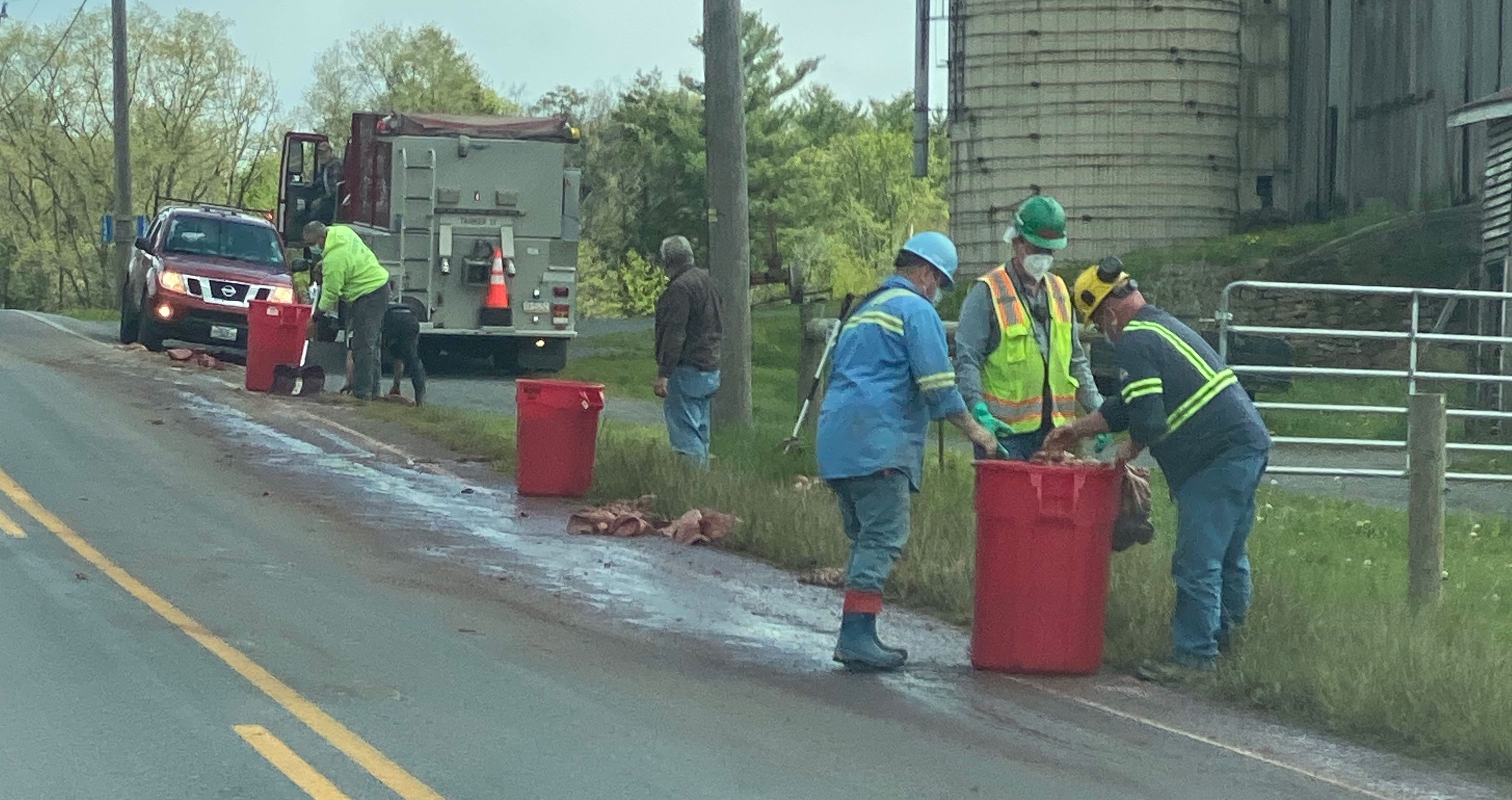
That may not have surprised many of Leigey’s neighbors. Most of them were well aware of the desiccated animal parts occasionally strewn across local roads. Not many gave a second thought to trucks spraying a cocktail of blood, urine, water, and other slaughterhouse refuse over local farmland. But few wanted to accuse the company of wrongdoing, given that it employs over 425 people — about as many people in all of Loganton — and by some estimates processes 10 percent of the state’s beef.
Leigey, a single mother who works three jobs, decided she had to speak up, for herself, her family, and her neighbors. “I just want a simple life,” she said. “I don’t feel like I should have to be emotionally, mentally, financially, and physically exhausted because some millionaire wants to dump blood on fields because it’s a cheap way to dispose of it. It’s not right.”
A jury agreed and in December held the company liable for causing a nuisance and trespassing on neighboring properties by fouling their air and water. Leigey and three others who joined her in suing Nicholas Meat were awarded $145,000, a surprising victory in a state where lenient right-to-farm laws make such cases difficult to win.
Still, the verdict is not expected to change how operations like Nicholas Meat do business. There’s no compelling reason for them to.
Nicholas Meat is much smaller than giants like Tyson Foods, but it’s a big player in central Pennsylvania. What started in 1987 as a family business handling a couple dozen cattle each day bloomed over the decades into one of the county’s largest private employers. It slaughters about 1,000 cattle each day, according to the lawsuit, and has been the biggest business in a town so small it doesn’t have a traffic light. That makes the case against Nicholas Meat more than a neighborhood dispute. It illustrates how the economic pressures of industrial meat production can push environmental risks onto surrounding communities.
Across the state, waste from slaughterhouses, farms, and the like is routinely spread on fields as fertilizer. Spreading these “food processing residuals,” as the mixture is known, is legal, lightly regulated, and cheaper than transporting and treating the waste elsewhere. At least 900 farms and food-processing operations across the state participate in it. Many farms are eager to receive the waste as a more affordable way of fertilizing fields. “There is a place for it, especially as a replacement for synthetic fertilizers,” said Michael Kovach, president of the Pennsylvania Farmers Union.
The problem is scale. A small butcher, like the one Kovach works with, might kill and package a few dozen animals a day. Slaughterhouses handling hundreds or thousands generate waste at an entirely different level. The lawsuit estimated that Nicholas Meat produces at least 200,000 gallons a day, with the capacity to store 1 million gallons on-site and another 4.3 million elsewhere. Aside from mixing and aerating the slop, there is no treatment before disposal — something the state Department of Environmental Protection, or DEP, said is typical.
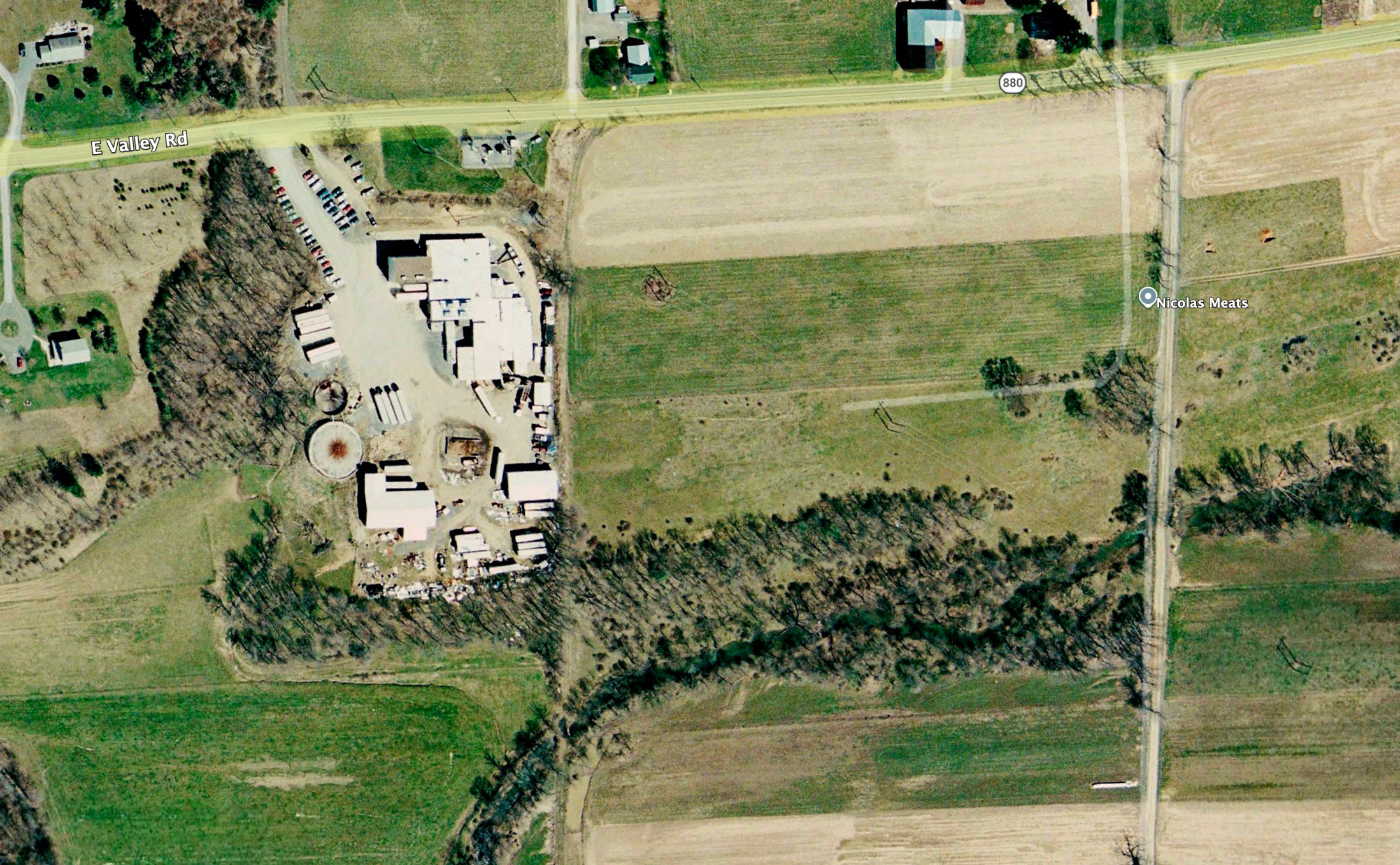
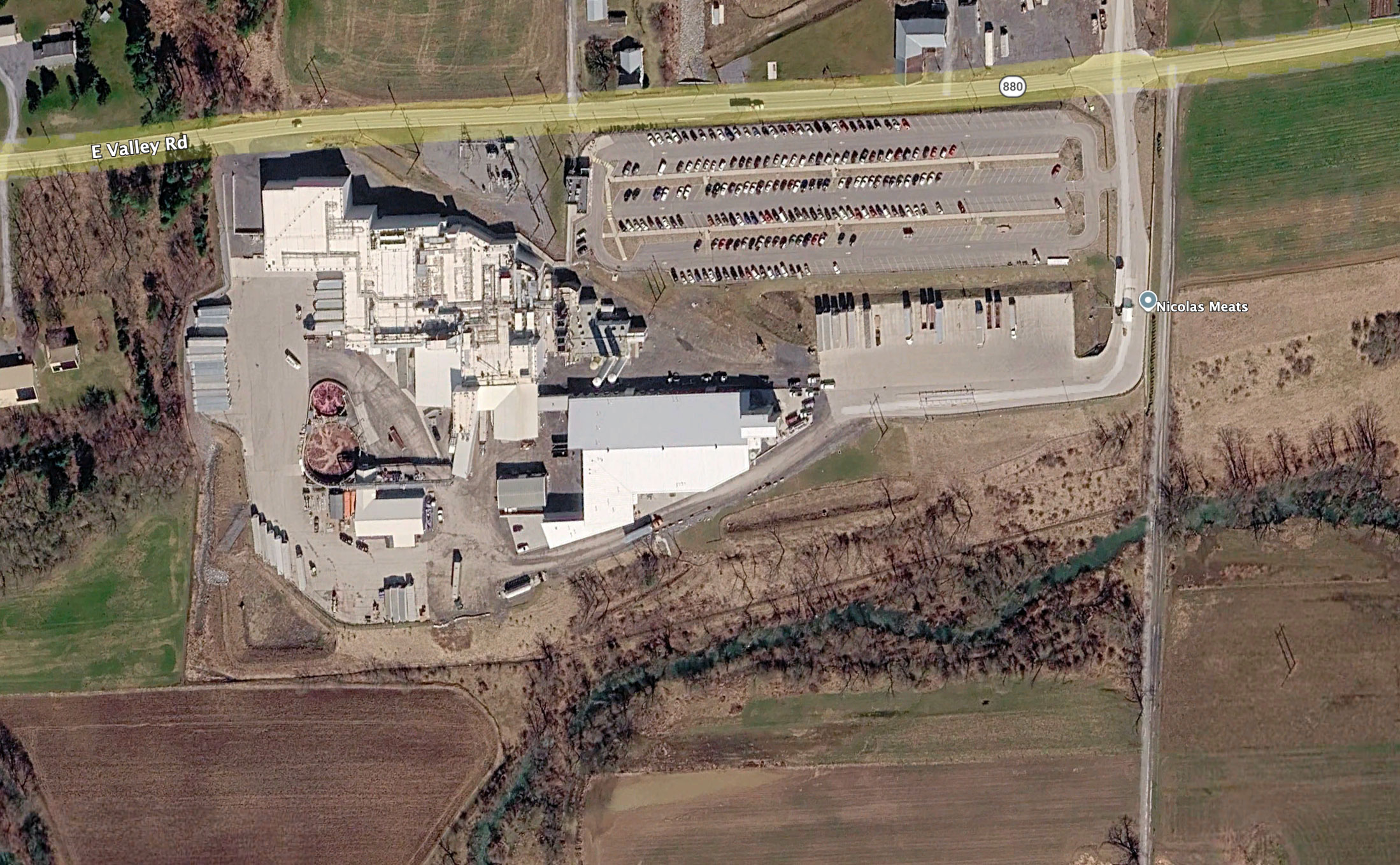
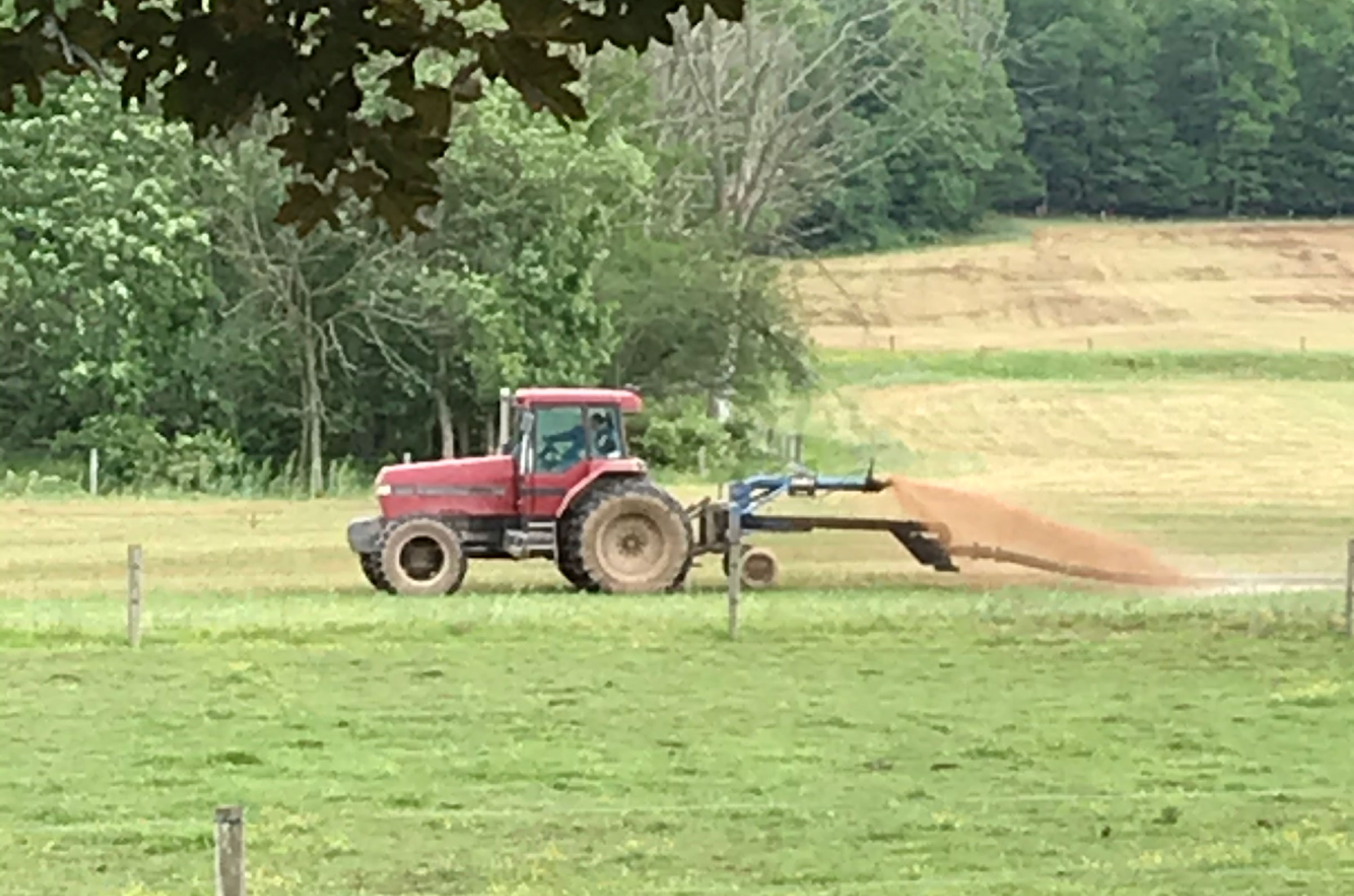
Nicholas Meat, which supplies supermarket chains like Giant and fast-food restaurants like Burger King, spreads and injects its waste on fields that Eugene Nicholas and his son, Doug, own or lease in Clinton County and across the county line in places like Antes Fort. Since the state considers it fertilizer, there is little oversight on how food processing residuals are applied.
“There’s nowhere that there’s a law or a regulation involved with the type of farming that we do,” Eugene Nicholas said during the trial. His son, Doug, now largely oversees the Loganton slaughterhouse. The Nicholases and their attorneys did not respond to multiple requests for comment.
Pennsylvania does not require a permit to spread food processing residuals, which includes everything from potato skins and dairy waste to slaughterhouse remains. The practice is governed by guidelines published in 1994. They do little more than require farmers to outline details like how much could be used for various crops, and warn people not to dump it near waterways or drinking water sources.
Regulators investigate complaints of unbearable odors or polluted runoff, but DEP records dating to 2013 show people near the slaughterhouse would often wait days for a response. “There is really no oversight by anyone except residents,” said Angela Harding, a Clinton County commissioner who represents the area. “We don’t necessarily know what the long-term ramifications of this process will be.”
The lawsuit states that Nicholas Meat began spraying its waste on fields after it reopened in 2010 after a fire. It estimated that it sprays 10 million to 13 million gallons of waste over “hundreds” of acres annually. Reports from a Clinton County Conservation District employee presented during the trial revealed that the company was “way over applying blood” to farmland and the practice was “continuous for 8-10 hours a day.” One farmer quoted in a report said he couldn’t drive a tractor on his fields because they were saturated with waste. Evidence presented during the trial showed the company sprayed on barren, wet, and even snowy fields, creating the risk of runoff that could pollute other locations.
Local geography and geology add to that danger, particularly for those who depend upon wells. Springs and sinkholes are common in central Pennsylvania, and the cracks and channels in the rocky soil make it easier for contaminants to flow into aquifers and wells, said Brandon Fleming, a groundwater specialist with the U.S. Geological Survey Pennsylvania Water Science Center. He was not involved in the trial.
A 2017 U.S. Geological Survey assessment of Clinton County groundwater, conducted to establish baseline conditions ahead of potential fracking, found that more than half of 54 private wells, including Leigey’s, contained fecal bacteria, including E. coli, which appeared in about 25 percent of them. The study did not determine the source of the contamination. But evidence and testimony presented at the trial revealed that Nicholas Meat knew sinkholes dotted the fields where it sprayed and injected waste. That bloody mixture would have flowed into them and could contaminate groundwater, a groundwater expert testified.
Bovine DNA from blood or tissue, along with human fecal markers, also were detected in water samples taken from three homes near disposal sites in Sugar Valley as part of the legal case against Nicholas. Such pollutants can cause gastrointestinal illnesses resembling food poisoning, including diarrhea and severe abdominal cramps.

Meat processing waste can expose people to viruses, bacteria, parasites, and chemicals associated with health risks ranging from gastrointestinal illness to methemoglobinemia (sometimes called blue baby syndrome) and cancer. The threat can be compounded by cleaning agents and antimicrobial drugs often found in such refuse, said Christopher Heaney, an associate professor at the Johns Hopkins Bloomberg School of Public Health, who was not involved in the trial.
Even exposure to airborne particles can cause or exacerbate respiratory problems like asthma, while persistent noxious odors — which Leanna Rockey, a retired nurse who sued the slaughterhouse alongside Leigey, described as “rotting flesh and blood” — can also lead to high blood pressure, stress, and other psychological impacts.
For those living near one of these sites, those impacts are part of daily life.
Leigey said her youngest daughter, Alaina, who is now 15, suffered debilitating headaches from the stench, something her neighbors described as often inescapable. It could get so bad that they’d seal themselves indoors despite the summer heat. Many neighbors stopped hanging their clothes out to dry years ago. For Rockey, it has meant investing in a water cooler and regularly hauling clothes to the laundromat so they aren’t stained by fouled water.
“We still don’t drink our water,” Rockey said. “I never dreamt in a million years my little piece of heaven would be turned into a dumping ground.”
The two-week trial lasted longer than most cases heard in Clinton County, which has just two judges. Craig P. Miller, who presided over the case, joked about Nicholas’ “team of 950 lawyers” from the high-powered firm of Fox Rothschild descending on the rural area. Leigey skipped work and her daughter missed school, and a handful of neighbors attended the trial to provide moral support. Much of the testimony focused on whether Nicholas Meat had a right to apply the waste. Jurors deliberated for several hours before returning a verdict that Nicholas’ attorneys appealed on May 5.
Even so, the victory may do little to change the underlying system. The $145,000 that jurors awarded will help cover what Leigey and her neighbors spent over the years on bottled water, laundromat visits, and new wells. But the jury did not award punitive damages, and nothing about the verdict requires the slaughterhouse to change how it operates despite the history of environmental violations revealed during the trial.
“There’s no disincentive for him to do this,” said Chris Nidel, Leigey’s lawyer. Based on the volume of waste produced, he estimated the company saves $4,500 an hour spreading it locally rather than hauling it to a wastewater facility. “They can make that money up in less than a week.”
But unless state regulators pursue an investigation or adopt new rules, accountability remains elusive. Cases like Leigey’s can be difficult to prove if defendants can create enough doubt by pointing to other possible sources of contamination — another farm, a leaky septic tank, or past agricultural use. These cases are usually “a catch-me-if-you-can situation,” said Dani Replogle, an attorney with Food & Water Watch who was not involved in the lawsuit.
The same pressures play out nationwide in a $161 billion beef industry built on processing vast numbers of animals at low cost to meet high demand.
“The more animals you have in one location, the worse the environmental problems are going to be,” Replogle said. Stricter regulation is the only way to negate that, she said. “That is just not happening. There’s a really powerful lobby standing in the way of that.”
That pressure is reinforced locally. Nicholas Meat employs a significant share of the region’s population. Neighbors may be employees, relatives, or landowners connected to the operation, leaving communities tied to the facility responsible for the pollution. That leaves few people willing to complain.
Kovach, the president of the farmers’ union, believes the case reflects a broader shift in agriculture: Livestock production and processing have become concentrated in the hands of fewer, larger operators. “What we need is a lot fewer plants that can handle 600 to 1,000 [cattle] a day and more that can handle 100 a day,” he said.
Regardless of whether the industry makes that shift, state Representative Paul Friel said the rules need to change. He has introduced legislation to tighten oversight and hold polluters more accountable because some “bad actors” are turning “farm fields into unregulated landfills.”
“There has to be a distinction between normal farming practice and industrial waste disposal,” he said. “There’s not a path forward to manage this without legislation.”
In the months since Leigey won her civil suit, the air around her house has been crisp and fresh. The pungent smell of rotting flesh has waned, but that’s largely because Nicholas Meat is spreading its waste on other fields across the Sugar Valley of central Pennsylvania.
She spent around $10,000 having a deeper well dug in 2021, and although her water now runs clear, she worries how long it’ll stay that way. Her lawyer hopes the lawsuit might inspire others to take a stand and force the industry to change, but Leigey and her neighbors wonder whose well might be the next to run rank.
“Innocent people should not have to suffer for the greed of other people,” she said. “I’m still going to keep an eye on it. Sometimes bad habits are hard to break.”
This story was originally published by Grist with the headline Blood in the well: One town’s fight against the slaughterhouse polluting it on Jun 4, 2026.