U.S. special operations leaders expressed frustration Tuesday about manufacturers’ proprietary agreements that block them from making quick upgrades to military equipment.
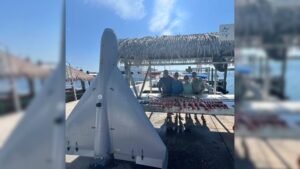
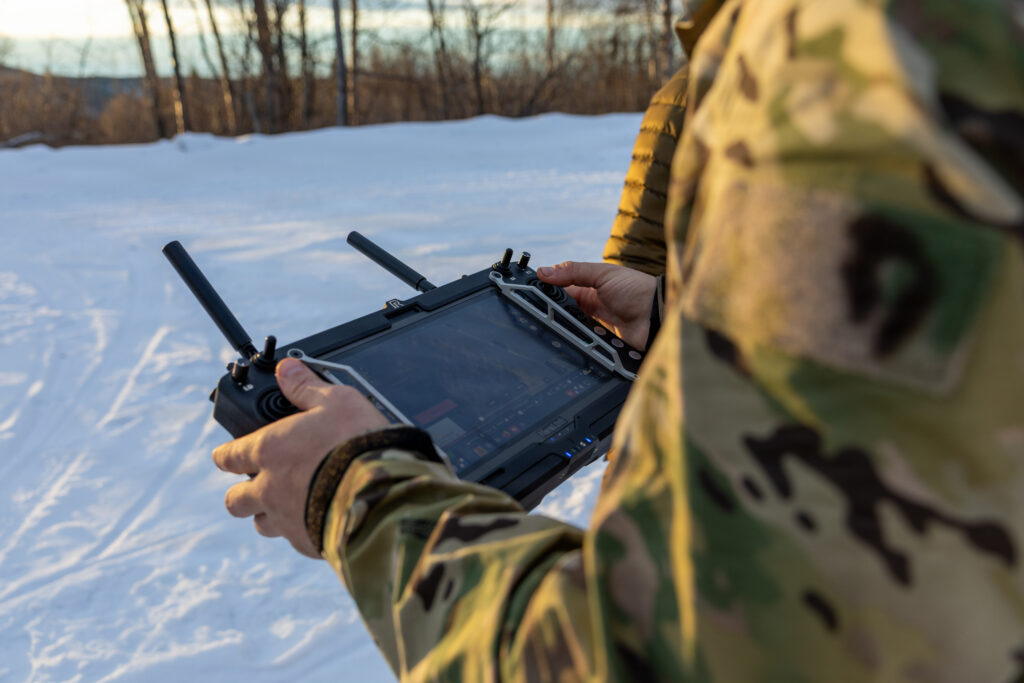
The problem is especially acute for unmanned systems, they said, as technology is evolving far faster than the ability of U.S. Special Operations Command to modify its drones.
“The biggest challenge that that we face, at least within the majority of our formations, is the inability of the operator at the edge to have the authority to tinker,” Lt. Gen. Lawrence Ferguson, chief of U.S. Army Special Operations Command, told the Senate Subcommittee on Emerging Threats and Capabilities on Tuesday.
“Specifically, I’m thinking of unmanned systems, mainly unmanned aerial systems. We are bound right now to the actual vendor of that system that has the proprietary capability. And so what we are looking for is an ability for our people at the edge to have the right to repair.”
Ukraine’s battlefield integration surpasses US military’s, Army secretary says
Ferguson was joined by the heads of the Air Force, Navy and Marine Corps special operations commands, who told the committee of similar issues.
To add a small, long-range cruise missile to an aerial platform, “I want to be able to iterate quickly on the software,” Lt. Gen. Michael Conley, chief of Air Force Special Operations Command, told the subcommittee.
“Often working with the large vendors, there’s proprietary information to get into the mission computers we hit. We hit walls that small vendors that are trying to move fast and give us those capabilities, sometimes get outmuscled by the bigger vendors and they can’t break through.”
Despite prodding by Sen. Ashley Moody, R-Fla., the special operations commanders did not name any of those big manufacturers.
As with civilians resentful over an inability to fix everything from cell phones to farm tractors without having to go through the manufacturer, right to repair has become a controversial issue for the U.S. military. Nonetheless, right-to-repair provisions were stripped from the fiscal 2026 National Defense Authorization Act.
This may be particularly galling to the U.S. special operations community, which often uses specialized and cutting-edge equipment — and which can be the first to test that equipment in combat.
The proprietary agreements make it difficult to keep up with adversaries, the leaders said.
For example, drug cartels, or militant groups like Al-Shabaab in Somalia, can easily acquire and modify small drones, said Maj. Gen. Peter Huntley, chief of Marine Forces Special Operations Command.
“I can buy them right now,” Huntley testified. “I can put them in the hands of our operators. But the ability to kind of adapt them, and make them a real military capability at some form of scale, is very challenging right now.”
US-European relations create complications
The subcommittee also heard about the strain that that the war on Iran and other operations have placed upon the SOCOM community.
“AFSOC executed the two largest presidentially directed deployments in our 36-year history, while also maintaining a persistent operational tempo across five other geographic commands,” Conley said.
Fractures in the relationship between the U.S. and Europe over the Iran war — and the refusal of nations such as Spain to allow American forces to use host-country bases — has also complicated SOCOM’s work.
“I think maybe we’ve taken that for granted to some degree over the years, that the bases are always going to be open for our use,” Conley said in response to questions from Sen. Elissa Slotkin, D-Mich.
“We’ve been able to adapt and we’ve been able to get the missions complete. But not having the assured access that we’re used to with mainly European countries as we transit transatlantic towards CENTCOM, has been something we’ve had to work hard to make happen.”
“The things that affect Mike’s [Conley’s] formations as far as access basing and overflight, those do affect us because we’re usually along for the ride,” echoed Ferguson.
However, Ferguson added that “generational” ties between U.S. special operations forces and American allies have helped ensure a smooth relationship.
“I’ve not seen any impact as far as allies being hesitant to work with us,” Ferguson added.