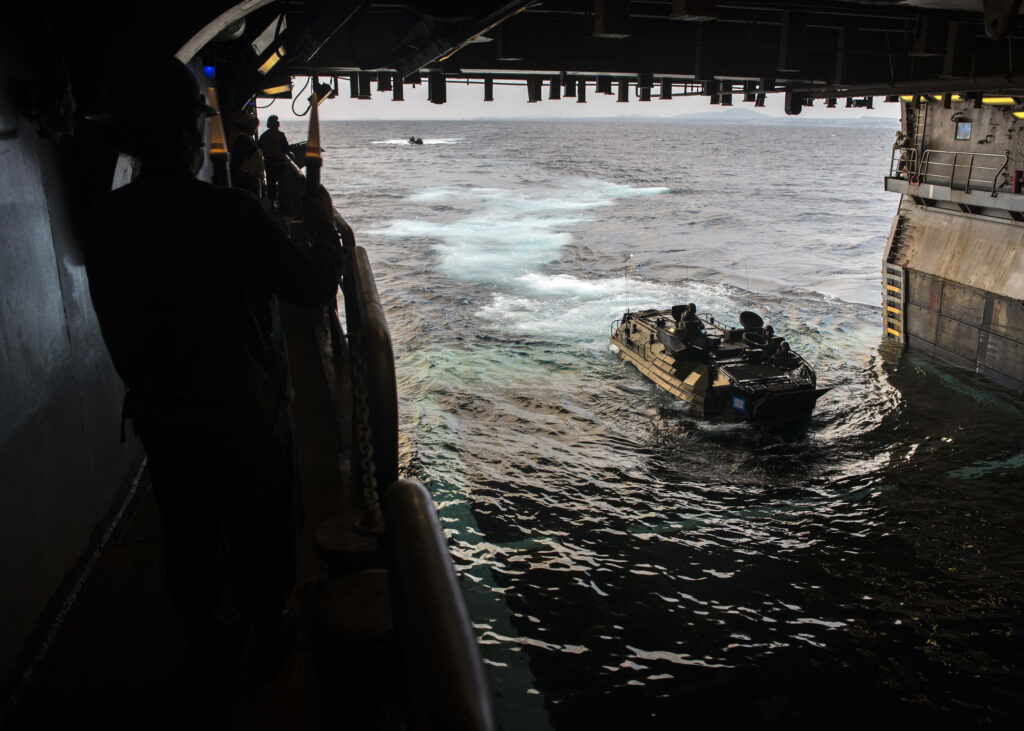
After more than five decades of carrying Marines to shore, the U.S. Marine Corps’ assault amphibious vehicle made its final appearance this month during a military exercise in Romania before beginning its next task defending allied countries in the Black Sea region, the Marine Corps said in a Thursday release.
The AAV-P7, or AAV, affectionately known to Marines as Trax, is being replaced by the amphibious combat vehicle. But rather than being retired to storage, the battle-tested tracked vehicles are slated to be transferred to partner nations by experienced instructors.
The AAV entered the service in 1972 and morphed into a mainstay of Corps’ amphibious assault capabilities for decades. It has undergone multiple upgrades over the years and saw combat in Lebanon and Iraq. The platform was officially decommissioned in September 2025.
At the exercise, the AAV was used in doctrinal roles, such as a mechanized assault platform, a logistics carrier and a direct fire asset. The Corps said it was being tested among drones, which have changed the nature of war drastically since the vehicle was first introduced.
For many marines, the Trax was the center of their careers, and its retirement marked an emotional end to what was more than a weapons system.
Master Sgt. Daniel Porter, logistics chief for 4th Assault Amphibian Battalion, spent 22 years working on the vehicle after first seeing one as a fresh Marine.
“This has been my home since I started in the Marine Corps,” Porter said in the statement, which later chronicled the Marine’s sentimental last look at the vehicle. “Last ride,” he said, after bidding farewell to the beast he called “old girl.”