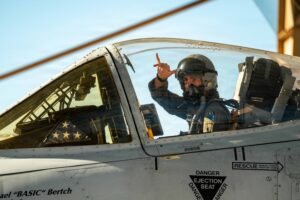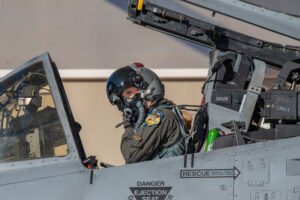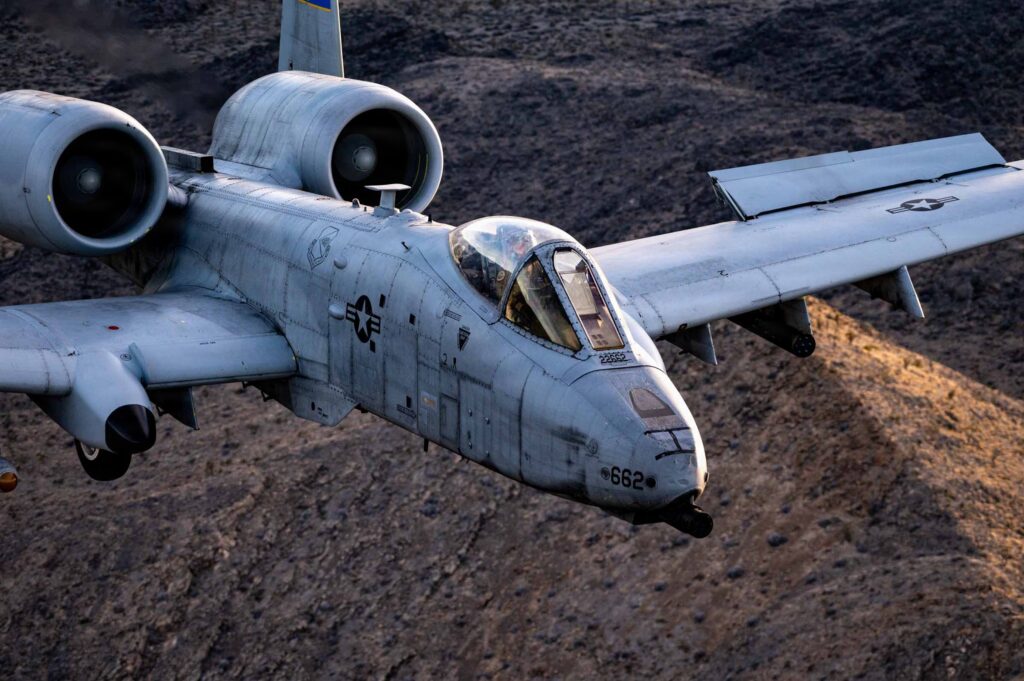
A House bill filed this week would force the Air Force to keep at least 126 A-10 Thunderbolt II Warthogs, far more than were in the service’s plans, and to reverse a year’s work dismantling the aircraft’s maintenance depot, pilot training pipeline and weapons course.
Introduced Monday as H.R. 9780 by Rep. Abe Hamadeh, R-Ariz., the BRRRRT Act (Bolstering Recognition, Resurgence, Retention, and Remembrance of the Thunderbolt) gets its name from the bone-rattling “BRRRRT!” sound the jet’s 30mm Gatling gun makes when fired.
Rep. Don Davis, D-N.C., is co-leading the bill. He and Hamadeh both sit on the Armed Services subcommittee that writes fighter force-structure policy, with Davis as the committee’s vice ranking member. Four Republicans also signed on as original cosponsors, including members from Georgia and Missouri, home to the last two A-10 bases.
The bill comes as the Air Force has ramped up A-10 divestment yet has not identified the aircraft that can, and will, take on the close air support and combat search and rescue missions the Warthog has assumed for decades. The service says those roles will be filled by some combination of platforms like the F-35A, F-15E and F-16.
“The A-10 has repeatedly proven itself on the battlefield, saving American lives and delivering unmatched close air support when our troops need it most,” Hamadeh said in a statement announcing the bill. “The BRRRRT Act ensures we do not retire a proven weapons system before a certified replacement exists.”
This bill is the latest move in a lengthy tug-of-war between the Air Force and lawmakers.
The Air Force began fiscal 2026 with 162 Warthogs and tried to retire them all. Congress refused, setting a floor of 103.
Following heavy A-10 involvement in Iran, including the recovery of downed F-15E aircrew, the service announced it would keep squadrons flying at Moody Air Force Base, Georgia, and Whiteman Air Force Base, Missouri, into 2029 and 2030, roughly 54 jets across three squadrons.
Reaching 126 aircraft would mean halting retirements already scheduled and towing aircraft back out of the boneyard at Davis-Monthan Air Force Base, Arizona.
The bill gives the Air Force 90 days after enactment to explain how it will restore depot work, training, sustainment and flight testing, programs that were all cut in anticipation of retiring the fleet.
The depot line at Hill Air Force Base, Utah, closed in February. The last class of new Warthog pilots graduated in April, and the Weapons School course at Nellis is winding down.
Under the bill, retiring more A-10s would become harder, as well. The defense secretary would first have to certify that a replacement is fielded and fully operational, and get that in writing from the Army secretary, the Marine Corps commandant and the head of U.S. Special Operations Command. A mission does not count as replaced, the bill says, if another aircraft picks it up as a secondary tasking.
Should the bill fail to pass, the terms could find their way into the annual defense authorization act instead, which is how the 103-jet floor came to be. Hamadeh took that route in June, placing two A-10 provisions in the House bill that reappear in the BRRRRT Act.
Editor’s note: At the time of publication, the text of H.R. 9780 had not been made public. Details of the bill are based on the July 13 Legislative Counsel draft, provided to Defense News.