Five years ago, climate activists stunned corporate America by winning three seats on Exxon Mobil’s board. Similar revolts have forced some of the nation’s biggest companies to address climate change. Now, the federal regulator overseeing shareholder rights is making it harder for small investors to convey their concerns.
In November, the Securities and Exchange Commission, or SEC, announced that it would essentially stop weighing in on whether companies must put shareholder proposals to a vote. Then, in January, the agency said it would no longer allow investors with less than $5 million in shares to use its online system to send communiqués, known as exempt solicitations, to fellow shareholders. Such documents are often used to lay out an investor’s stance on a given issue, including climate action.
The SEC says the moves are an attempt to rein in the scope of government and ease burdensome regulation. But others see them as a way to contain the influence of potentially irksome investors. “We are concerned that they limit the voice of [company] owners,” Steven Rothstein, chief program officer for Ceres, a sustainability nonprofit working with companies and investors, said of the changes. “Shareholders are being cut out of the process.”
The SEC had already made it harder to place a resolution on the voting docket during President Donald Trump’s first term. And companies are still allowed to block such proposals for several reasons — for example, if they can’t reasonably implement them or if they amount to micromanagement of business operations. But, prior to November, companies could expect the SEC to offer guidance on whether the government would take action if a proposal was excluded. While technically non-binding, these so-called “no action” letters were a strong sign that the government would let the company’s decision stand.
The SEC said it would retreat from its role as arbiter for at least a year, citing “resource” considerations and last fall’s prolonged government shutdown. Andrew Behar, CEO of the shareholder advocacy group As You Sow, wouldn’t be surprised if the SEC extended the pause. As he put it, “they are no longer going to be the referee.”
The government also lamented that the “large volume” of requests often require prompt attention from staff. According to nonprofit think tank The Conference Board, which has more than 2,000 companies as members, last year the SEC ruled on 291 “no-action” requests from companies on the Russell 3000 stock market index. That’s up from 207 the previous year, and 144 in 2023. “It was too much,” said Ariane Marchis-Mouren, an expert in corporate governance at The Conference Board. “This is a way for them to shift the responsibility to the companies.”
Marchis-Mouren argues that without the SEC’s input, companies face greater legal risk from investors or the SEC, which could make them think twice before excluding proposals. But Behar and other activists worry the opposite will occur: Because the SEC has rarely taken enforcement action in this arena and lawsuits are often prohibitively expensive for smaller shareholders, there is little left to prevent companies from omitting resolutions they don’t like.
“Exxon wouldn’t put them on their proxy statement,” said Behar, giving an example. Still, he remains unsure whether the new SEC approach will spur activists to flood companies with proposals, or shy away. What’s more clear, however, is the impact on exempt solicitations.
Advocacy nonprofits and corporate gadflies have been the main drivers of exempt solicitations, according to data from The Conference Board. As You Sow topped the list, writing more than 200 of them since 2018, on a range of concerns, including climate change. But, under the new rules, Behar said groups like his would be almost entirely sidelined.
Win McNamee / Getty Images
Some argue that this is a good thing — that exempt solicitations have devolved into a platform for activism that’s better reserved for other platforms. “These notices were not meant to be the means for any shareholder to broadcast its views via EDGAR,” an SEC spokesperson told Grist in a statement, referring to the commission’s official online system. Shareholders can instead use “press releases, emails, websites and social media, and electronic shareholder forums.”
But Rothstein argues that the targeted nature of the official SEC systems helps give often niche or nuanced issues more weight. “People may not see that newspaper story or that radio interview or whatever it might be,” he said. An exempt solicitation, on the other hand, “reaches the people voting.”
Ultimately, Behar said, limiting small investors’ options for holding corporations accountable removes incentives for those companies to constructively engage with advocates. “Companies generally sit down with us,” he said, noting that As You Sow had more than 100 such engagements last year alone. “It’s all part of a process.”
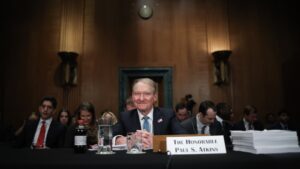
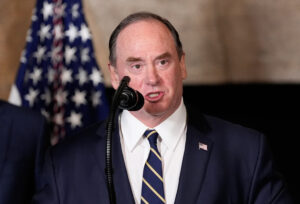
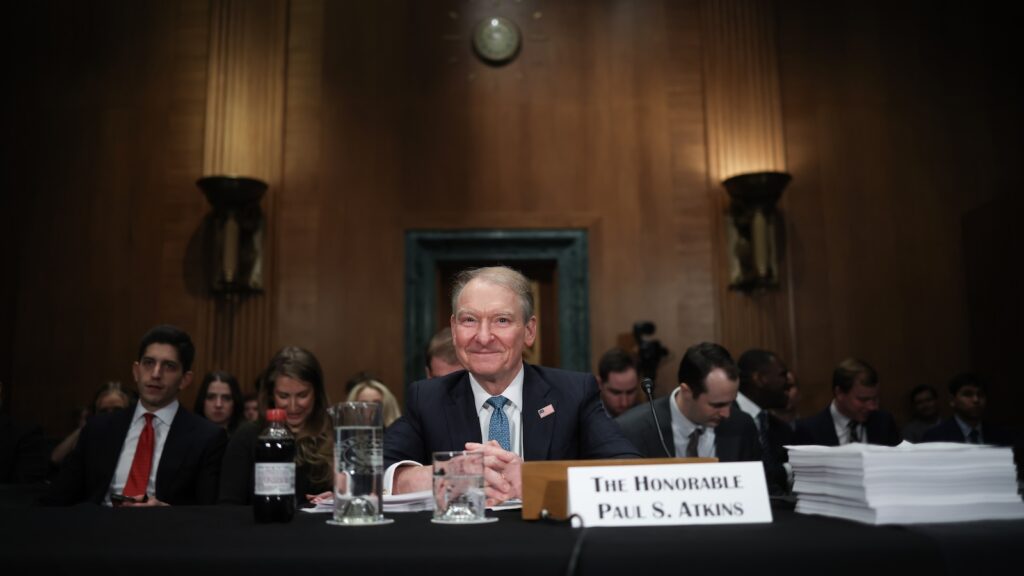
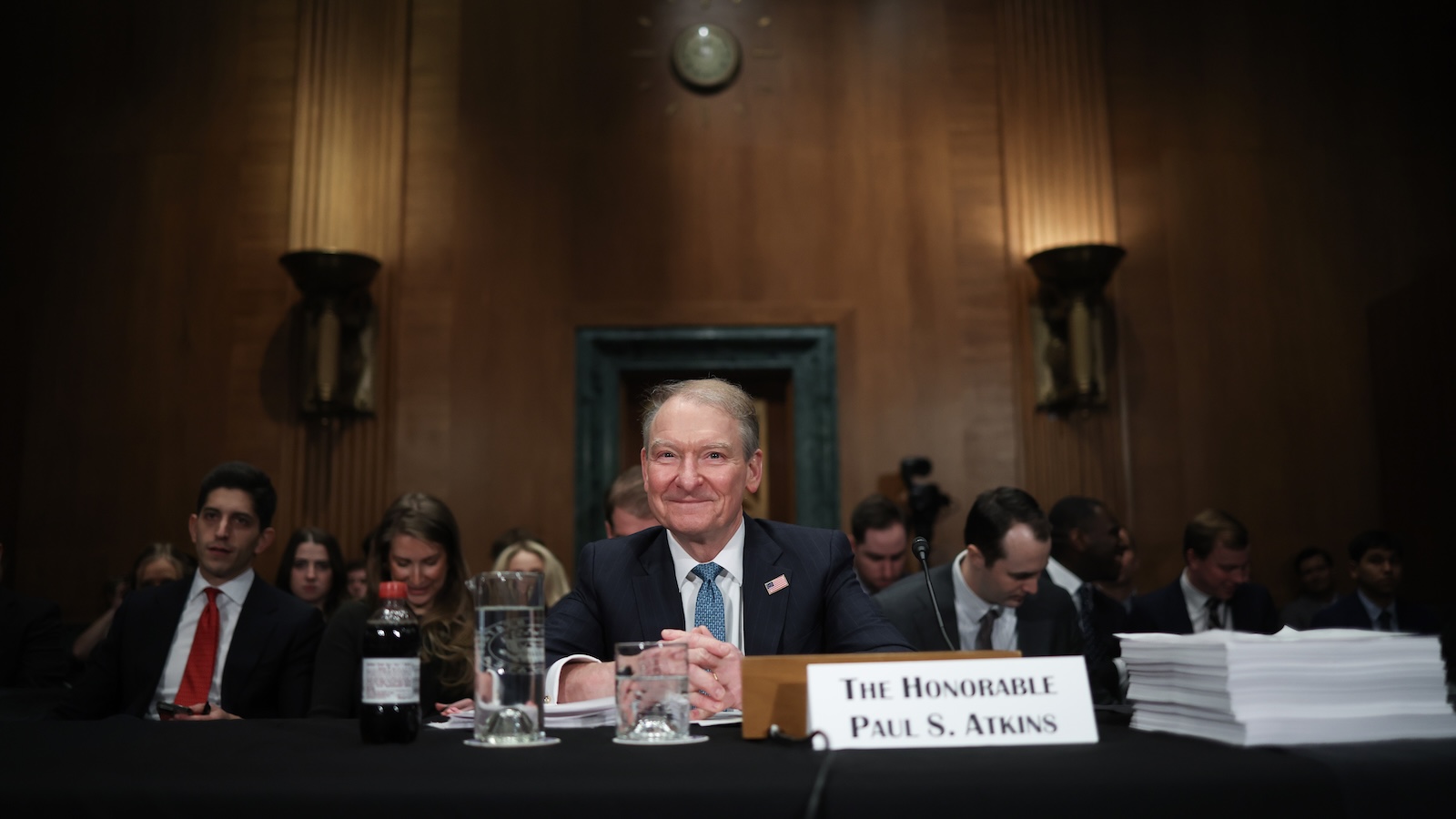
On Wednesday, SEC chairman Paul Atkins doubled down on his deregulatory push in testimony before the House Committee on Financial Services. He said that, in addition to the steps already taken, the SEC is reevaluating the frequency of financial statement reporting, which is now quarterly, and considering scaling back other disclosures a company must make. Lawmakers asked him about this apparent shift toward shareholders having access to less information.
“In general, it comes down to the company’s decision as to what they believe is material or not,” he said during an exchange with Representative Ayanna Pressley, a Democrat from Massachusetts. “Our rules are geared to the company.”
The SEC did not respond to follow-up questions from Grist, including whether the one-year pause on no action letters will be extended or, without them, how the government plans to enforce noncompliance.
Rothstein worries that the current trajectory could have broader consequences for the economy.
“Engagement has made our capital markets great,” he said, arguing that tamping the dialogue between companies and its owners will reduce transparency and could make people less likely to buy stock in U.S. companies. “We think that is very harmful to the American economy.”
This story was originally published by Grist with the headline It just got harder for shareholders to push companies on climate on Feb 13, 2026.