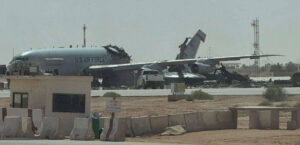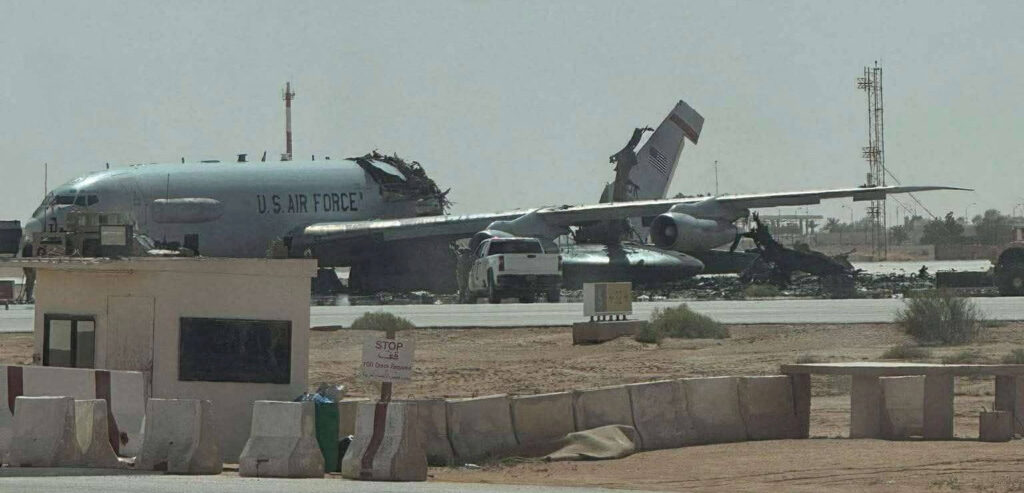
A U.S. Air Force E-3 Sentry, an airborne warning and control system, was among the aircraft damaged in a March 27 Iranian missile and drone attack on Prince Sultan Air Base, Saudi Arabia — one of several strikes on the installation since Operation Epic Fury began Feb. 28.
Two weeks earlier, on March 13, five KC-135 Stratotanker refueling aircraft were damaged on the flight line, two U.S. officials told the Wall Street Journal, as reported by Military Times.
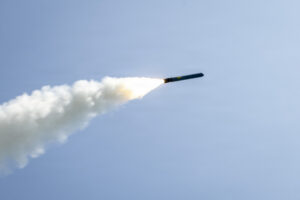
Since Feb. 28, Iran has struck radar systems, satellite communications and mission-critical aircraft at at least seven U.S. bases across Bahrain, Qatar, Kuwait, Saudi Arabia and the UAE. The attacks have focused on infrastructure that U.S. forces depend on to detect threats, refuel aircraft and direct air operations in the region.
By late March, Iranian missile and drone launches had dropped more than 90% since the conflict began, according to U.S. Central Command. Meanwhile, the attacks that persist have zeroed in on radar sites, SATCOM terminals, tankers and now an AWACS.
Kelly Grieco, a senior fellow at the Stimson Center, said the pattern points to deliberate targeting, rather than opportunism. The strikes are systematic and target three “distinct functional categories, she said, including radar and communications infrastructure, aerial refueling tankers and now the AWACS.
“Each is a critical enabler of U.S. air operations,” Grieco told Defense News. “That’s not random. That’s a target set derived from an understanding of how U.S. airpower functions and where it is most exposed. The pattern suggests deliberate doctrine, or something close enough to it, not opportunism.”
Joe Costa, director of the Atlantic Council’s Forward Defense program and former deputy assistant secretary of defense for plans and posture, said Iran’s targeting approach makes tactical sense.
“It’s much easier to hit stationary infrastructure on the ground than planes flying in the air,” Costa said. “The U.S. has a dynamic process to quickly reallocate global resources to mitigate risks to troops and the mission, but the real cost is the cumulative impacts this operation will have on long-term readiness for other U.S. priorities.
“The more assets we use and lose now, the less will be available later until maintenance cycles, repairs, and new purchases are complete.”

Strikes on communications, missile defense infrastructure
Iran’s retaliatory campaign targeted communications infrastructure from the opening hours of the conflict.
On Feb. 28, an Iranian drone struck Naval Support Activity Bahrain, home of the U.S. Navy’s 5th Fleet. Satellite imagery later obtained by The New York Times showed damage to large SATCOM terminals at the installation.
Satellite imagery also confirmed damage to the AN/FPS-132 phased array early warning radar in Qatar, with at least one of the system’s three arrays struck in the opening days of the conflict, according to Planet Labs imagery obtained by the Middlebury Institute of International Studies. Similar strikes hit radar facilities at Al Ruwais and Al Sader in the UAE, according to satellite imagery reported by The War Zone.
Qatar purchased the AN/FPS-132 radar system from the U.S. in 2013 for $1.1 billion. The Iranian drones used to strike it cost an estimated $20,000 to $60,000 per unit.
CENTCOM and Space Force Public Affairs directed Defense News to previously released operational updates and declined to comment further about the strikes.
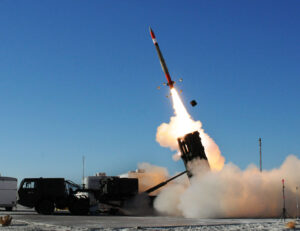
The targeting extended to missile defense infrastructure.
Satellite imagery confirmed the AN/TPY-2 radar for a U.S. THAAD battery at Muwaffaq Salti Air Base in Jordan was struck and apparently destroyed in the opening days of the conflict, later confirmed by a U.S. official. The AN/TPY-2 is the primary sensor for the THAAD system. Without it, a THAAD battery cannot independently search for or track targets.

An already waning E-3 fleet
The damage to the Prince Sultan E-3 on March 27 comes at a time when the fleet is already stretched thin. The Air Force’s E-3 inventory has dwindled to 16 aircraft, the last delivered by Boeing in 1992.
In fiscal 2024, the fleet posted a mission-capable rate of 55.68%, according to Air Force data reported by Air & Space Forces Magazine, meaning fewer than nine aircraft were operationally available on any given day.
As of March 26, the Atlantic Council’s Forward Defense program, which tracks U.S. military assets committed to Operation Epic Fury, estimated that between 66% and 75% of the available E-3 fleet was deployed to the theater.
Air & Space Forces Magazine, which reviewed imagery of the damaged aircraft, reported the extent of the damage likely renders the E-3 unrepairable.
Grieco said the near-term impact is real, but manageable. Prior to the damage, six aircraft were forward-deployed, and the theater was operating “at the margins of what continuous battle management coverage requires, she told Defense News.
“Five aircraft means accepting either a single continuous orbit or periodic gaps when a second cannot be regularly sustained. In those gaps, the air picture degrades, air battle management is less effective, and the theater’s ability to coordinate a complex, multi-aircraft operation becomes significantly more constrained,” she said.
“The United States could send another E-3 to the theater,” Grieco added, “but there are only 15 left in the entire fleet — and every one deployed to the Middle East is one less available everywhere else.”
Philip Sheers, an associate fellow in the Defense Program at the Center for a New American Security, said the loss emphasizes the burden on the airborne battle management fleet. About half of the 16-aircraft E-3 fleet is mission capable, he said, and with six in the Middle East, only two or three remain for other needs.
“There is very little slack remaining for flexibility and adjustment, and that places a huge burden on the remaining fleet as well as other systems to fill in the gaps, potentially at the expense of other priorities,” Sheers said.

A ‘massive alarm bell’ for air defense
A March 2026 report by the Center for a New American Security warned that proposed alternatives to dedicated airborne battle management aircraft, including space-based sensors and fighter-based networks, are either longer-term technological prospects, unproven at battle management or highly vulnerable, and should be treated as complements rather than substitutes.
Replacing the airborne capability will take time.
The Pentagon moved to cancel the E-7 Wedgetail program in its fiscal 2026 budget request, citing cost growth, from $588 million to $724 million per aircraft, as well as survivability concerns in contested airspace. Congress reversed the decision, preserving the program in the fiscal 2026 National Defense Authorization Act and blocking further E-3 retirements until enough Wedgetails are in service.
According to the Government Accountability Office, the E-7’s first flight has slipped to May 2027, with full operational capability now projected for the early 2030s. Space-based systems proposed by the Pentagon as a longer-term alternative face a similar timeline, according to Space Force officials.
Near-term, Sheers said the loss will increase operational strain on the remaining E-3s and could result in increased dependence on carrier-based E-2 Hawkeyes and the Australian E-7 Wedgetail.
“The demand for airborne sensing to manage cruise missile and drone threats is not going anywhere,” he told Defense News. “Medium and long-term, this all bodes very poorly for E-3 readiness and highlights the need for DoD and Congress to resource a real solution to the shrinking and aging E-3 fleet.”
The KC-135 tanker fleet faces parallel pressures. Already cannibalizing parts from the boneyard, the Cold War-era jets have absorbed repeated strikes.
In addition to the five KC-135s damaged at Prince Sultan on March 13, multiple refueling aircraft were also hit in the March 27 strike, according to Air & Space Forces Magazine.
Costa pointed to broader implications that outlast the current conflict.
“The continued use and possible reallocation of high-demand, low-density assets like air defense systems will impact readiness for other U.S. global priorities,” Costa said. “That’s the real strategic tradeoff.”
Sheers said the conflict should serve as a warning well beyond the Middle East.
“The entirety of this conflict should be a massive alarm bell on the need for passive defenses, not just for U.S. forces in the Middle East, but over the homeland where drone incursions are increasingly frequent, and especially in the Indo-Pacific, where the Chinese missile threat is orders of magnitude larger and more difficult to suppress,” he told Defense News.
“Airbase vulnerability has been an issue for decades, and the drumbeat of independent analysis on this issue could not be louder,” he added. “If DOD doesn’t take these events as a wake-up call, we are setting ourselves up for disaster in a future great power conflict.”
Grieco suggested the effects may already be rippling through the campaign in ways that don’t show up in publicly available strike counts. Those “less visible metrics” include tanker availability, AWACS coverage gaps and stockpile constraints, she said.
“If Iran’s strikes on radar and communications infrastructure are compressing warning times and creating gaps in the missile defense network, that’s operationally significant even if no additional aircraft are destroyed,” she said.
“The threshold for material degradation isn’t a single dramatic loss. It’s the accumulation of constraints that make the campaign more expensive, less flexible and less effective over time. We may already be past it in ways that won’t be visible until the campaign’s operational history is written.”