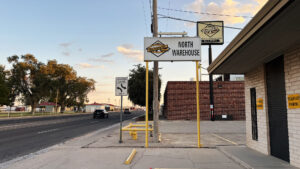
For those coaxing thirsty crops like alfalfa from the parched fields and withered pasturelands in Eloy, Arizona, water is as good as gold — and just as scarce. “We’ve had nothing from the Colorado River for the last two or three years. I mean, we’ve had to cut back the volumes to the growers and have had to reduce acres and stuff to make it work,” said Ron McEachern, former general manager of the Central Arizona Irrigation and Drainage District, which serves the Eloy area.
The agricultural hub draws from the Colorado River basin through a vast canal network, but drought, overexploitation, and aging irrigation equipment are draining what little remains. “We got gates that are leaking and leaking downstream,” McEachern said. “The water spills and it spills, and nobody’s getting any use out of it.”
Nearly two years ago, the irrigation district was invited to apply to a new non-competitive grant program that the U.S. Department of Agriculture under the Biden administration was launching to help farmers in areas grappling with devastating droughts. McEachern collaborated with the federal agency to identify what his team would do with the grant: replace and upgrade the 35-year-old deteriorating radial arm gates in their local canal system. The district needed the components to more precisely regulate water levels in the canals, but they are much too expensive for them to buy and install on their own.
Then, in late 2024, they got the break they’d been hoping for. The Central Arizona operation was one of 18 irrigation districts spread across 12 western states initially selected to receive up to $15 million each from the USDA. The agency’s Water-Saving Commodities program also earmarked grants for three tribal communities and two state associations of conservation districts. In total, the USDA planned to spend a $400 million pool of funds on the initiative.
Gloria Montaño Greene, who served during the Biden administration as Deputy Under Secretary for USDA’s Farm Production and Conservation, told Grist that the idea for the program started back in 2021, as severe drought conditions enveloped agricultural powerhouse states across the country. The $400 million, according to Montaño Greene, was set to be distributed through the Commodity Credit Corporation, a financial institution used to implement specific agricultural programs established by the federal government. By the close of 2024, she said the Biden administration had entered final agreements with selected recipients and notified Congress of how they intended to use the money.
“When we left the administration, we already had the signed agreements and the commitments that were going to be going through with the process,” said Montaño Greene. Based on those final agreements, the money, which was structured to be either reimbursement-based or in the form of advance payments — or both, depending on the agreement — should have started flowing last year, as part of a five-year payment plan. “Everything was done, vetted, and reviewed,” said Montaño Greene. But because this money wasn’t voted on by Congress, the USDA may have the authority to backtrack on its commitments under an earlier administration.
Another former top USDA official familiar with the program, who requested anonymity, confirmed that the agreements were “100 percent” finalized before the end of 2024 — with the expectation that the incoming administration would need to honor them. “I can speak to the assumptions and guidance that we were working on from legal counsel at that time, which was by entering into these agreements with the districts and other partners, we’re committing those dollars to this purpose,” the former official added. “From our perspective, we were operating under a framework and counsel that we were committing those funds to the USDA partners.”
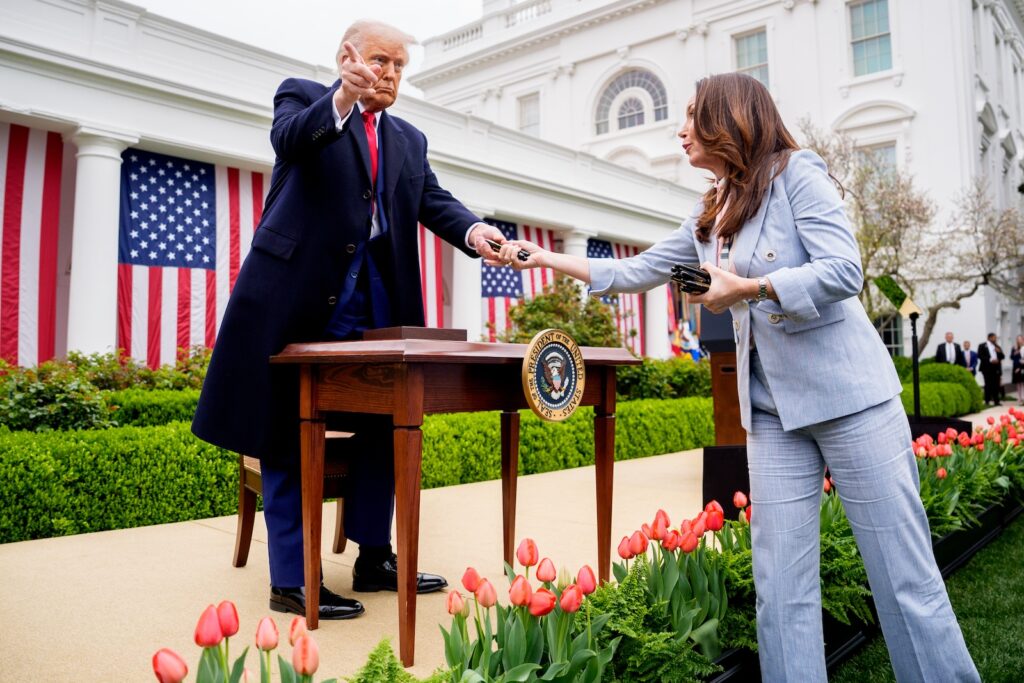
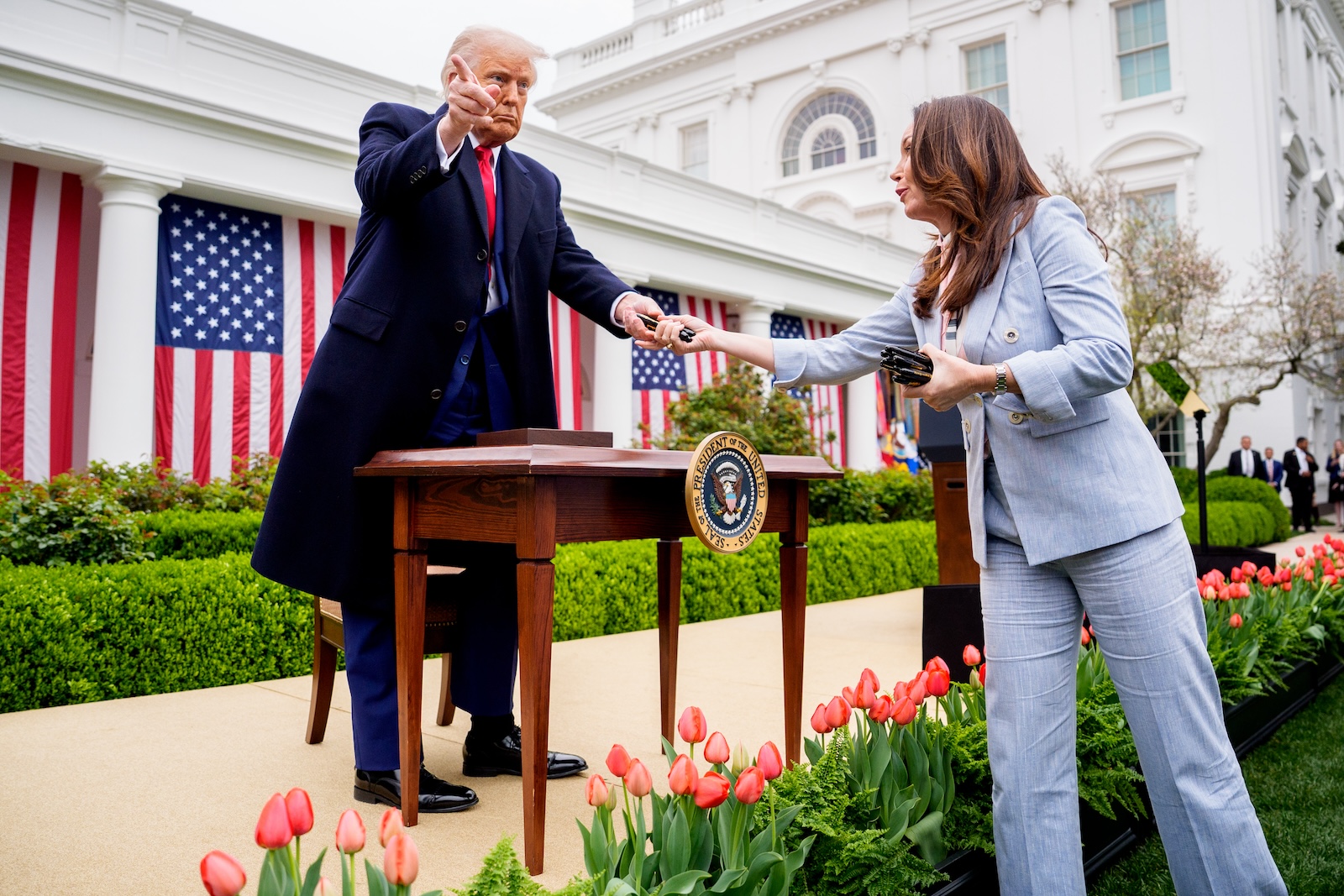
Beginning last January, the Trump administration threw that into a tailspin. Federal monies were frozen, grant programs culled, and an unprecedented number of federal staffers were forced out of work. Many operations at USDA have since resumed to some semblance of normalcy. But the $400 million promised to the irrigation districts, associations, and tribes in 2024 remains unaccounted for, and the grant recipients have received no indication of whether the program would start or the money would be paid out.
In fact, McEachern no longer even knew who at the USDA to ask for help. The last he heard from the agency about the water-saving grant was an email from his former point of contact to let him know they were leaving the USDA. That was over a year ago.
“I think some of the people that were involved are probably no longer there, and nobody was really kind of pushing to get this off the ground,” said McEachern. “One thing is, they haven’t swept the money. So the money is there. It’s just getting them to release it.”
Dan Crabtree, superintendent of Palisade Irrigation District, based in Colorado, one of the other 18 irrigation districts, has had much the same experience. “Since the election, we have not heard anything from USDA, other than to say they were evaluating the program and the application,” said Crabtree. Another recipient — Greybull Valley Irrigation District in Wyoming — told Grist in an email that it also knew nothing about the program’s status.
Randall Winston, general manager of Hidalgo & Cameron Counties Irrigation District 9, in Texas, another of the USDA’s selected recipients, said that while they’ve been waiting, the severe drought in the Rio Grande Valley has only gotten worse. As a result, they have been forced to dramatically reduce how much agricultural land the district is able to irrigate — last year, they supplied water for roughly 8,000 acres, when on a typical year they irrigate 120,000.
“Every drop of water, we’re trying to maximize that and save as much as we can,” said Winston. Prices for the equipment they need to manage the water they do have have also continued to climb, according to Winston, further setting them back. “We are concerned because we need to know the direction to take … We’re not mad at USDA, we just need to find out where we’re at with this,” he said.
Exactly why the administration has kept the funding locked without any communication to grantees for over a year is difficult to discern, according to Food & Water Watch research director Amanda Starbuck. “Is this specifically because it’s intended to help farmers adapt to climate change, and climate change is a bad word in the administration, or it’s simply just trying to cut corners wherever they can?” said Starbuck.
The USDA did not respond to multiple requests for comment.
During one former USDA staffer’s last few months working at the Farm Service Agency, they claim they were forced to partake in information “gatekeeping” as it related to the water-saving program. According to the staffer, who left their role in 2025 and asked to remain anonymous, “I was getting a lot of questions about, like, ‘Can we start or not?’ and I didn’t know the answer. I couldn’t get an answer. I really wasn’t allowed to communicate with them directly. Like, I couldn’t tell them ‘Your grant is frozen. Don’t spend any money because the money may never come to you.’ It was just ‘Tell them it’s under administrative review’ … And then I couldn’t get a clear answer out of my leadership, or my direct manager, or my manager’s manager, about where the program was in the review process.”
As for the suspicion that the program may have been targeted in the way that other Biden-era programs geared toward mitigating climate change have been, the former staffer isn’t convinced. “To me, it does seem pretty neutral from a climate perspective, because a lot of the states that have water problems are not necessarily blue states,” they said. “So I don’t think it was something that someone, like a high level official, would come in and say, ‘That’s the program I want to gut.’”
Although they can’t be certain, the former staffer believes the explanation is actually quite simple: There are no employees left to distribute the money.
Within the first five months of the Trump administration, the Farm Service Agency lost around 24 percent of its federal workforce. “It’s very possible it’s frozen because no one who works there that interacted with the program, like all of the people who know anything about the program, have now left the agency,” they said. The former staffer also said they have “a sinking suspicion” that the internal organizational disarray at USDA may have led the agency to forget about the program, which they described as having “a pretty small footprint” when compared to other initiatives that were dismantled in the last year. “I just don’t understand why we couldn’t be more transparent. … I don’t believe that that is the role that public servants, broadly speaking, both politically appointed and career, should play.”
As the planet continues to heat up, rainfall is becoming increasingly erratic — ushering in longer dry spells punctuated by intense, sudden downpours that can overwhelm the land’s ability to absorb too much water. The resulting whiplash between periods of drought and flood can disrupt farming operations for multiple seasons. Extreme weather fueled by warming already costs the nation’s agricultural industry billions in lost crops and rangeland every year.
Agriculture is not only a victim of this vicious cycle, but one of its drivers. In the U.S., the sector is responsible for at least 80 percent of all water consumed. Crop irrigation, which is often done inefficiently, makes up the single largest share of freshwater withdrawals nationwide. Take alfalfa. The crop used an estimated 2.15 trillion gallons of water across the seven states in the Colorado River basin in 2024 — most of it grown to feed cattle and dairy herds.
“At USDA, we need to do more to also shift production systems to really be lined up with the climate reality,” said Starbuck, who argues that the burden of adaptation shouldn’t fall on individual farmers, or the irrigation districts that support them, but rather to federal regulators.
Yet even as demand for water grows, the policies intended to protect remaining supplies are being systematically dismantled. Over the last year, the administration has aggressively rolled back climate and environmental safeguards — revoking the government’s authority to regulate greenhouse gas emissions, proposing the removal of federal protections from the vast majority of the nation’s wetlands, and holding up billions in conservation efforts.
Together, says Starbuck, these actions are putting at risk the very water supplies that American agriculture depends on.
This story was originally published by Grist with the headline Did the USDA just forget about $400M in drought aid for farmers? on Feb 23, 2026.