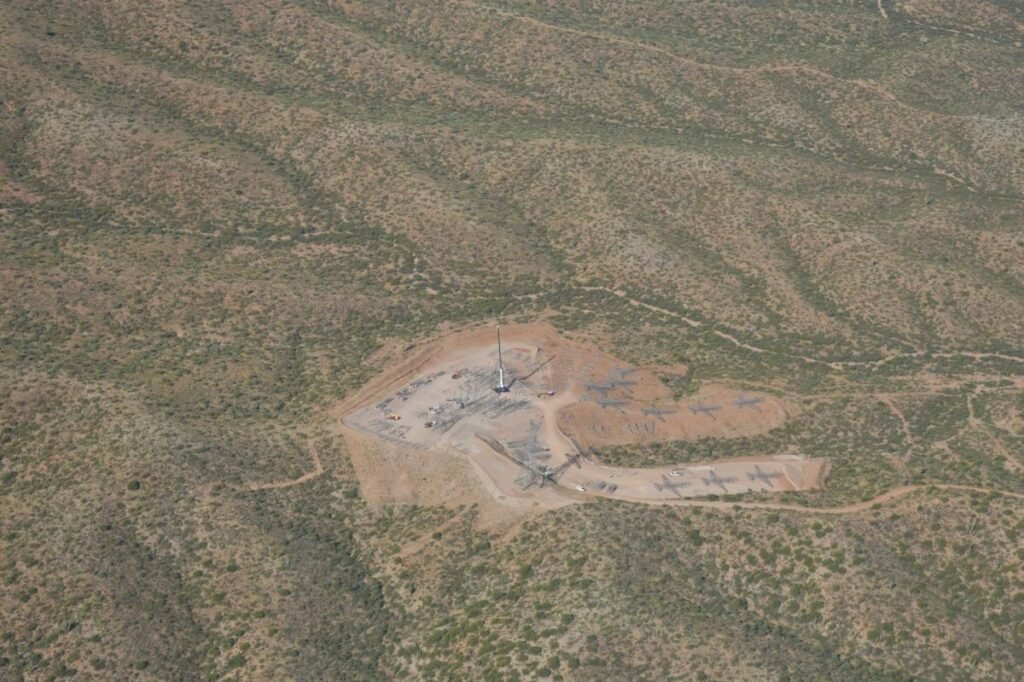
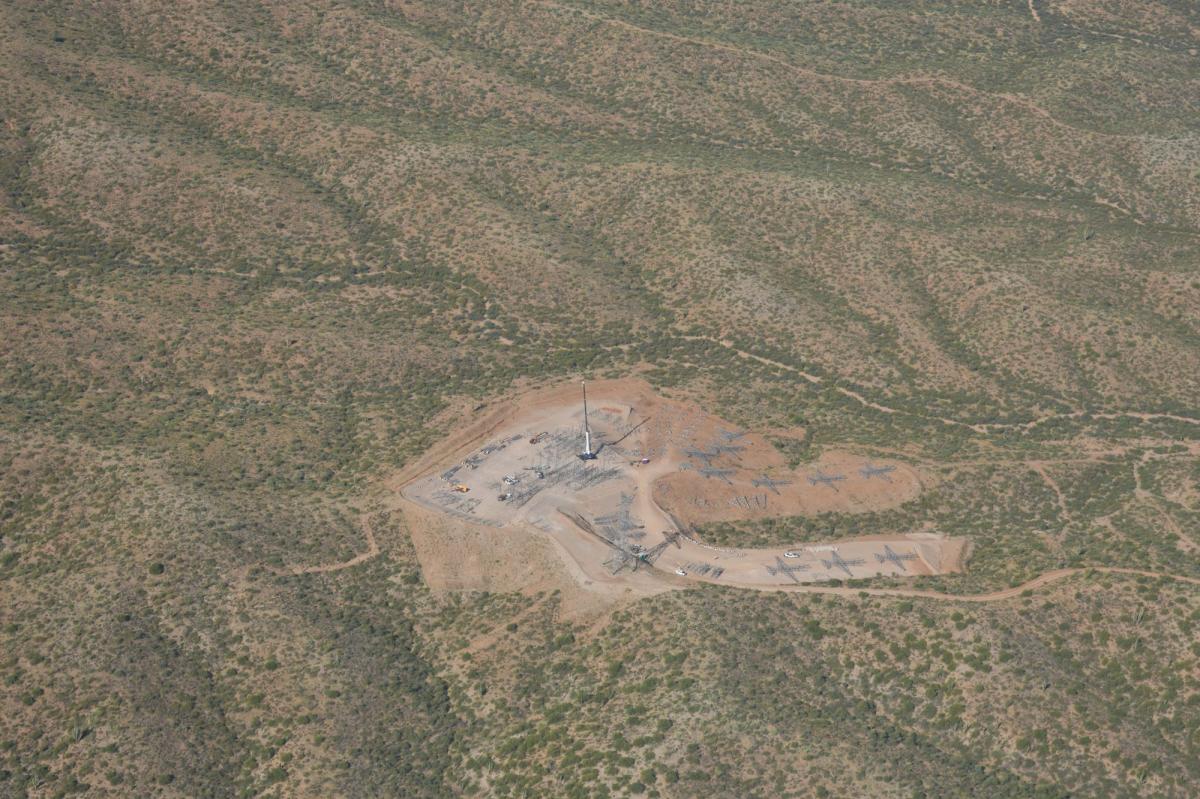
The largest renewable energy project ever built in the United States — the sprawling SunZia wind farm and power line in New Mexico — took two decades to build. Its transmission line, necessary to transport the wind power to cities in Arizona and California, faced opposition from birders, the military, and tribes. While some disputes were resolved, tribes’ concerns about the project’s impacts on historic sites have remained unsettled, leading to court battles that still haven’t been resolved even though the line was completed in June.
Such legal challenges commonly delay renewable energy projects and the transmission lines that carry their power to population centers. The threat of lawsuits and resistance from utilities have driven down long-distance power line construction in the United States, limiting the country’s ability to use cheap renewable energy.
The Senate is poised to pass a “permitting reform” bill that could make it much faster and easier to build transmission lines and renewable energy projects — but it casts a wide net, easing construction for almost all large infrastructure projects. Supporters of the Bipartisan American Affordability and Jobs Act, or BAAJA — including clean energy companies and prominent climate-conscious senators — argue the bill is necessary to clean up the power grid. Critics say it could disempower communities, tribes, and environmental groups while also speeding construction of fossil fuel infrastructure. Once through the Senate, the bill would still need to pass the House and receive the president’s signature before becoming law.
Here are the answers to some basic questions to help you understand the bill, why it’s such a big deal, and why it’s so controversial.
What would this bill do?
At its heart, the bill is an effort to streamline the federal government’s process for issuing permits for infrastructure projects, including many large-scale energy and transportation projects. Without these permits, developers can’t build infrastructure on federal land, across state lines, or with certain kinds of federal funding. But companies say getting a permit, and keeping it, is a time-consuming, unpredictable, and costly process, even when their project meets all necessary environmental standards.
That’s due in part to the National Environmental Policy Act of 1969, or NEPA, one of America’s bedrock environmental laws. NEPA requires federal agencies to study the environmental, economic, and social impacts of major government actions, including many infrastructure permits. They must consider alternatives to what’s been proposed, solicit input from the public, and publish their findings. A different law called the National Historic Preservation Act requires agencies to carry out similar reviews of projects’ repercussions for historic and archaeological sites.
While NEPA doesn’t explicitly hold projects to a higher environmental standard, it creates a formal process that can educate the public, inform government officials, and open pathways to better outcomes. Still, this process often becomes the source of delays. Opponents of a project can sue an agency, claiming it conducted an inadequate review, potentially forcing the government to redo parts of its analysis and halting construction in the meantime — even if the agency ultimately issues the same permit after redoing the analysis. The motivations for these lawsuits can range widely, from wealthy communities trying to protect their property values to tribes defending their sovereignty and religious freedom.
The Senate bill would speed up environmental and historic preservation reviews, narrow the potential impacts agencies must consider, restrict who can sue over them, and shorten the deadline for doing so. Supporters say that would prevent costly delays, which can be particularly consequential for land-intensive renewable energy projects. Critics say it would reduce public scrutiny and make it harder for communities and tribes to identify environmental harms, protect historic or sacred sites, and push developers toward better alternatives.
The bill would also make several changes aimed specifically at the power grid. It would give the federal government greater authority to override states that block interstate power lines and require regional grid operators to approve lines that improve reliability and affordability. Transmission construction in the United States has slowed over the last decade, even as its importance is expected to grow.
Controversially, the bill would also prevent states from using the Clean Water Act to block power lines or pipelines crossing waterways unless they directly discharge into the water. The bill would not affect the vast majority of projects built on private land within one state.
Austin Corona / Grist
Would this bill change my community?
Tribes, states, and local groups would have less power to stop or delay some infrastructure projects, and projects could move forward with less time for public scrutiny. That could mean more power lines crossing landscapes and greater risk that communities’ concerns don’t get adequately considered.
But experts expect the bill to lower electricity costs slightly over the next 15 years by making it easier to move cheap power between regions, while helping states meet clean-energy goals. Households and businesses would likely find it easier to sell electricity from rooftop solar and batteries onto the grid.
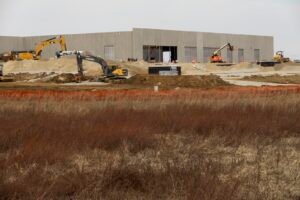
Most data centers wouldn’t see big changes because of the bill, as they are overwhelmingly constructed on private land whose development is overseen by local and state governments. (Proposals on federal lands exist, though they often involve significant legal issues that this bill would not necessarily change). The bill could accelerate the power and pipeline infrastructure that benefits data centers, but it would also require them to pay for grid upgrades they need and increase transparency around their electricity use. The bill could also make data centers’ power cleaner by making it easier for them to connect to grids with clean energy, rather than building polluting, off-grid gas turbines.
Would this bill be good for the climate?
The bill would enable energy infrastructure generally, meaning fossil fuel projects could grow alongside renewables. The advantage would likely tip toward renewable energy, according to projections from some organizations, though predicting future energy markets is tricky. Some experts believe the bill would make it harder for future administrations to limit fossil fuel projects, making emissions reductions more difficult.
Rhodium Group, an economic research firm, projects natural gas pipelines would continue advancing at roughly their current pace, while renewable energy deployment would accelerate due to faster permitting and greatly expanded transmission. Rhodium’s modeling finds a modest emissions reduction even if natural gas prices drop more than renewables, with larger reductions if renewable energy becomes much cheaper than natural gas.
But arguably the bill’s biggest climate effect would be strengthening future clean energy initiatives: States pursuing clean electricity or electrification would have an easier time building the infrastructure they need, and future federal clean-energy incentives could produce better results.
The reverse is also possible. Republicans could take advantage of faster permitting processes to speed up fossil fuel infrastructure while suppressing renewables. The bill attempts to limit presidents’ ability to discriminate among energy sources, although recent amendments slightly weakened those provisions. Some opponents worry these provisions wouldn’t keep President Donald Trump from continuing to suppress wind power, while others worry they will be too successful and prevent Democratic presidents from phasing out fossil fuels.
Robert Nickelsberg / Getty Images
Who supports the bill, and who opposes it?
Supporters include labor unions, clean and fossil energy companies, a few tribes and tribal energy advocates, centrist policy organizations, and some climate advocacy groups. Clean-energy companies have been especially enthusiastic, arguing that permitting and transmission constraints have become some of the biggest obstacles to expanding renewable power.
Opponents include environmental nonprofits, dozens of tribes, rural landowners, civil rights groups, and other climate activists. Some opponents support the bill’s transmission provisions but argue its changes to environmental review would excessively weaken the ability of communities and tribes to scrutinize projects and seek alternatives.
That disagreement has split Democrats and the climate movement. Climate-focused Democratic senators Sheldon Whitehouse and Martin Heinrich co-wrote the bill, while Green New Deal sponsors Ed Markey and Mazie Hirono opposed it. Climate movement veterans Al Gore and Genevieve Guenther have also opposed the current legislation, while climate scientist Zeke Hausfather and utility watchdog David Pomerantz support it.
Neither camp is monolithic, and advocates on both sides offer nuanced explanations of the trade-offs they are or aren’t willing to accept. Many opponents say they support permitting reform but believe Democrats should wait until January, when they will have majorities in both houses of Congress, to negotiate stronger protections for clean energy, communities, and tribes. Some supporters counter that the country needs new clean energy infrastructure now and that there is no guarantee a better political opportunity will arrive.
Will this bill become law?
The bill is likely to pass the Republican-controlled Senate, where nearly every Republican and half of Democrats have voted to advance it for consideration. If struggles over new amendments don’t derail it, the bill could leave that chamber before Thanksgiving. Afterward, however, BAAJA faces a more uncertain future in the House of Representatives.
The bill was crafted with limited input from members of the House, so the lower chamber might have less motivation to pass it quickly. The chamber is also controlled by Republicans, but some — including House Energy and Commerce Chair Brett Guthrie of Kentucky — have signaled concern over transmission provisions. Many lawmakers in the House of Representatives come from rural districts, and they might be hesitant to sacrifice local influence over infrastructure projects.
House Democrats, including top Democrat Hakeem Jeffries of New York, have also expressed concerns about the bill. If a large group of Democrats can convince a handful of Republicans to vote against it, they might be able to defeat it.
Trump has said he supports the permitting reform effort, meaning it should become law if it makes it out of Congress. If BAAJA doesn’t get signed before the new year, however, it will die, and lawmakers will have to start over if they want to pass permitting reform in the next session.
This story was originally published by Grist with the headline What Congress’ bill to speed up energy projects would mean for you on Nov 18, 2026.