The first signs of trouble are subtle.
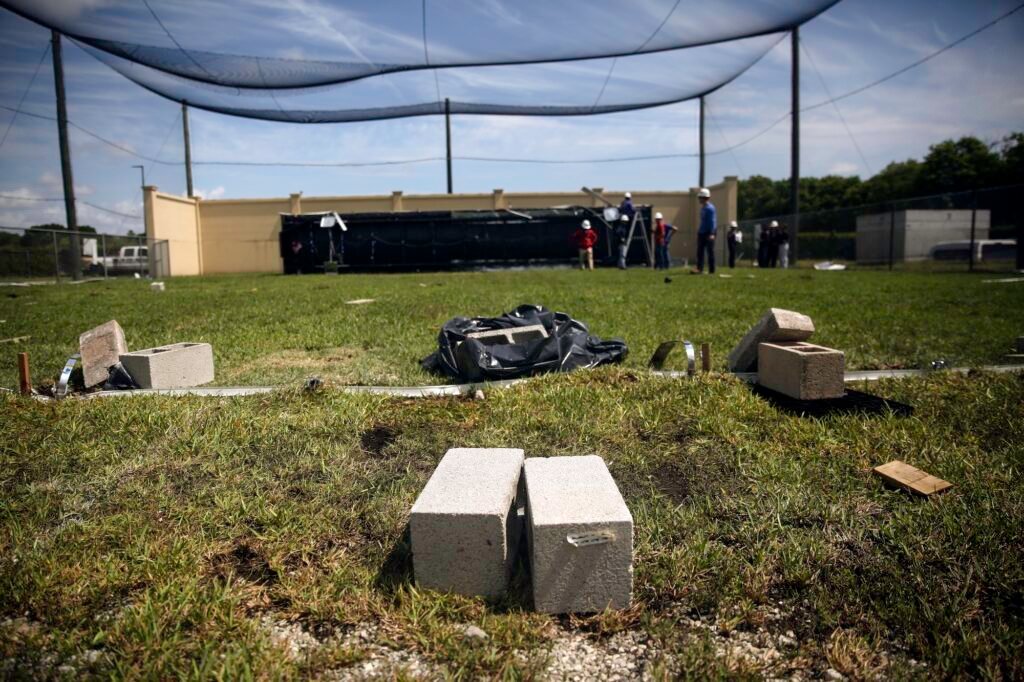
The vinyl skirting flutters. Siding near the roofline pulls away. Then the 12 massive fans arrayed across the 14-foot-high Wall of Wind accelerate in unison, forcing air across the laboratory at highway speeds. The manufactured home begins to shudder on its supports. A roar fills the testing facility.
The engineers keep cranking up the fans.
Hundreds of pressure sensors dot the structure, but some of what the researchers are learning in this laboratory at Florida International University can be seen with the naked eye. As the wind pushes against the walls and over the roof, a window blows out. The house strains against the steel straps and anchors holding it down. They begin to snap.
The last three break in unison. The entire structure pitches back, then overturns.
That is exactly what Elaina Sutley wants to see.
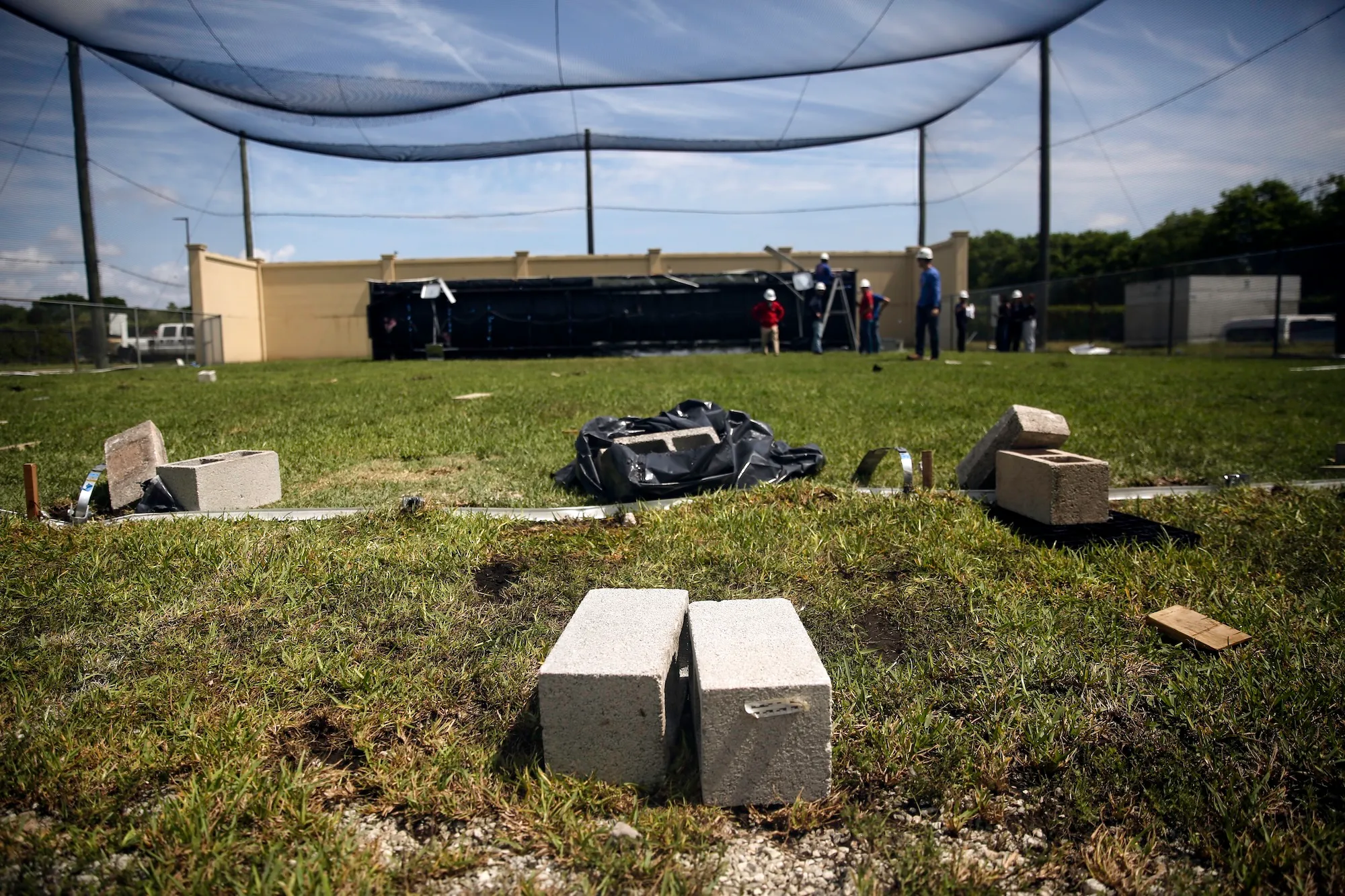

Sutley, a structural engineer at the University of Kansas, has brought manufactured homes, which were once called mobile homes, to Miami to destroy them. By changing how each of them is installed and battering it with increasingly powerful winds — up to 157 mph, with driving rain — she and her colleagues can see where the structures fail and determine whether relatively simple changes might help them withstand more powerful hurricanes and tornadoes.
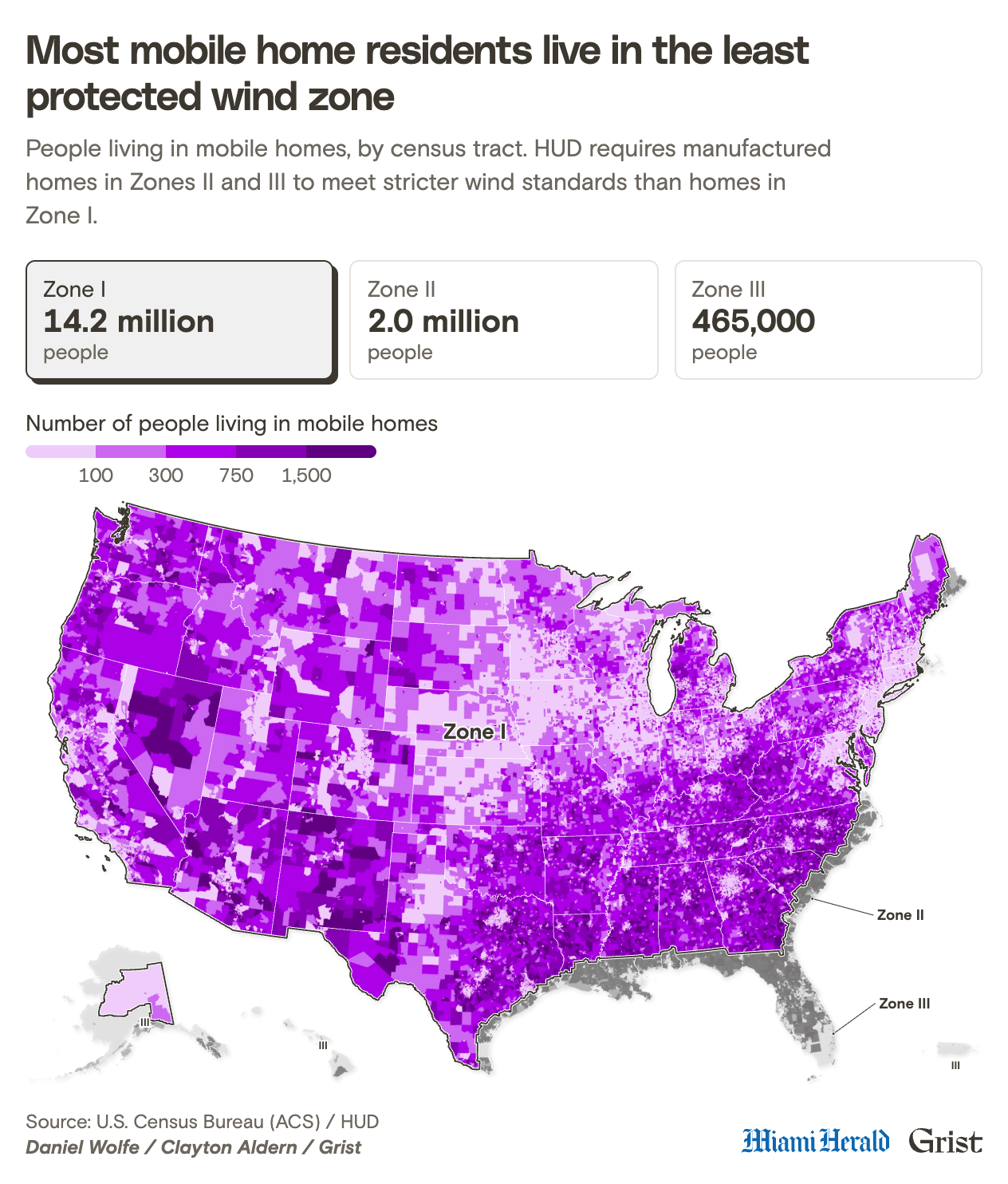
The answer matters far beyond the laboratory. More than 20 million Americans live in 6.7 million manufactured homes, a form of housing disproportionately exposed to extreme wind and other climate hazards. Many were built before 1994, when widespread destruction from Hurricane Andrew prompted the federal government to strengthen its wind standards for such structures. But the requirements for securing them vary depending upon where they are installed, a system that Sutley’s experiments are now putting to the test.
To understand what she is watching for as the house begins to move, however, requires looking underneath it.
Sutley learned what extreme wind can do to buildings long before she began deliberately destroying them.
Fifteen years ago, she was a master’s student in structural engineering in Tuscaloosa, Alabama. She was on the second floor of a three-story apartment building when a devastating outbreak of tornadoes swept through the region with wind speeds believed to have topped 190 mph. She hid in the bathroom as the walls around her warped and twisted.
When Sutley stepped outside afterward, the landscape was disorientingly unfamiliar. She could see a nearby hospital that had not been visible before. A friend’s home that once blocked the view was gone. The tornadoes injured thousands, killed hundreds across the state, and caused an estimated $4.2 billion in property damage.
For Sutley, the destruction exposed something unsettling about the buildings engineers design.
“We don’t design buildings to withstand tornadoes,” she realized.
Sutley, now a professor of civil, environmental, and architectural engineering at the University of Kansas, has devoted her research to natural hazards and how to protect the people most vulnerable to them. In May, that work brought her and a team of researchers to the Wall of Wind with three manufactured homes.
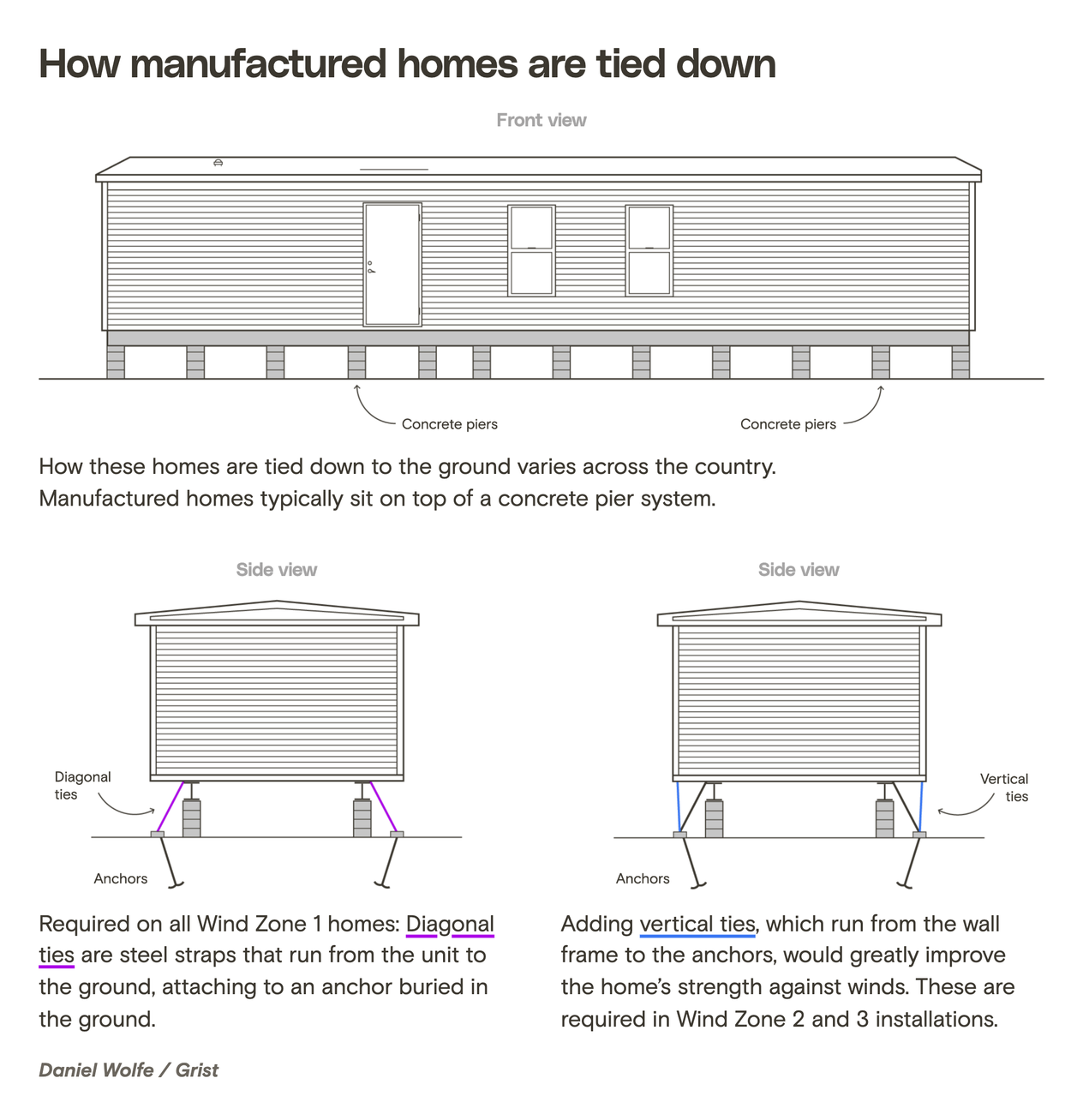
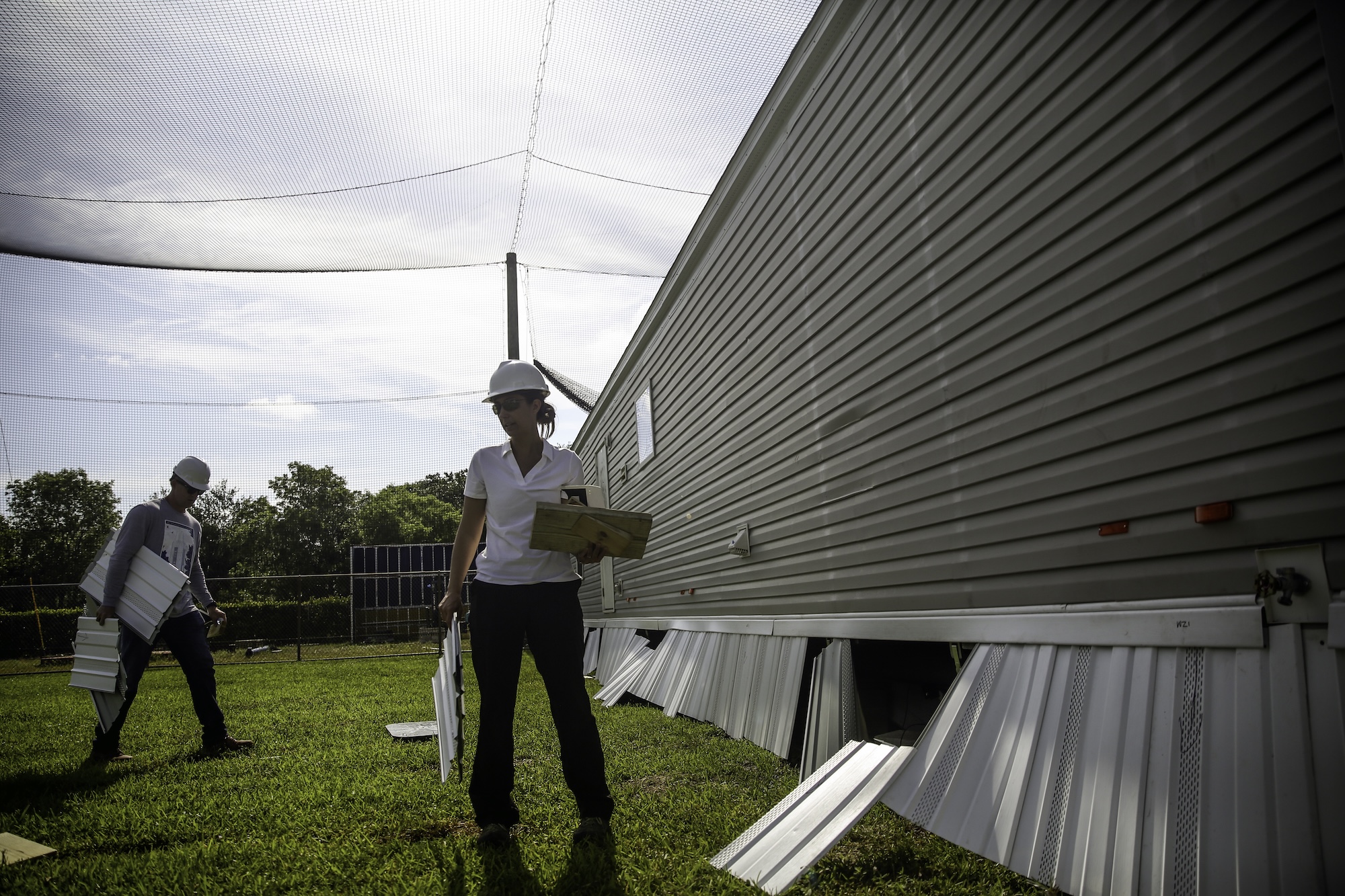
Those homes pose a unique threat. Designed to be transportable and affordable, they are typically installed above the ground on piers rather than the poured foundations common to site-built houses. Their ability to withstand extreme winds therefore depends not only on the structure itself but on the supports, straps, and anchors holding it down.
“When we look across the country, we see that manufactured housing is exposed at a higher rate to certain climate hazards than other forms of housing,” said Andrew Rumbach, a senior fellow at the Urban Institute who studies the impacts of natural hazards, climate change, and disasters on U.S. communities.
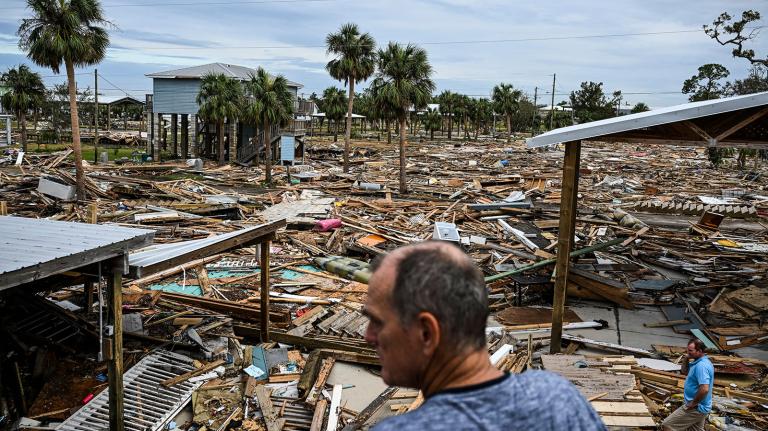
Roughly 5 million of these homes are in areas prone to the worst effects of climate disasters, according to a study Rumbach co-authored. A review of where 1 million new manufactured homes were installed during the past decade found that more than half went to Gulf states. Unlike conventional houses, which are regulated by local building codes, manufactured home structures are governed by a single federal construction and safety code administered by the Department of Housing and Urban Development.
That federal system also makes Sutley’s experiments potentially consequential: Changes prompted by her research could make manufactured homes nationwide more resilient.
The first question is whether the rules meant to keep them on the ground are strong enough.
Reshma Kirpalani
Many of the regulations governing conventional homes — structural strength, fire safety, electrical and plumbing systems — have counterparts in the federal code for manufactured homes. Given that they are designed to be transported to a site, they also face requirements regulating how they are supported and secured once there, including standards for piers, anchoring, and tie-down systems. Those rules vary in part according to the wind conditions the structure might face.
HUD divides the country into three regions based upon the wind speeds a home is expected to experience. Most of the U.S. falls within Wind Zone 1, where manufactured homes must be able to withstand winds reaching 70 mph, while more stringent zones 2 and 3 cover hurricane-prone areas along the Gulf and Atlantic coasts. Sutley wanted to determine whether manufactured homes everywhere would be safer if they followed the tougher standards.
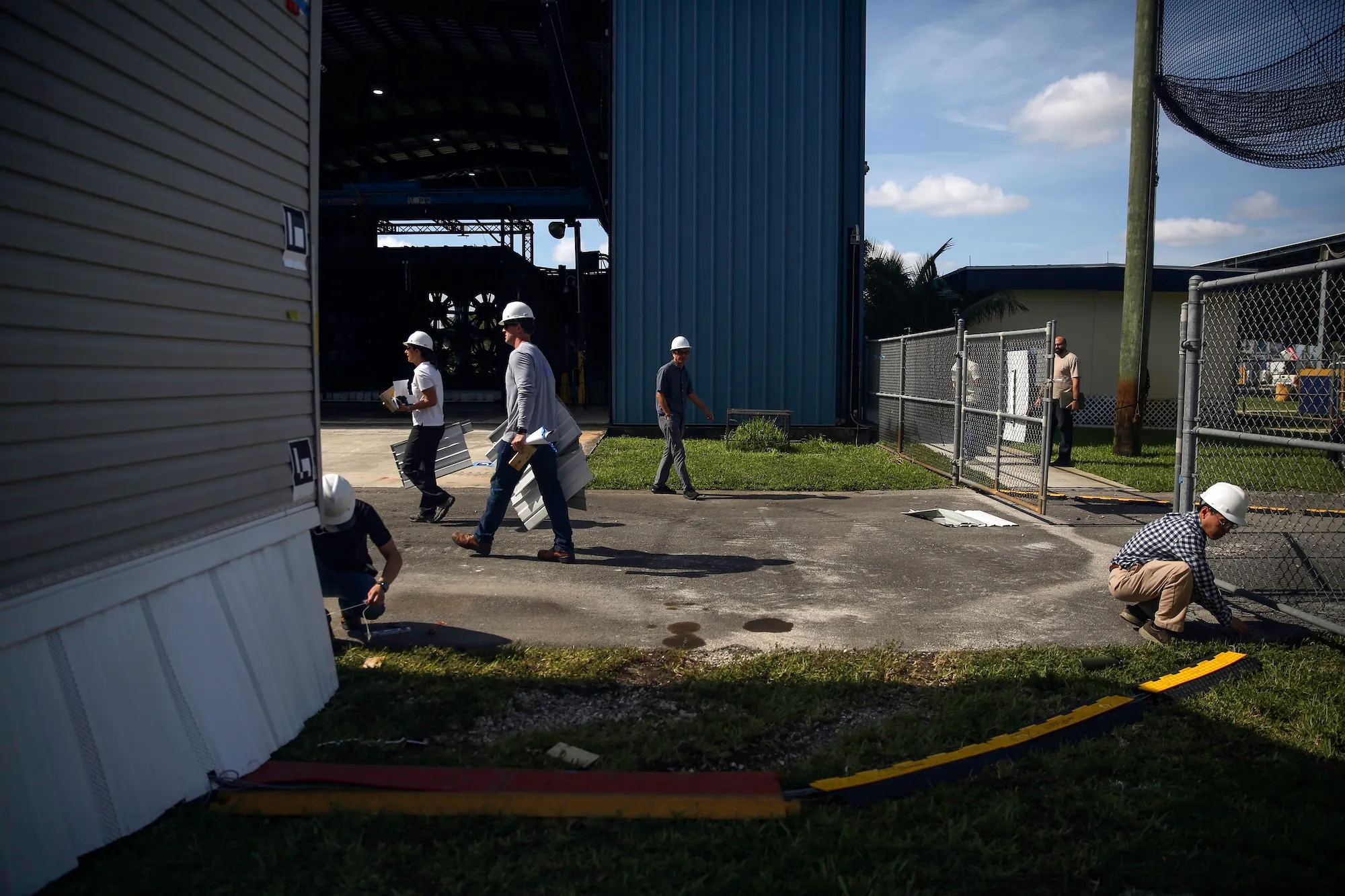
The experiment is simple: Test different homes under different installation configurations. Each system is tested to failure, which means damaging the structure beyond repair or toppling it. The researchers keep increasing the wind speed until one of those things happens.
Sutley’s team varied a host of conditions, including the installation standard, the wind speed, and the angle at which it approached. They also changed the home’s elevation, its supports and skirting, and whether any openings allowed wind to enter the structure.
A key difference in the standards is how the buildings are anchored against the forces trying to slide, lift, or overturn them. All manufactured homes require anchors that are embedded in the ground like tent stakes to secure diagonal ties, which connect the home to the anchors like guylines. They prevent the structure from sliding or lifting. Restraints called longitudinal anchors run lengthways along the home to prevent tipping on that axis. But vertical ties are not required in Wind Zone 1. These additional straps connect the frame directly to anchors below, helping resist upward force.
The preliminary findings suggest the difference matters.
Although Sutley and her team are still analyzing the hundreds of pressure measurements and other data points recorded during the tests, they found that Wind Zone 1 designs are inadequate. Sutley believes the research will show that using Wind Zone 3 retention systems can lower the risk of failure. That improvement, she said, could be relatively inexpensive, including requiring vertical ties on all home installations nationwide.
For Regina Blanchard, who helped Sutley’s team set up the homes for testing, the focus on anchoring speaks to changes she has watched over three decades in the business. Blanchard, owner of Blanchard’s Mobile Home Removals and Transport in Hollywood, Florida, said vertical ties once wrapped around the entire home. These days, they are connected to tabs affixed to the bottom of the home if they are used at all.
“They’re just riveted in,” Blanchard said. “And that’s horrifying because all of the torque and stress of an uplift on a house is on those anchors and on those sidewalls.” That makes them prone to breakage.
In another test, Sutley collaborated with Clayton Homes, one of the largest builders of manufactured and modular homes in the country, to test an alternative to tie-down straps: struts, or metal bracing. Unlike straps, which work only when taut, struts are rigid and can resist forces pushing or pulling against the home. Systems like these may offer a cheaper solution than pouring a permanent foundation, particularly when retrofitting existing homes.
For Sutley, collaboration with builders is promising in itself. The industry occasionally revises its construction and installation practices and often recommends changes to federal standards through the Manufactured Housing Consensus Committee. That means what happens to a handful of homes in front of the Wall of Wind could eventually reach far beyond the laboratory.
Blanchard welcomes improvements to the standards but cautions that “affordable homes are not affordable anymore.” Beyond the purchase cost of $80,000 to $120,000, buyers must pay setup costs that Blanchard estimates can reach $40,000 to $50,000 once electrical, plumbing, and HVAC are included.
Rumbach said it’s a concern he often hears from the building industry: Protecting affordable housing may make it less affordable. But upfront cost, he argues, is only part of the financial picture. “When a manufactured home doesn’t perform well in a heatwave, or is vulnerable to flooding, that is much more costly to a homeowner,” he said.
These costs add up. FEMA estimates that hurricane winds alone contribute to an average of $29 billion in losses annually.
There is an upside to updating the HUD code, Rumbach said: The entire industry must follow it, and moving at scale generally brings down costs. He points to Clayton Homes, which is already going beyond federal requirements in some areas to make homes more energy efficient and climate resilient. “They’re showing that you can do that, make those changes, without dramatically increasing the cost [per unit].”
HUD plans to review Sutley’s findings to determine if and how her team’s suggestions might be adopted. The agency is “committed to using research and innovation to make manufactured housing safer, more resilient, and more affordable,” a spokesperson said.
The improvements Sutley is studying are modest compared with the forces they are meant to resist: a different tie, a stronger connection, a metal strut transferring the load into the ground. But these relatively small changes could have enormous consequences if widely adopted.
Could these changes save lives? Sutley paused when asked, taking a deep breath. Her team has no control over whether its findings lead to changes in the HUD code. But if the changes were adopted, she said, “I absolutely believe they could save lives.”
For now, the houses have done their part. At the Wall of Wind, every failure leaves behind instructions for how the next one might remain standing.
This story was originally published by Grist with the headline At the Wall of Wind, engineers blow homes apart to learn how to save them on Oct 21, 2026.