This is an original story by Mongabay republished through the Indigenous News Alliance.
Philippine President Ferdinand Marcos Jr. arrived at the Grand Hyatt Manila on Sept. 10 to address hundreds of foreign business representatives assembled for the Luzon Economic Corridor investors’ forum.
Outside the hotel, hundreds of demonstrators had also gathered, carrying signs that read “No to Pax Silica!” The scene reflected both the government’s ambitious plans to ride the artificial intelligence wave and deep ambivalence in civil society.
Police confronted the crowd, shoving them with riot shields and batons on the street outside the hotel lobby. Activists say police injured at least 27 protesters and arrested five. Police, meanwhile, reported minor cuts and injuries to 16 personnel.
Protester Jona Yang, from the activist-scientist group AGHAM, said she was negotiating with the police to cool tensions when they arrested her. “We want the Marcos government and investors to see the outrage all of this has caused,” Yang told Mongabay. “They’re taking away our resources and our lands.”
The Luzon Economic Corridor, or LEC, is an economic initiative focused on the Philippines’ biggest island, begun in 2024. Pax Silica, the U.S.-led global pact to build an AI and semiconductor supply chain that is not reliant on China, includes the LEC. In April, Washington and Manila announced plans to build a 4,000-acre high-tech manufacturing hub in the Central Luzon region.
Pax Silica has become a lightning rod for political and environmental contentions. The government maintains it’s a boon for the Philippine economy. But opponents of the project, including Indigenous and local communities living on the land designated for the project, say it’s an international land and resource grab in the name of U.S. AI ambitions.
U.S. Secretary of State Marco Rubio visited Manila in July to affirm bilateral commitment to the project, with a final agreement slated for signing in November.
At the LEC forum, Pax Silica was discussed behind closed doors, and officials gave few details about its future. Angela Ignacio, an undersecretary at the Philippine Department of Finance, told reporters it would be premature to share any details on Pax Silica before plans are finalized. But she did call it a chance for the Philippines to become a “global player when it comes to technologies that will shape the future.”
Heather Variava, senior adviser to the U.S. State Department’s Bureau of Economic, Energy, and Business Affairs, added that “the goal of the U.S. is always to be an additive, to bring more power, to bring water, to bring more benefits to the Philippines.”
The Pax Silica hub will be built within New Clark City, a government-planned “smart” city inside the greater 79,000-acre Clark area, a former U.S. military complex. Clark is titled and managed by the Bases Conversion and Development Authority, or BCDA, an office under the supervision of the president. At a press briefing, development authority chief Joshua Bingcang shared a “conservative” estimate that the facility would need around 3 gigawatts of energy to run. He also said that it would be green and mainly solar powered.
“We are blessed with 300 days of sunshine,” Bingcang added.
Running consistently, the Pax Silica facility would demand about 26.3 terawatt-hours each year; by contrast, the Philippines’ entire service sector consumed about 28 TWh in 2024.
Giovanni Tapang, former dean at the University of the Philippines’ College of Science and a convenor of the Network Opposed (NO) to Pax Silica, told Mongabay that the Philippines has the “most to lose” among the 25 nations involved in the pact as it chains domestic resources to U.S. policies. “How many thousands of hectares will they be taking from farmers to build solar panels? And if we’re generating all this clean energy, why let the U.S. use it instead of local households?” Tapang said.
The development authority initially said that data centers could be part of the Pax Silica. But Bingcang and the president’s office later denied this in a September press briefing where he emphasized it would be a semiconductor facility.
A document shared at the LEC forum listed data centers as part of the planned infrastructure in New Clark City. It did not specify whether the data centers would be built inside the Pax Silica hub.
Bingcang said the Pax Silica hub would also consume about 16 million to 24 million gallons of water each day, sourced from rainwater via an impounding dam. “We can ramp it up to 300 million liters [79 million gallons] a day with the available technology,” he told reporters in Filipino.
Tapang voiced concerns about how the development authority’s plan would work during the Philippines’ dry season, which runs from December to May. “This is the same period where farmers need their water for irrigation,” he said.
The BCDA says it intends to house mineral processing technology as well. Thony Dizon of the advocacy group BAN Toxics said the government has yet to reveal anything about how it will manage the resulting waste. “How will the government ensure that after 30 years, we are not left with a contaminated environment and depleted natural resources?” Dizon said.
The United States’ history with Clark dates to a military base established in 1903, when the Philippines was under U.S. colonial rule. The base remained under U.S. military control until 1991, when Clark finally came under the control of the Philippine government 45 years after the country gained independence.
Long before that, historians argue, the area was the ancestral territory of the Aetas, considered to be some of the earliest settlers on the archipelago.
The Pax Silica site, located within the 23,350-acre New Clark City, overlaps with the ancestral domain claims of thousands of Aetas. A survey of the land by Arnisson Andre Ortega, a professor at Syracuse University in the U.S. and a member of the geographer group Countermapping Ph, revealed that planned construction for Pax Silica would impede on the lands of at least three existing Aeta villages.
“There is no ancestral domain title in that area,” BCDA chief Bingcang said, denying that the project would displace anybody.
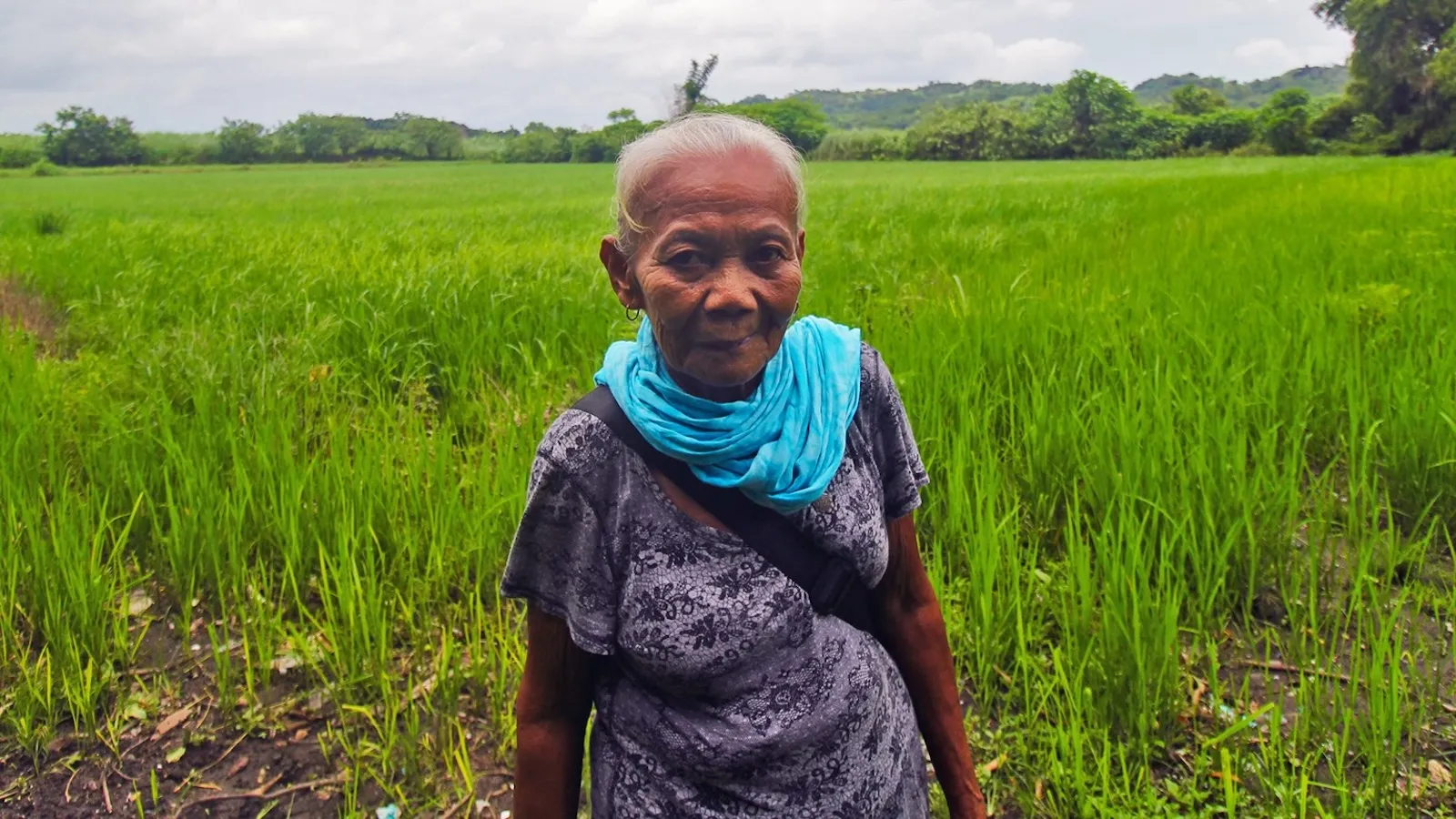
Michael Beltran for Mongabay.
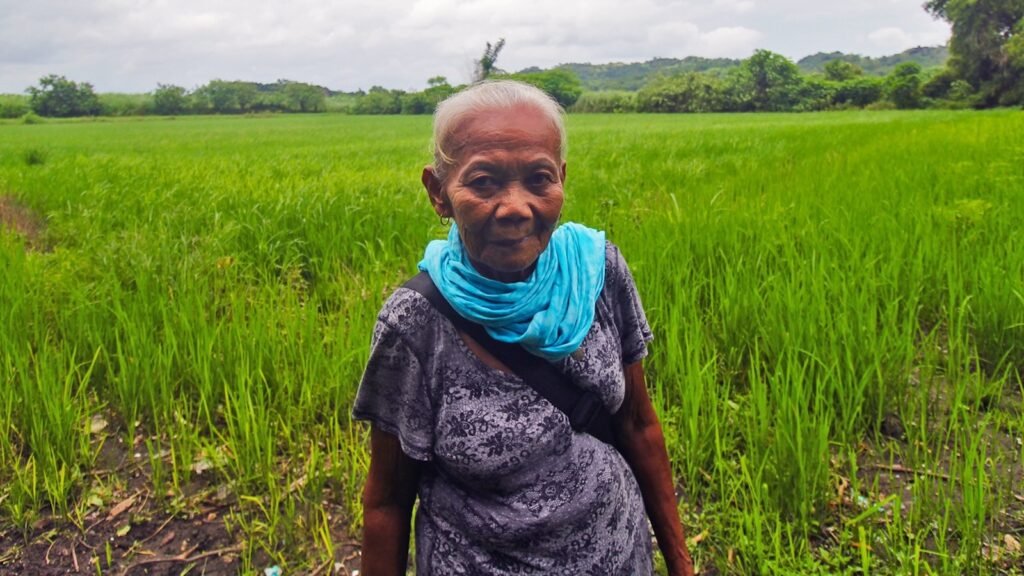
Gloria Capiz-Estabillo, 76, an elder of the Aeta Hungey tribe, told Mongabay that the development authority has already begun informing Aetas that they need to leave the land. “They’re setting up right in the middle of our land. Where are we going to live? How about our crops? Where will they take us, just drop us in the ocean?” Estabillo told Mongabay in Filipino.
To gain land rights, Indigenous peoples must apply for what’s known as a certificate of ancestral domain title from the National Commission on Indigenous Peoples.
Aetas in Clark have been lobbying for a certificate since 1994, but have been beset by frequent delays as the impoverished communities struggle to complete the minimum requirements needed: a detailed area map, a population census, genealogy of at least five clans covering the past three generations, and elder testimonies.
Ortega said the process has lagged for decades under “Indigenous-unfriendly” red tape involving the Bases Conversion and Development Authority and the commission. “The absence of a formal title does not invalidate their claim to their ancestral lands; rather, it highlights a critical lack of government support,” Ortega told Mongabay.
By contrast, the Pax Silica hub is supported by the Investor’s Lease Act, signed by President Marcos Jr. in September, which allows foreign businesses to lease commercial and industrial lands for up to 99 years.
The second day of the LEC forum was held in New Clark City. The BCDA led a field visit for the hundreds of prospective businesses. Hundreds of protesters continued to hound them, joined by nearby Aeta communities.
“They’ll have to kill us to take us off this land,” Estabillo said.
This story was originally published by Grist with the headline America’s AI ambitions threaten Indigenous lands in the Philippines on Oct 14, 2026.