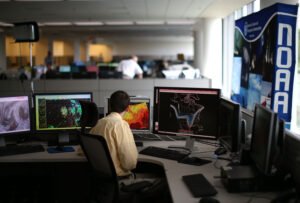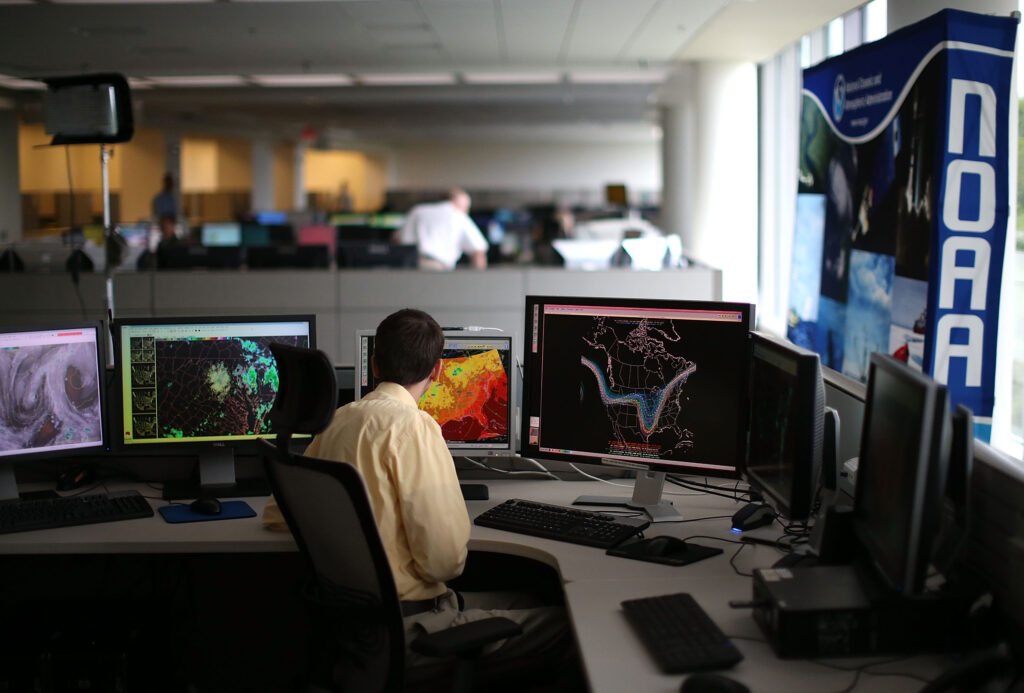
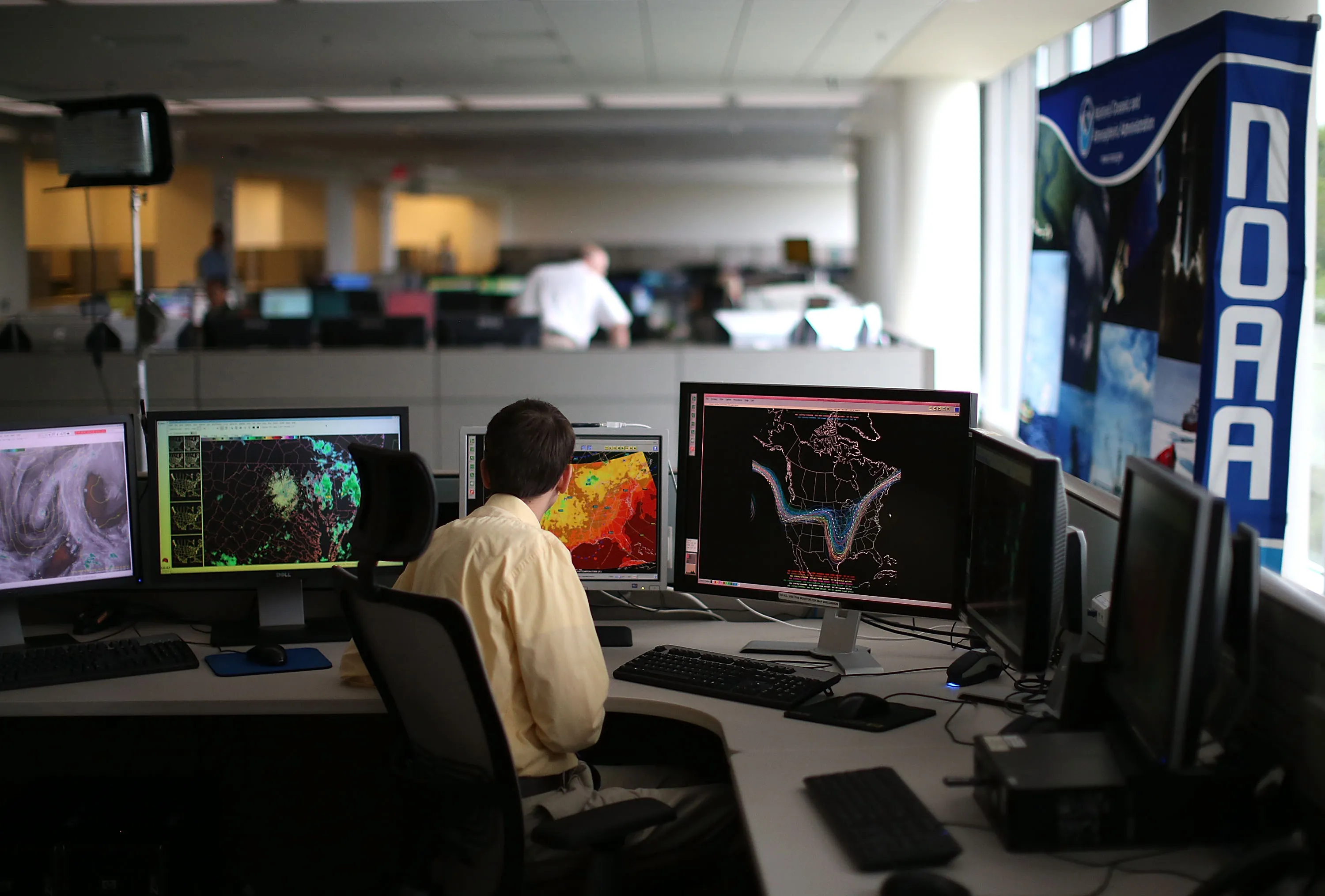
Last year was a tough time for anyone who studies climate change for a living. The United States, once respected around the world for its sprawling investments in science, suddenly reversed course. Shortly after President Donald Trump began his second term in office, his administration set to work slashing funds for America’s scientific institutions, scrapping billions of dollars in research grants and firing thousands of federal employees at agencies, from the Environmental Protection Agency to the National Oceanic and Atmospheric Administration.
People were “in shock,” said Aparna Shrivastava, who was a senior climate official in the Biden administration. In private chats, she found herself in conversation with dozens of experts who had recently lost their jobs or funding, but wanted to continue studying the rapidly warming planet or trying to prevent its worst effects. But the sudden cuts left many with few options.
All of them were trying to figure out, “what could we possibly do to address this?” Shrivastava said. Eventually, the conversations started happening in person. At a workshop convened by the Aspen Global Change Institute in Colorado last July, a group of more than 30 climate experts landed on a possible solution — one that would help fund new jobs for laid-off colleagues across the country. Today that idea is a full-fledged initiative, backed by tens of millions of dollars, with Shrivastava at the helm. They call themselves the Climate Reserve, and they’re just now taking their operation public.
Climate Reserve functions through a network of experts with a mission to identify the most critical climate work left in limbo and find a place where it can continue, even without federal support. Sometimes that means placing a climate researcher with an organization focused on the environment or climate; other times that means finding a new home for projects that the government cut from its budget, Shrivastava said.
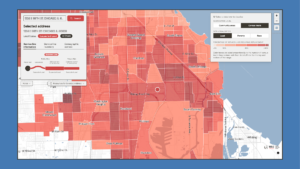
So far, Climate Reserve has funded more than two dozen new positions for climate experts. These people, known as their fellows, are now working across the U.S. at nonprofits such as the Environmental Protection Network and institutions such as the University of Minnesota. The group has also resuscitated a number of federal projects, such as EJScreen, an online map that shows which American communities experience the worst pollution. There’s international work happening too, such as a project mapping sea level rise on islands in Panama, and another measuring greenhouse gas emissions in five different African countries.
And there’s more that the group isn’t willing to share publicly. The hope is that a measure of secrecy will keep some of its fellows and projects out of the crosshairs of the Trump administration — which has been notably punitive with some of its funding cuts. After all, many of those working within the network still rely on federal funding in some capacity, or plan to apply for federal funding in the future.
Now that Climate Reserve is making progress, its leaders are willing to take the risk of being more open about their efforts to attract more funding for fellows. So many people are still out of work, Shrivastava said. Even the Lyft driver in Washington, D.C., who drove her to the airport to meet potential funders this spring happened to be a laid-off climate and energy expert.
The name “Climate Reserve” is meant to evoke a nature reserve as well as the Army Reserve — “the emergency group that you can call up to bring people together,” said Brittany Janis, executive director at the nonprofit Open Environmental Data Project, who was involved in the group’s discussions from the start. Her organization recently partnered with Climate Reserve to hire a former senior advisor for environmental justice programs in the Biden administration to keep the now-independent EJScreen tool up to date.
Funding these positions is meant to provide a kind of “parachute” that can help former federal workers, along with all their specialized knowledge and the relationships they’ve built, land in a safe place, Janis said. “How can we be really thoughtful about parachuting people to the right places so we aren’t losing all that institutional knowledge and that really critical basis for climate action in the U.S.?”
Unlike a traditional hiring or grant funding system, the group wants to emphasize collaboration rather than competition, according to Ben Poulter, who leads an emissions-monitoring program at Spark, a climate solutions nonprofit that is in the process of hiring two Climate Reserve fellows. “We realized early on that the changes that were happening could fragment the community even further as resources became scarcer,” he said. “The whole point of Climate Reserve is that we’re all in the same boat and we need to work together.
This philosophy — dubbed “movement generosity” by several of the group’s founders — means focusing on the broader goals of the climate movement and trying to share resources and expertise across organizations to achieve them. For instance, a single expert funded by Climate Reserve could split their time between two different organizations, allowing them to coordinate on similar projects and reduce redundancy.
Poulter, who previously coordinated greenhouse gas monitoring efforts between federal agencies, now leads a program tracking how ecosystems that are especially sensitive to warming, like wetlands, will release more planet-warming emissions as temperatures rise — a feedback loop that is often overlooked by climate models. One of the fellows working at Spark will coordinate these measurements across five different African countries, while another will translate that science into policy recommendations for those countries, Poulter said.
There’s also a lot of vitally important, but “unsexy” data-crunching projects being saved by Climate Reserve, said Sonia Wang, who leads the Center for Climate and Environmental Data at the Data Foundation, a nonprofit think tank. It’s an important, and often invisible, part of understanding the realities of climate change. For example, two groups using satellites to detect methane emissions might end up with different estimates if they aren’t using the same wind speed models.
Sorting out these discrepancies is “not the flashiest thing, but when you look under the hood, this is really what’s necessary,” Wang said. Her organization has taken on four Climate Reserve-funded experts to help with these kinds of projects that make it easier for decision-makers and scientists to trust climate data, she said.
By the end of this month, Climate Reserve will have placed 50 climate experts in new roles, and it plans to triple its funding by the end of next year, Shrivastava said. And if federal support for climate research eventually returns, its organizers hope the network they are building can make the entire field more collaborative and resilient to political shifts in the future. “We are not at all looking to replace the government. We’re just stepping up to try and meet some of the needs here,” Shrivastava said.
Climate change may be politicized in the United States, but its impacts “affect us all,” said John Balbus, a Climate Reserve fellow who spent 15 years in the federal government. Most recently, he was a senior official in the Department of Health and Human Services coordinating projects to address the health effects of climate change, such as seasonal forecasts for extreme heat and wildfire smoke. He is now continuing that work at the Federation of American Scientists and as an independent consultant.
The climate and health experts that Balbus once worked with would “do anything in their human power” to continue living a life of public service, even without a government job, he said. And the need for this kind of work, he added, isn’t going away. “The need is only going to get stronger every year.”
This story was originally published by Grist with the headline Trump cut their climate jobs. This secretive network found them new ones. on Sep 24, 2026.