Editor’s note: This report contains discussion of suicide. Troops, veterans and family members experiencing suicidal thoughts can call the 24-hour Suicide and Crisis Lifeline at 988 and dial 1, text 838255 or visit VeteransCrisisLine.net.
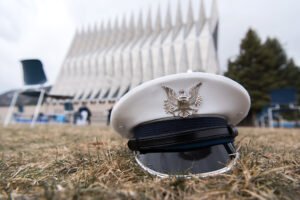
The parents of an Air Force Academy graduate who died by suicide filed a federal lawsuit against the school, arguing that it failed to protect her from sexual assault and adequately address the trauma that followed.
Gary and Colleen Foster filed the wrongful death case on July 13 in a Colorado federal court on behalf of their daughter, 2nd Lt. Cailin Renee Foster, who died six months after graduating from the academy in 2021.
In court documents, the Fosters detail a disturbing narrative about their daughter’s rape and argue that “systemic negligence, regulatory violations, and failures of clinical and administrative safeguards” contributed to her “severe psychological trauma and preventable death.”
Although they only list the federal government as the defendant, court documents identify by name the alleged rapist, other cadets at the school who knew Foster or witnessed concerning behavior, and Foster’s commander, whom her parents argue made the issue worse.
The sexual assault
According to court documents, Foster was sexually assaulted by a male cadet during her first year at the academy in 2017. He allegedly followed her into her dorm room after a party, locked the door and then attacked her.
“He then threw Cailin onto her bed and forcibly raped her, ejaculating inside of her and leaving shortly thereafter,” the court documents say.
The Fosters argue that the school failed to hold the cadet accountable because, even before the attack, he had displayed “coercive, threatening, and nonconsensual advances toward multiple female cadets.”
According to court documents, school authorities received multiple reports of him confronting Foster outside her dorm, peeping into dorm rooms, inappropriately touching female cadets and consuming alcohol on school grounds.
Despite the reports, he “was not issued a No Contact Order, not placed in quarters away from cadets he’d harassed, or otherwise restricted in any way from accessing freshman female cadets at the Academy.”
Months after the attack, however, the suspect was issued No Contact Orders for multiple cadets. The school also encouraged him to voluntarily disenroll for poor academic performance. Despite his reported behavior, he received an honorable discharge.
The academy’s failed response
The lawsuit says Foster’s mental health deteriorated after the sexual assault and argues that the academy failed to provide adequate support.
Citing the 2003 Fowler Commission, which found that Air Force leadership showed “indifference, incompetence or a combination of both” toward sexual assault allegations at the academy, the lawsuit says Foster “feared reporting the rape” because she believed officials “would take punitive action against her and her friends.”
Still, near the end of her freshman year, Foster did report the attack to her element leader — a cadet in a leadership position — along with four friends. One of them told a chaplain, who “actively discouraged” the friend from reporting the rape to authorities.
In the years after the attack, Foster’s friends described her as “extremely depressed” when comparing her behavior before the sexual assault.
In March 2020, two cadets died within two days of each other, both believed to have died by suicide. The lawsuit says one of the cadets was Foster’s boyfriend.
The lawsuit argues that the academy did not formally activate its disaster mental health team to help Foster, nor did it take decisive action when her parents reported that she was sending suicidal messages to her deceased boyfriend’s social media account.
Then, in October 2020, Foster was forced to complete a physical fitness test despite an injury. The lawsuit argues that the combination of her grief and failing a fitness test for the first time contributed to her suicidal ideation.
Additionally, sometime between March and October 2020, Foster attempted to kill herself by hanging, but another cadet stopped her.
Although Foster’s commander sent the academy’s Commandant of Cadets a message describing her disturbing behavior, the lawsuit says she received “no professional mental-health care.” Instead, medical personnel completed a one-page intake form.
Out in the fleet
In May 2021, Foster was assigned to Wright-Patterson Air Force Base in Ohio, where she experienced “unnecessary psychological pain” and “bullying” from her supervisor, according to the lawsuit.
The lawsuit says the former was because Wright-Patterson was where Foster’s deceased boyfriend was buried and the latter was because her supervisor’s actions were “unusual and inappropriate” for the supervisor’s rank and position.
According to court documents, Foster failed another fitness test, but officials initially refused to tell her by how much. “After repeated inquiries, the Air Force finally admitted she failed by one point,” the lawsuit says.
Afterward, Foster received two “counseling” sessions from her supervisor for failing the fitness test and attending college classes outside of work, which the supervisor said demonstrated that Foster was “not supporting her mission.”
A little more than a month later, in November 2021, Foster died.
In 2022, the Air Force released the results of an investigation into the bullying allegations, which cleared the supervisor of wrongdoing. But the lawsuit says the full report was only released in response to a Freedom of Information Act request and contained “159 completely blacked-out pages.”
Two years later, Foster’s parents received an email from a high-ranking civilian employee who said she was also being “harassed and bullied” by the same supervisor, which “negatively impacted her own mental and physical health.” The civilian employee said she had also filed multiple complaints against the supervisor.
The fight after Foster’s death
The Fosters say they have been pursuing legal action since learning of their daughter’s sexual assault, which she referenced in her suicide note.
“Mommy, Daddy and sissy, You couldn’t have done anything to stop this. Do all that you can to make sure that I am the last one. Love you for all to eternity, Cailin,” she wrote.
Initially, the Fosters said they could not understand why their daughter, who came from a family with a proud tradition of military service and attending military academies, would blame the school.
“You do not understand,” Foster wrote. “The Academy does not care. They will let you down.”
In 2024, the Fosters filed a $20 million wrongful death claim, which the Air Force denied a year later.
Bradford S. Hunt, writing as the chief of the General Torts Branch for the Air Force Judge Advocate, told the Fosters’ attorney that he had considered their claims and “after careful review, I regret that I must deny them.”
Hunt explained that the federal government “is not liable for servicemembers’ injuries or death that arose out of activities incident to their military service” and that legal precedent bars claims that the government was responsible for protecting Foster from sexual assault.
However, Hunt added that if the Fosters were dissatisfied with his decision, they “may now file suit” in federal court.
“I cannot begin to imagine the pain they have experienced through this ordeal,” Hunt wrote. “I am grateful for Lt. Foster’s dedication and service to our nation, and for your clients’ desire to improve the Air Force culture for all current and future servicemen and servicewomen.”
Foster’s father, Gary, a retired Air Force lieutenant colonel and academy graduate, told Stars and Stripes, which was first to report on the lawsuit, that he owes it to his daughter to push for accountability.
“We need people to stand up and be heard, to join the fight, for change, reform and system accountability,” he said, adding, “we just want to prevent the next Cailin from being victimized.”