More than half the world’s population depends on rice to survive. But this year’s El Niño weather pattern and the ongoing climate crisis are intensifying dry, hot weather that could cause yields to plummet.
Globally, rice production is set to fall for the first time in more than a decade, according to projections by the U.S. Department of Agriculture. In the U.S., where most rice is grown in the Mississippi Delta, production for the upcoming season is expected to fall by more than half, to the lowest levels in 40 years.
“High temperatures can substantially reduce the rice yield,” said Atul Jain, a professor of climate, meteorology, and atmospheric sciences at the University of Illinois. “Farmers are going to be hit hard during these extreme climate events.”
How much rice farmers can produce depends on a range of weather conditions, such as precipitation and temperature. Climate scientists have predicted that this year’s El Niño will be the strongest on record, describing it as a “super El Niño.” The naturally occurring phenomenon, which happens roughly every two to seven years, will continue to drive extreme weather, including intense drought, in regions across the globe.
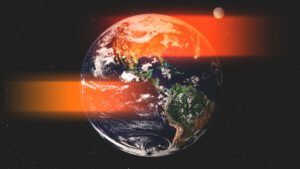
Researchers at Columbia University’s Climate School shared this week that the current El Niño has already reached “very strong” levels and will continue to intensify in the coming months. During a given El Niño year, trade winds weaken and warmer ocean water in the Pacific drifts eastward, leading to convection, or warm air rising off the ocean. “That acts like ringing a bell,” said Radley Horton, a professor at the Climate School. “It sends out waves that resonate all across the globe.” The result is that some areas experience much wetter seasons than usual, while others see much drier months.
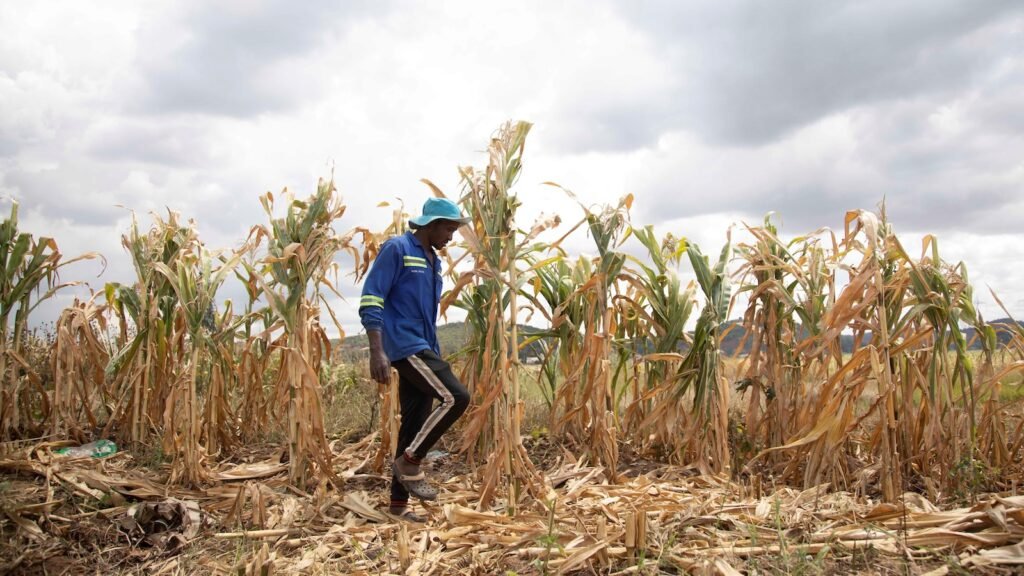
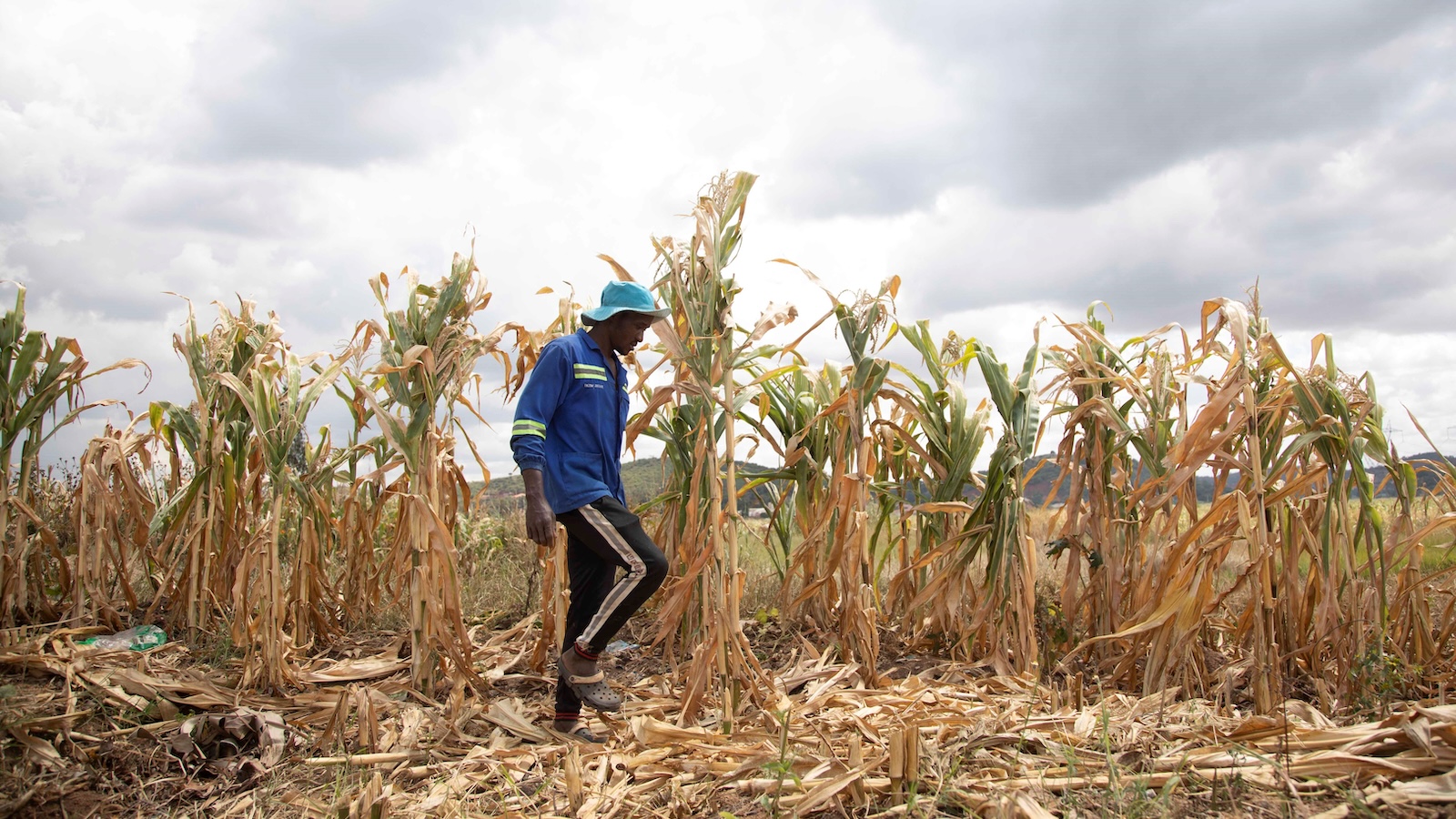
As this El Niño intensifies, the world could experience major disruptions to food systems dependent on staple crops like rice. “Drought,” said Jeremy Zwinger, president and CEO of The Rice Trader, an industry analysis company, “kills commodities.”
The good news, though, is that many countries are more prepared than ever for the variability that climate change brings to food production. In recent decades, governments, nongovernmental organizations, and corporations have invested billions of dollars in improving agricultural technologies, especially irrigation systems and new, heartier strains of rice (some of which actually slash planet-warming emissions).
Recent advancements in irrigation and plant-breeding are an insurance policy of sorts that has been useful in years like this, when the rainy monsoon season in parts of South Asia has been delayed and unpredictable. India has been especially successful at using new technology to boost production, which has pushed it to the top of the list of rice-growing countries this year.
In some ways, the agricultural gains have worked almost too well. The world is now oversupplied with rice, said Zwinger, which has resulted in falling prices and less money for farmers. “It’s a mind twist,” he said, “because you’re penalizing somebody for success.”
In another twist, the very carbon dioxide that is causing global warming also makes it easier to grow rice. Higher concentrations of CO2 in the air enhances photosynthesis and improves water-use efficiency, said Jain, calling it “the primary environmental factor” contributing to the surge in worldwide rice productivity.
Still, the increasingly warmer and dryer conditions that climate change will bring are expected to inhibit rice growth. A new study found that climate models have generally underestimated the production loss by as much as half. For every degree of warming Celsius, it said, rice production will fall about 8 percent.
“Climate change amplifies these pressures through higher temperatures, erratic rainfall, floods, salinity intrusion and longer dry spells,” said Alisher Mirzabaev, senior scientist and policy analyst on climate change for the International Rice Research Institute.
Another worry is that some advanced irrigation systems, especially in India, are depleting long-term ground water stores in order to meet short-term needs. “For this season, the rice growers have basically used ground water,” said Sampriti Baruah, the head of sustainable agriculture for the India office of environmental think-tank World Resources Institute. This type of excess withdrawal will eventually catch up with farmers, she said, “But that’s the fallout of the irrigation system.”
These risks are why experts say a continued focus on adaptation measures remain critical. “These different management practices help us offset some of these climate impacts,” said Jain. Of farmers, he added, “if they are very well prepared for that, definitely they can overcome all these issues.”
On the whole, Zwinger said he isn’t too worried about El Nino causing a slump in rice production this year. The excess in the system should be able to satisfy demand, and less supply could improve pay for many growers. But, at the same time, he certainly isn’t cheering for El Niño, either.
“I know certain countries will really suffer,” said Zwinger. “What you’re going to have is the have and the have-nots.”
Zwinger is especially worried about the Philippines, where rice makes up half of the typical meal, and sub-Saharan Africa, both of which are major rice importers. An extra-strong El Niño would also worsen food security in other vulnerable regions around the world, including southern Africa, South Asia, and parts of Brazil.
In Indonesia, one of the globe’s top rice producers, a weaker monsoon season due to El Niño would mean less rainfall. This could delay the planting season for rice, ultimately leading to reduced yields. In 2015, another very strong El Niño year, the country had already seen significant drops in rain totals by the early fall, said Horton. Resulting fires blanketed the parched country, as well as Singapore and Malaysia, in heavy smoke. That in turn impacted public health, particularly for outdoor agricultural workers. This year, “we’re concerned about seeing all these effects at once,” Horton said.
Whatever El Niño and climate change bring, Jain’s research suggests that technology can help mitigate rice production problems — at least for now. “The challenge for the future is whether these management improvements can continue to keep space as the climate intensifies,” said Jain. “It will be the key scientific and the policy question.”
This story was originally published by Grist with the headline Why rice crops could be in for a weird year on Jul 31, 2026.