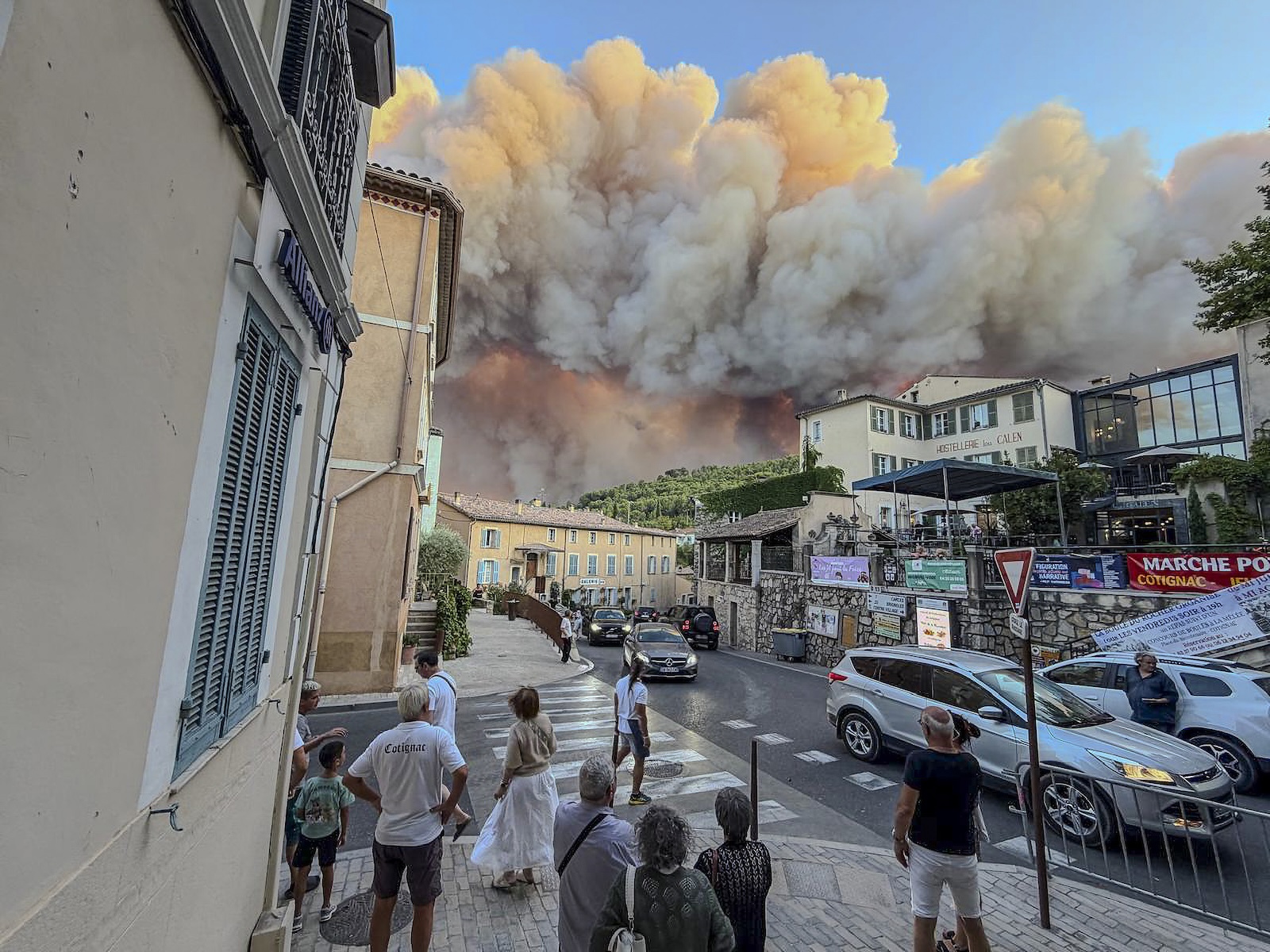
Over the past week, hundreds of thousands of people in France and Spain fled their homes, many in the dead of night, carrying only what they could. In the coming days and weeks, as evacuation orders lift, some will come home to partially destroyed towns. Others will only find ash.
The fourth heat wave of a broiling summer is underway this week, and Europe has already seen one of its most destructive wildfire seasons on record, leading to one of the largest evacuation of people on the continent since World War II. It’s also the latest consequence of climate change, according to a study released on Thursday by World Weather Attribution, a scientific nonprofit that analyzes the role of global warming in extreme weather events. Human-induced climate change made the likelihood of fire-prone conditions in France at least twice as likely, and at least 20 times as likely in central Spain.
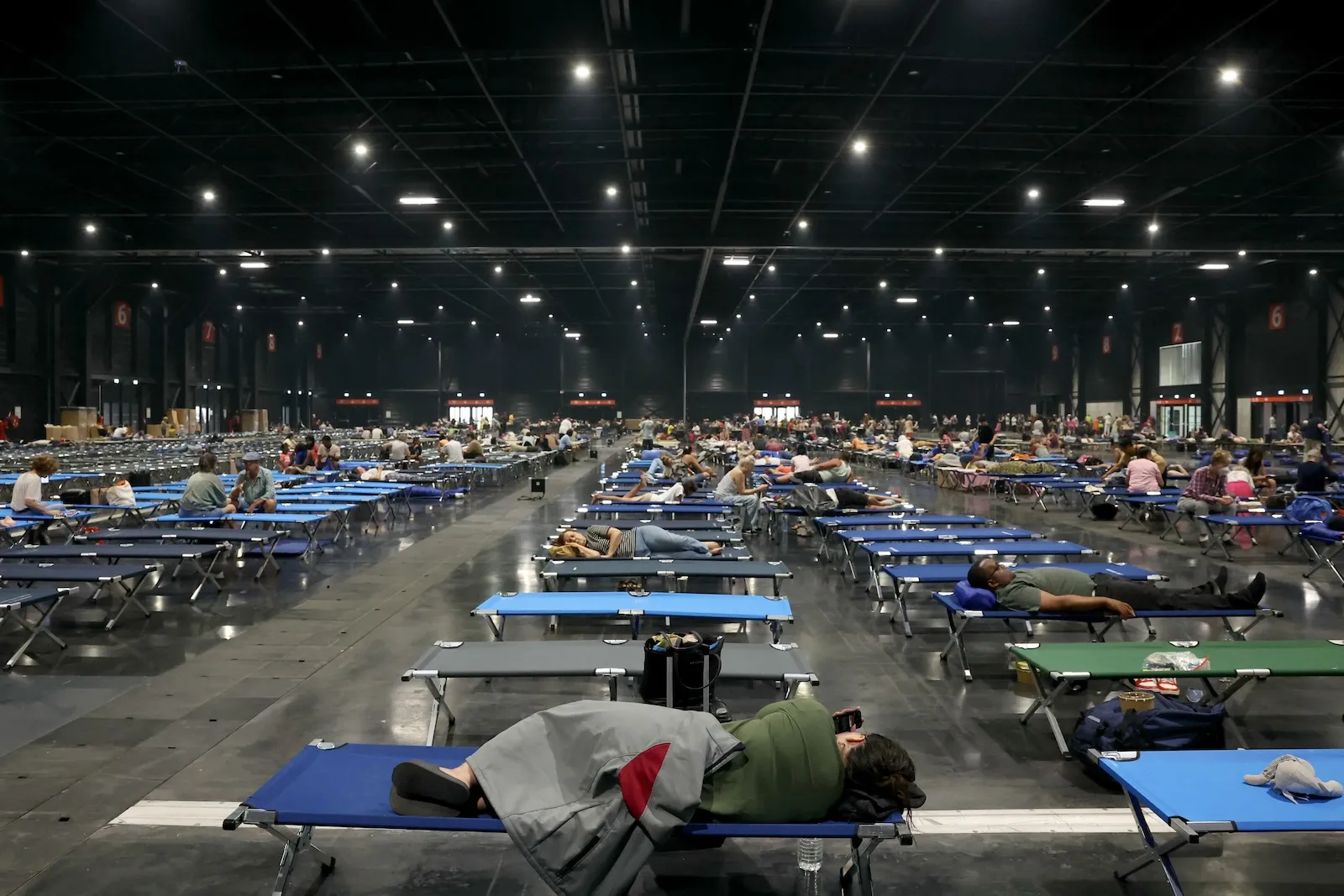
“This is not an isolated event, it is part of a pattern,” said Maria Alcazar Castilla, the deputy regional director of the International Federation of Red Cross in Europe. The Red Cross is helping coordinate the disaster response effort in both countries and providing supplies and temporary shelter for thousands.
For months leading up to the recent wildfires, Western Europe had been scorched by back-to-back heatwaves and an extended drought that dried out trees, shrubs, and farmland, turning the landscape into a tinderbox. Climate change makes the confluence of these extremes more likely, scientists say.
Last year, similar conditions created Europe’s worst wildfire season in history, with more than 2 million hectares burned by September. This year could be on track to surpass that: Some 430,000 hectares have burned so far — roughly 100,000 more than this time last year with two months left to go. In Spain alone, the burned area is roughly equivalent to the size of London.
With heatwaves projected to continue in the coming weeks, the risk of more fire looms over the continent. Other research on Southern Europe, also released on Thursday, found that summer days with conditions making them prone to extreme fires have more than doubled in recent decades.
At the height of the disaster this week, more than 300,000 people had been displaced across France and Spain. Rural areas that rely on farming and tourism have been the worst hit, Alcazar said. “The impact to the livelihoods of people will be huge.”
ALain Jocard / AFP via Getty Images
The high temperatures that set the stage for these fires had their own devastating consequences. This June was the hottest ever recorded in Western Europe. In addition to causing nuclear reactors and trainlines to shut down, the oppressive heat killed thousands of people across the continent in the span of a few weeks.
This summer has shown that climate change is a “national security emergency facing Europe and threatening our way of life,” said officials from the United Kingdom and Spain in a joint statement on Thursday.
Scientific research that links climate change to weather events is a relatively young field known as attribution science. Groups like World Weather Attribution skip the typical publishing process in science and use rapid analysis methods to get answers faster. The goal is to give the public an understanding of the role climate change plays in an extreme event before the newscycle has moved on.
Clair Barnes, a research associate at World Weather Attribution who led the analysis, said this particular study was completed more quickly than the organization’s usual studies. It drew from the group’s earlier research on heat and drought, which, along with wind speed, are key components in so-called fire weather. The group also analyzed historical weather data to compare this year’s fire conditions with those from past summers, as well as with simulations of a world without climate change.
“As long as we continue to emit fossil fuels into the atmosphere, those greenhouse gasses are going to continue to warm the planet more,” Barnes said. “This is just the beginning of how bad it’s going to be.”
One significant factor, the group found, was a rainier-than-usual winter in January and February, which prompted a burst of vegetation growth in the spring. Then, as the months-long drought set in, those plants dried up, becoming the tinder that fueled these fires.
This phenomenon, sometimes called, “weather whiplash,” is a direct result of climate change. As the atmosphere warms, it gets spongier and thirstier, sucking up more moisture from the land and holding onto it for longer periods of time. That, in turn, leads to more intense rainfall that happens less frequently.
FBM Media / Getty Images
How people use the land can also make wildfires conditions significantly worse, said Robert Field, a fire and climate researcher at Columbia University in New York.
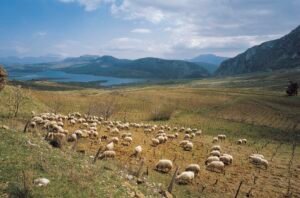
In both France and Spain, abandoned farmland and a shift away from cattle, which graze down plants, might have played a role in fueling the fire. In France, the wildfire outbreak was centered in the Landes de Gascogne, a coastal region with an abundance of planted pine forests. Research on wildfires worldwide has shown that timber plantations like these can be twice as flammable as natural forests.
“I don’t think it’s like an issue of firefighting capacity or investment,” Field said. “It’s fundamentally an issue of landscape management in the face of global warming.”
Since Tuesday, firefighters have managed to partially contain many of the fires and authorities have more than 100,000 evacuees to return home in southwest France. A weak cold front is also on its way to Europe, potentially providing a small window of relief, according to Jason Nicholls, a meteorologist and international forecasting lead at AccuWeather.
But another surge of heat could come as soon as this weekend, with more heat expected by mid-August, forecasts show. “I don’t see any drought relief in the near term, which would mean the wildfire risk will stay very elevated,” Nicholls said. The drought and heat will continue to smother France, Spain and other parts of Central and Western Europe, like Germany and Hungary.
“I’ve been doing international forecasting for 20 years,” Nicholls said. “These wildfires have been some of the worst I’ve ever seen.”
This story was originally published by Grist with the headline Here’s what supercharged the monster wildfires in Spain and France on Jul 31, 2026.