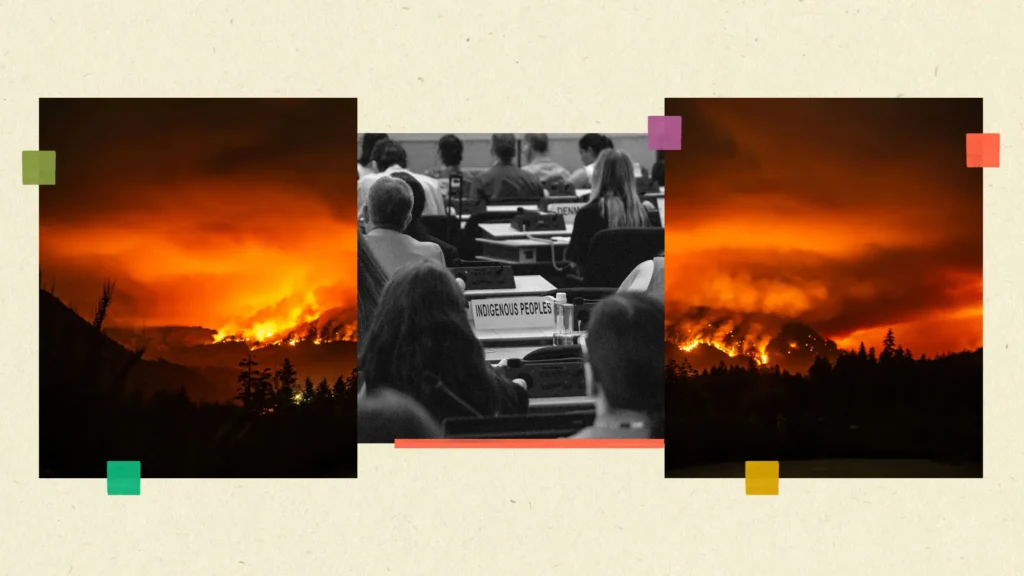
More than 900 wildfires are burning throughout Canada, with devastating impacts for First Nations. Thirteen Nations remain under evacuation orders that have forced 2,182 people from their homes.
The Namaygoosisagagun (Collins) First Nation watched one blaze largely destroy its entire community in less than an hour, forcing them to flee by boat. Residents reported having only minutes to gather their belongings before homes were overtaken by the flames on Wednesday, and Anishinabek Nation Grand Council Chief Linda Debassige said in a statement that all community members have been accounted for pending a full assessment.
“It is with heartfelt sadness that I share that our member First Nation, Namaygoosisagagun First Nation, has been devastated by an unexpected and fast-moving wildfire that advanced toward and through the community, causing extensive damage and destruction to homes and community buildings,” Debassige said in the statement.
Of the 903 fires burning as of Friday, 750 remained out of control and 43 had started within the prior 24 hours.
The effect has been greatest in Ontario, where seven First Nations have fled the 193 fires now burning there. According to the Chiefs of Ontario, several communities were cleared under mandatory orders issued by their leadership with support from the Ontario Provincial Police. In addition to Namaygoosisagagun, Whitesand First Nation, Kiashke Zaaging Anishinaabek, and Animbiigoo Zaagi’igan Anishinaabek are among those impacted by those orders.
Dozens of non-Indigenous communities throughout the province have been ordered to evacuate as well.
The Namaygoosisagagun (Collins) First Nation is about 125 miles north of Thunder Bay and inaccessible by road. Debassige told The Canadian Press that residents did not receive advance warning from provincial or national officials, nor did they receive any evacuation support. It’s been reported that community members went door to door warning their neighbors, and more than two dozen people fled by boat just as the flames approached.
Meaghan Daniel, a lawyer who represents Collins First Nation, told The Canadian Press that residents also are being denied assistance because the national government does not recognize it as a First Nation.
Although residents are recognized as First Nations people under the Indian Act, the community itself is not. Its leaders have long sought official recognition. Daniel sent a letter to Mandy Gull-Masty, the Indigenous Services minister calling on the agency to provide the emergency, recovery, and reconstruction support recognized communities are entitled to.
“To be clear, if Namaygoosisagagun is denied access to the emergency and rebuilding supports available to recognized First Nations, it will not simply suffer a slower recovery. It may lose forever the opportunity to rebuild the community its members spent decades creating,” the letter states, according to The Canadian Press. “In those circumstances, the question is not merely whether recovery will be delayed. It is whether Namaygoosisagagun will have a future in the place it has called home since time immemorial.”
In a statement emailed to The Canadian Press, Eric Head, a spokesperson for the agency, said efforts are now underway to determine the community’s immediate needs and coordinate support to meet them.
As the situation unfolds, many other First Nations are currently undergoing the processes required to declare states of emergencies and evacuate their communities.
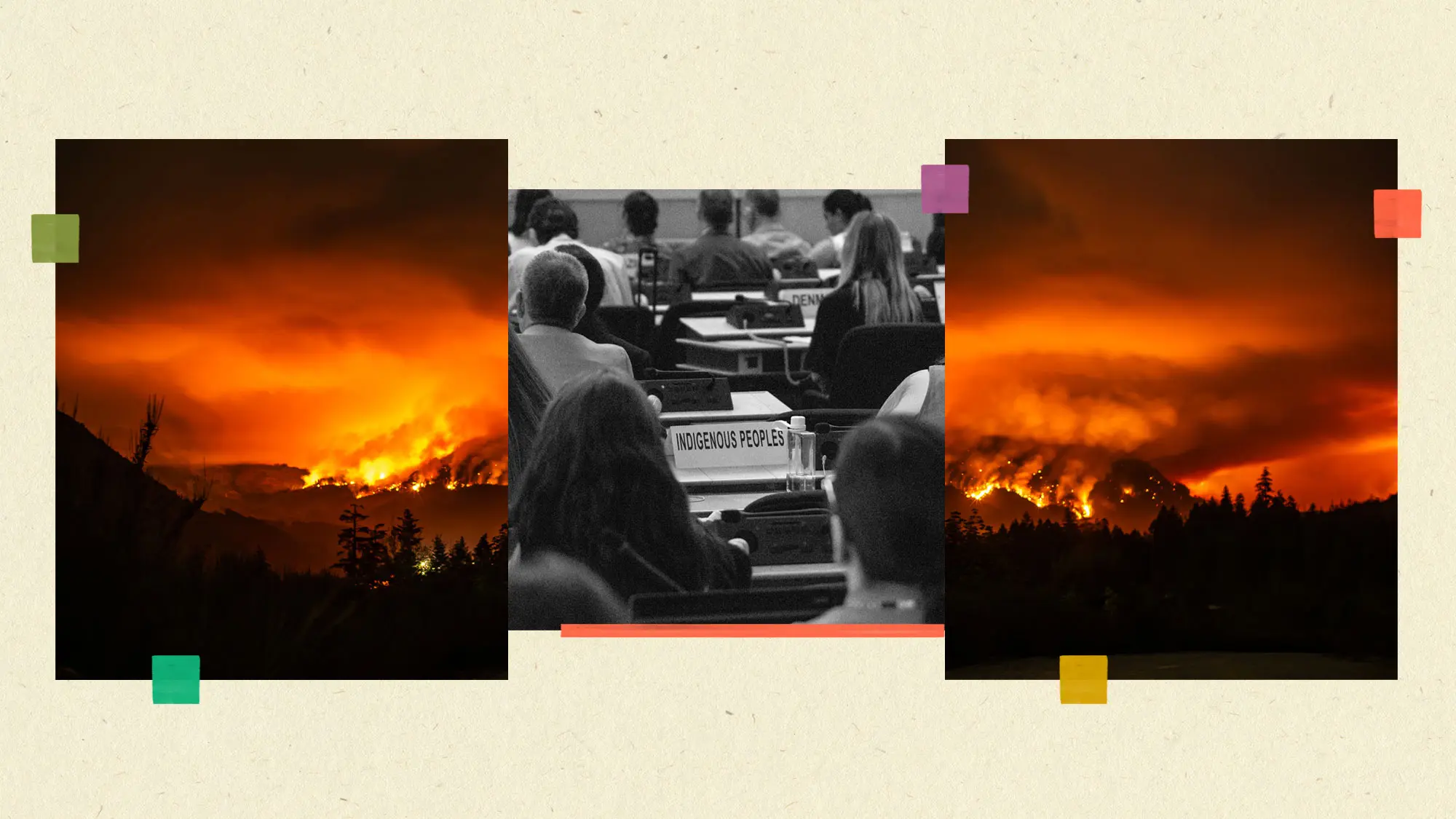
Ontario Chiefs held an emergency meeting Wednesday and expressed frustration with the bureaucratic processes in place to access emergency response services and a lack of communication from government officials regarding practices in place to declare a state of emergency.
“Jurisdictional disputes and administrative delays have immediate consequences and put lives at risk,” said Ontario Regional Chief Abram Benedict. “The priority of our leadership is to get people out as quickly and safely as possible. This needs to be everyone’s priority rather than financial discussions and technicalities.”
Benedict added that people are coming together to help one another.
“We are on the front lines of this catastrophe that is having international impacts. Our First Nations Leadership, emergency responders, and community members are working to protect their people and homelands,” Benedict said.
On Thursday, during their national assembly in Ottawa, the Assembly of First Nations passed emergency resolutions to provide support for Namaygoosisagagun and other impacted First Nations. It also calls on the federal government to provide ongoing support throughout the crisis.
The Anishinabek Nation asked for prayers for the people of the community that are dealing with this unprecedented loss.
“We ask that you please keep Chief Paavola, the citizens of Namaygoosisagagun First Nation, and all those affected by these wildfires in your prayers, and give them the privacy, time, and space required as they navigate this devastating situation,” the Nation said in a statement. “We send our heartfelt condolences, and our thoughts are with Namaygoosisagagun members who have suffered this tremendous loss of their entire community; our Anishinabek Nation family will be with you.”
Grist provided additional information for this story.
This story was originally published by Grist with the headline Thousands flee as First Nations bear the brunt of Canada’s wildfires on Jul 17, 2026.