CHRISTCHURCH, New Zealand — The U.S. Army’s 25th Infantry Division (25th ID) has undergone a veritable metamorphosis in the past few years, but Maj. Gen. James Bartholomees, its commanding general, explained even more transformation is coming.
Speaking to Defense News from the Philippines, Bartholomees confirmed that, as an original Transformation in Contact division, four of his five brigades have changed significantly already. Following his mobile infantry, artillery and sustainment brigades, he revealed the 25th Combat Aviation Brigade (CAB) is “next on the docket to do some transformation.”
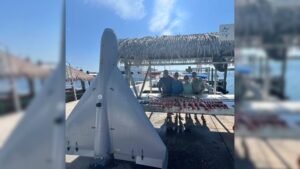
“The Gray Eagle company that was in Alaska is going to move to Hawaii – and what we see over time is, as the Army determines what type of larger-class unmanned aerial systems it uses, that those will land in the CAB.”
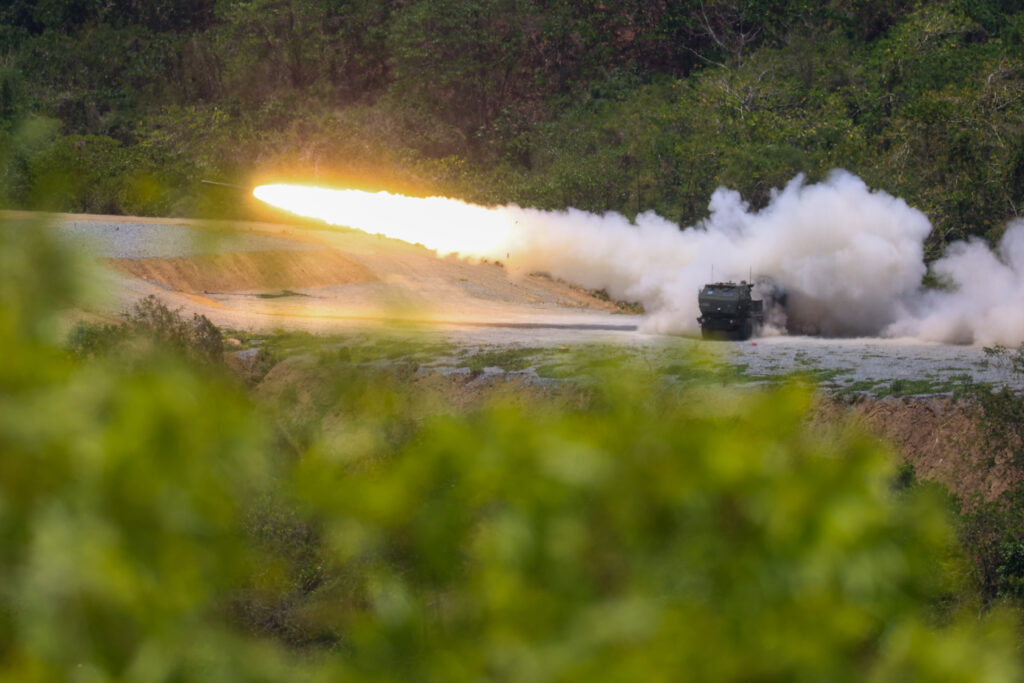
The general said longer-range drones “are essential to support the ranges that we can now shoot out to, particularly with HIMARS.”
In fact, 25th ID was the first U.S. infantry division to receive HIMARS, a weapon that greatly extends the formation’s reach compared to incumbent M777 and M119 towed howitzers. Because of HIMARS, Bartholomees pointed out his “division artillery is really what transformed the most.”

He highlighted how the “Tropic Lightning” Division performed a number of HIMARS infiltrations to Luzon Strait islands during recent Philippine wargames. Indeed, Exercises Balikatan and Salaknib allowed 25th ID to test new tactics and technologies from April to June.
The Ranger-qualified general added that the Army wants maximum flexibility in “new technologies, drones, counter-drones, electronic warfare, software-enabled technologies, and less [reliance] on a program of record that, by the time you receive it, is obsolete and you’re stuck with it for too long.”
For example, Bartholomees praised the Infantry Squad Vehicle that makes his soldiers “more lethal, light and mobile.” By increasing the mobility of his two infantry brigades, it helped shed a lot of needless vehicles. “Infantry brigades had too much stuff, too many vehicles, they were too unwieldy,” he said.
Balikatan and Salaknib were valuable to 25th ID because “you don’t really know if [equipment] is going to work until you operate with it in these environments,” Bartholomees explained.
He also highlighted the democratization of electronic-warfare capabilities across units, in addition to the transformation of communication systems. “We’re one of two divisions in the U.S. Army that’s conducting what’s called Next-Generation Command and Control,” he explained. This entails moving to smaller form factors and software-enabled systems.
Pushing new capabilities into frontline units is vital for 25th ID, especially when so far from home in places like the Philippines. “Shipping capability costs really drive forward the need for us to innovate,” he said.
One response has been the Forge, an expeditionary capability that allows soldiers to manufacture spare parts using 3D printing, for example. Bartholomees said the Forge is important “because it’s helping to thicken our sustainment lines by creating capability, creating parts and manufacturing forward where we can”.
He said 25th ID’s fielding of new technologies will continue unabated: “We’re literally transforming all the time,” although “we do have to manage how we do this, and we have to be disciplined in this approach.”