Eight years ago, three little words took hold of the environmental movement: Green New Deal. Part popular slogan, part political philosophy, the phrase described a sweeping agenda to create jobs, advance social justice, and combat climate change through major public investment inspired by the New Deal of the 1930s. The term made its way from hats and protest signs to the halls of power, where it shaped local and national policy. Progressives even pressured future president Joe Biden to adopt plans to address the crisis in the lead-up to the 2020 election.
Congress eventually whittled his ambitions down to the Inflation Reduction Act, a package of green tax credits and incentives that became the nation’s first comprehensive climate policy. That is, until Republicans dismantled the law last year. Under President Donald Trump, the national policy wins Democrats had scored by leveraging the Green New Deal’s momentum all but vanished. The party was left soul-searching, wondering how it should talk about climate change, or if those calling for solutions should even talk about it at all.
Progressives seem to have settled on an answer: Make everything about affordability. A new climate agenda released Wednesday by the Climate and Community Institute, a left-leaning think tank, aims to lower costs for everyday people through home insurance rate caps, bans on utility shutoffs, and other measures. It promotes “green economic populism,” a framework to provide relief for the working class through policies that also happen to cut carbon emissions (such as free transit or a moratorium on data centers), while regulating the corporations contributing to climate change and the cost-of-living crisis.
The architects of the so-called “working-class climate agenda” say they’ve learned lessons from the Green New Deal and the Inflation Reduction Act: One lacked political will, while the other failed to deliver tangible results to working-class voters quickly enough. “I think we’re all hugely inspired by the Green New Deal, and the Green New Deal moment, and what that represented,” said Patrick Bigger, research director at the Climate and Community Institute. “But I think that we recognize that we’re in a radically different place, politically, socially, economically now than we were eight years ago.”
American voters have declared, in poll after poll, that their top concern is paying the bills as food, housing, and health care become more expensive. But many of these rising household costs are related to climate change. Because heat waves diminish harvests, and extreme weather leads to spikes in energy prices and home insurance rates, climate advocates are connecting the dots. An analysis the Brookings Institution released last year found that the effects of a warming world — including the health costs of wildfire smoke and flooding — are costing the average household somewhere between $219 and $571 a year.
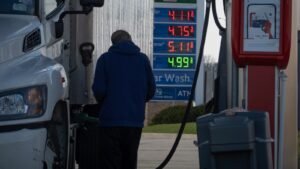
As the war in Iran drives up fuel prices, revealing the economic fragility of the nation’s dependence on oil, it creates a unique opportunity to advance the new agenda, said Daniel Aldana Cohen, a sociologist at the University of California, Berkeley, and founding co-director of the Climate and Community Institute: “It should be easier than it’s ever been before to say, ‘Fossil fuels are unreliable. They drive up your cost of living. They cause wars and people die. And if we make a green transition, that will make everyday life better for working people who are struggling.’”
The agenda was also inspired by the mayoral campaigns of Zohran Mamdani in New York City and Katie Wilson in Seattle, both of whom won elections last year with populist platforms focused on affordability. Like the Green New Deal, green economic populism also seeks to mobilize massive investments in communities, infrastructure, and industry. In the medium-term, that means rolling out technologies that can cut household expenses alongside fossil fuel use, like heat pumps, induction stoves, and electric vehicles — and making them accessible to the working class, unlike Biden’s EV tax credits that were taken advantage of mainly by the wealthy.
Some of the climate solutions you might expect are noticeably absent from the agenda. For example, it makes no call for carbon taxes or cap-and-trade, since these economic systems can pass on costs to consumers — an option Bigger said is “not politically tenable right now.” Meanwhile, some of the plan’s suggestions, such as implementing rent caps or freezes, might not even strike most people as climate policies. But making housing easier to afford is a climate solution, according to Wilson, the new mayor of Seattle, where transportation is the leading source of carbon emissions. “When you build affordable housing in the city near where people work, near where people shop, near where people do all the things — that is what enables people to not drive a car an hour to get to work each day,” Wilson said during a press briefing about the agenda.
Grace Adcox, senior climate strategist at the progressive polling firm Data for Progress, said Americans’ lack of trust in institutions, combined with a skepticism that they’ll reap the benefits, could make implementing bold public investments difficult. “I will say that the biggest question I often get about proposed climate solutions or climate infrastructure is, ‘How can you assure me that I’m not going to be paying the cost down the line?’” Adcox said. Her polling firm, however, found that 70 percent of voters believe economic policy can simultaneously lower costs and emissions.
But Emily Becker, director of communications for the climate and energy program at the center-left think tank Third Way, described the agenda as “Biden on steroids,” warning that it may not resonate as broadly as its proponents hope. “It lacks the imagination of the Green New Deal, and it lacks the pragmatism of the Inflation Reduction Act,” she said. “They find themselves stranded between, ‘OK, do we tell policymakers how to make something durable that works and that has political fortitude? Or do we paint the picture of the world we wish to build?’” That middle ground makes her think the agenda won’t catch on. She also thinks using a populist framing to convince the public to care about climate is unnecessary. “You are lucky to be a clean energy advocate in this moment, because clean energy is affordable energy,” Becker said. “So talk to them about addressing energy affordability and how clean energy can satisfy that.”
Advait Arun, an energy policy analyst at the Center for Public Enterprise, which advocates for state-led economic development, said the agenda is promising, but wonders if focusing so narrowly on how climate-friendly measures could cut individuals’ bills might be a mistake. Could climate advocates get so caught up in, say, pitching people on how a heat pump could cut their electric bills that they fail to fight for the larger changes needed to reduce price spikes? Or communities’ recovery costs after weather disasters? “I think [it] actually limits our imagination for the kind of stability we can sell and the kind of politics we can build around it,” Arun said.
The architects of the plan are working with their allies to refine the particular policies of the agenda, but they feel confident in the general vision. “I would characterize green economic populism at this stage,” Bigger said, “as very much that sort of overarching North Star towards which we’re orienting.”
Frida Garza and Jake Bittle contributed reporting to this story.
This story was originally published by Grist with the headline The Green New Deal has evolved. Now it’s all about ‘affordability.’ on Apr 21, 2026.